

What's Really Draining Your Battery
A car battery isn't just for starting the engine - it powers your vehicle's electronics, stabilizes voltage across all systems, and supports the alternator's output. When something disrupts that balance, the battery compensates until it can't anymore. Understanding the real culprits helps you stop the damage before it becomes a breakdown.
Most drivers assume battery failure is random bad luck. It rarely is. The habits that quietly wear out a vehicle apply just as much to the battery as to the engine or brakes. Below are the most common and preventable mistakes that shorten battery life - and what to do instead.
Taking too many short trips without allowing the battery to recharge.
Why it happens: Drivers assume that any amount of driving is enough to keep the battery topped up, not realizing each engine start draws a significant charge that requires extended driving to replenish.
Leaving lights, the radio, or accessories on when the engine is off.
Why it happens: It's easy to forget interior lights or leave a phone charger plugged into a powered outlet, particularly in vehicles where accessory power stays on after ignition.
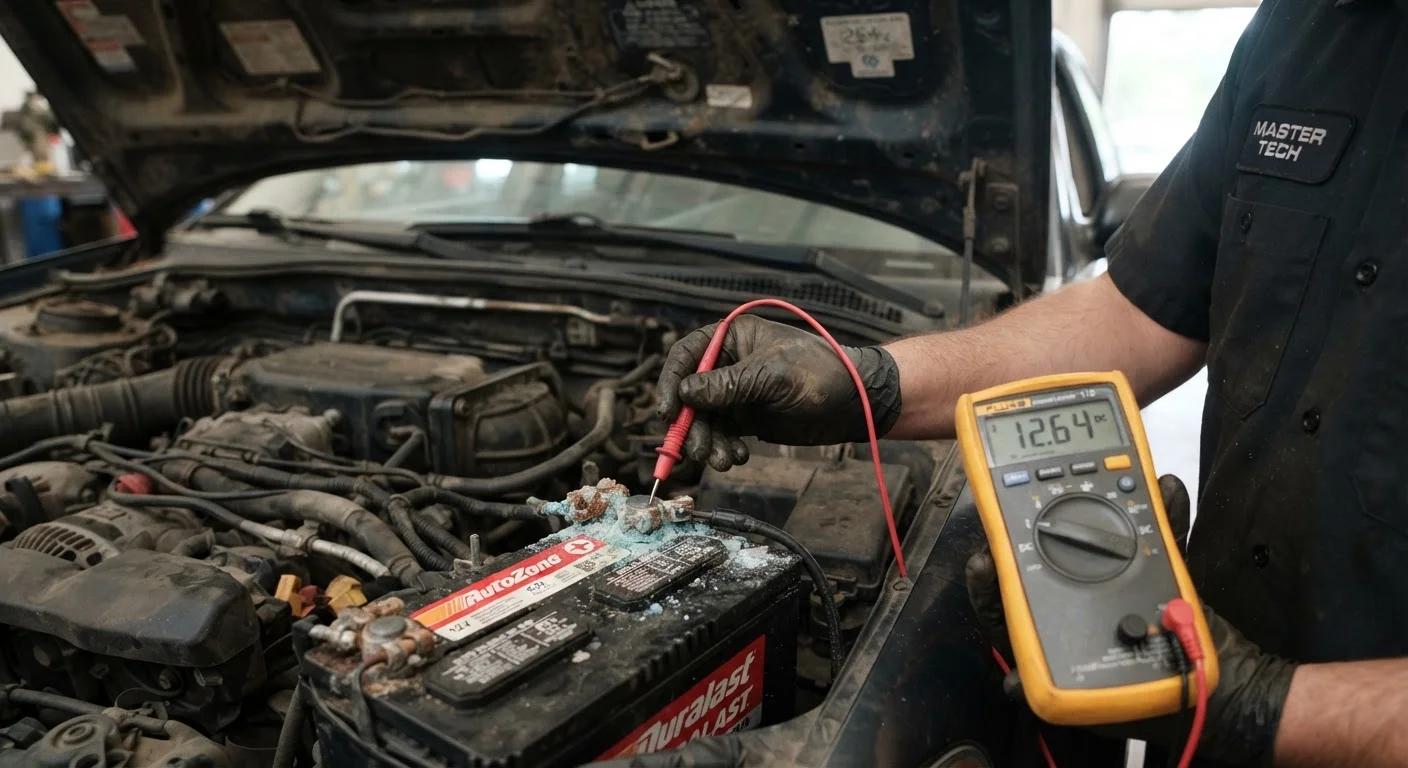
Ignoring corroded or loose battery terminals.
Why it happens: Terminal corrosion builds gradually and isn't visible without opening the hood, so most drivers never notice it until the car struggles to start.
Parking in extreme heat without considering the battery's location and ventilation.
Why it happens: Most drivers know cold weather is hard on batteries, but heat is actually the primary cause of long-term battery degradation - it accelerates the chemical breakdown inside the cells.
Never testing battery health until the car won't start.
Why it happens: Batteries don't usually give obvious warning signs until failure is imminent, and many drivers only think about the battery when there's a problem.
Protecting Your Battery for the Long Haul
Battery care isn't complicated, but it does require consistency. A few simple habits - periodic longer drives, routine terminal checks, and proactive load testing - can extend battery life well beyond the average and prevent most roadside failures.
Don't Ignore a Swollen or Leaking Battery
A bloated battery case or visible acid leakage is a safety hazard, not just a performance issue. Sulfuric acid is corrosive and battery gases are flammable. If you notice either sign, avoid sparks near the battery, wear gloves and eye protection, and have the battery replaced by a professional promptly.
Parasitic drain deserves special attention. Even with the engine off, modern vehicles draw a small amount of power for clocks, memory functions, and alarm systems. That's normal. But a malfunctioning relay, a faulty module, or an aftermarket accessory wired incorrectly can draw far more than intended, draining a fully charged battery overnight. If your battery keeps dying despite being in good condition, parasitic drain is a likely cause - and diagnosing it typically requires a multimeter and knowledge of your vehicle's electrical system.
When to See a Qualified Mechanic
If your battery is dying repeatedly despite being relatively new, the problem may be with the alternator, voltage regulator, or a persistent parasitic drain that requires diagnostic equipment to locate. Do not attempt to trace complex electrical faults without proper tools and training - incorrect probing can damage modern vehicle electronics.
Battery health is one piece of a larger maintenance picture. See our complete guide to keeping a car roadworthy for a broader look at what routine upkeep actually involves. And if you've encountered conflicting advice about car care, common maintenance myths worth reconsidering may help you separate fact from habit.
3-5 years
Typical car battery lifespan
AAA estimates most conventional lead-acid batteries last between three and five years under normal driving conditions.
33%
Battery-related roadside calls
AAA roadside assistance data consistently shows battery failure is among the top three causes of service calls in the United States.
2x faster
Battery degradation in extreme heat
Studies by battery researchers indicate that sustained high temperatures can double the rate of internal battery degradation compared to moderate climates.
The content provided on our blog site traverses numerous categories, offering readers valuable and practical information. Readers can use the editorial team’s research and data to gain more insights into their topics of interest. However, they are requested not to treat the articles as conclusive. The website team cannot be held responsible for differences in data or inaccuracies found across other platforms. Please also note that the site might also miss out on various schemes and offers available that the readers may find more beneficial than the ones we cover.