

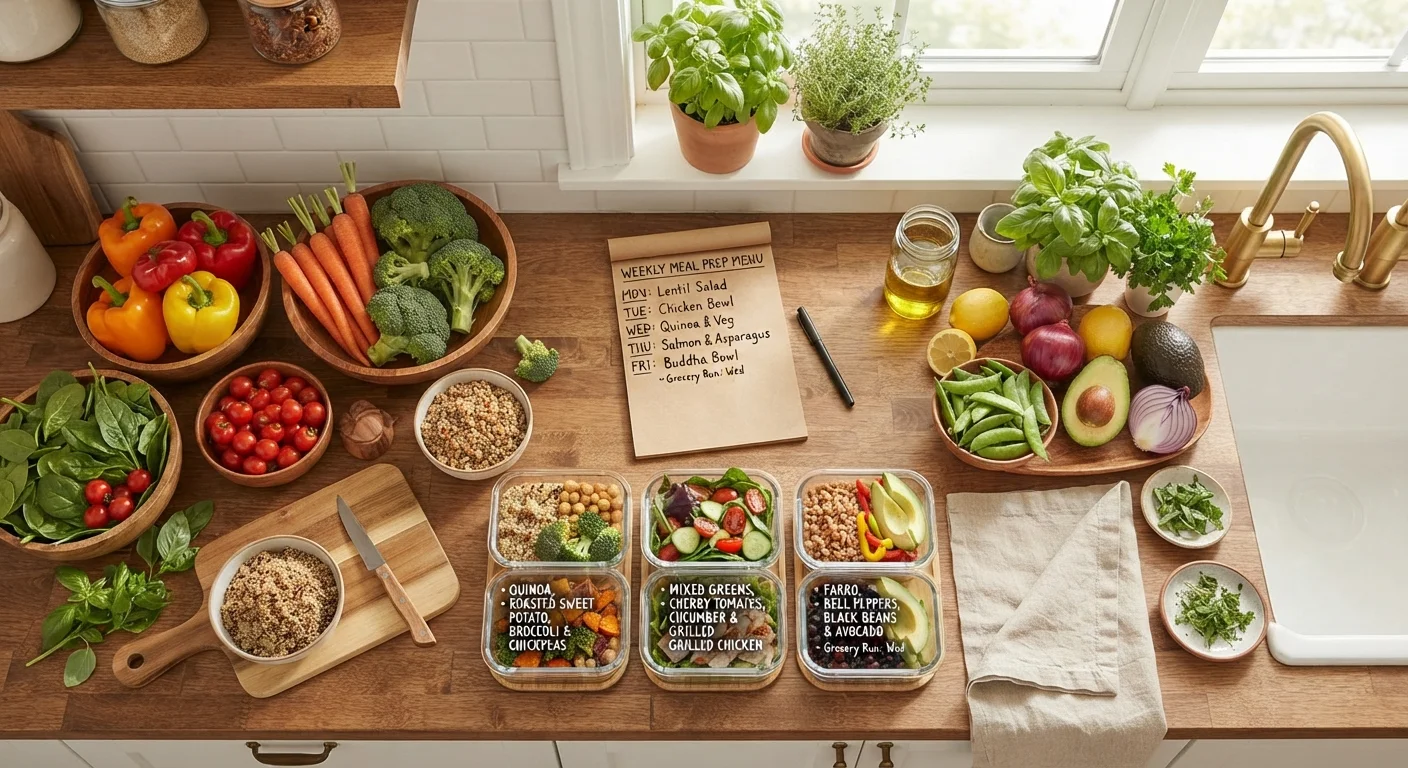
Why Meal Planning Works (and Why Most People Quit)
Meal planning has a reputation for being the domain of people with laminated binders and color-coded spreadsheets. In reality, the core idea is much simpler: deciding what you'll eat before you're hungry removes the moment-to-moment decisions that lead to takeout, skipped meals, or impulsive food choices that don't serve you well.
Research in behavioral science consistently shows that decision fatigue - the deteriorating quality of decisions made after a long string of choices - is a genuine obstacle to healthy eating. By front-loading food decisions to a calm, unhurried moment once a week, you protect yourself from the 6 p.m. pantry stare-down.
Most beginners quit for one of two reasons: they planned too ambitiously (every meal, from scratch, perfectly balanced), or they had one off week and decided the whole system had failed. The goal here is a sustainable rhythm, not a perfect record. Think of it like building a movement routine that sticks - structure matters more than intensity.
Build Around Proteins and Grains First
Planning your week becomes much simpler when you anchor meals to one or two cooked proteins and a grain or two. These versatile components can rotate across several meals - roasted chicken one night becomes a grain bowl the next. For more on why protein distribution across meals matters, see how protein spacing supports your goals.
What You'll Need Before You Start
You don't need specialized equipment or a culinary background to meal plan effectively. A few practical tools and a bit of self-knowledge go a long way.
What you will need
Weekly meal planning notepad or template
Maps out breakfasts, lunches, and dinners for the week so you shop with intention and reduce daily decision fatigue.
Airtight storage containers (various sizes)
Stores prepped ingredients and batch-cooked meals safely in the refrigerator or freezer throughout the week.
Sheet pan and a large pot or Dutch oven
Core cookware for batch-roasting vegetables and cooking grains or soups in bulk during a prep session.
Freezer space
Allows you to extend the life of batch-cooked meals and ingredients beyond a single week.
This Is General Information, Not Medical Advice
This article provides general nutrition and lifestyle education. It is not a substitute for personalized guidance from a registered dietitian, physician, or qualified healthcare professional. If you have specific dietary needs, a chronic health condition, or food allergies, consult a professional before making significant changes to your eating habits.
Your Step-by-Step Meal Planning Process
Follow these steps in order the first time through. Once the rhythm is familiar, you'll move through them naturally in under 20 minutes each week.
Take stock of what you already have
Before writing a single meal idea, open your refrigerator, freezer, and pantry. Note what proteins, grains, canned goods, and vegetables are already on hand. Building your plan around existing ingredients reduces waste and lowers your grocery bill - a principle explored further in eating well on a budget.
Plan meals around your actual week
Look at your calendar before choosing recipes. On nights with late meetings or practices, plan something that takes under 20 minutes or can be reheated. Save more involved cooking for genuinely open evenings. Aim to plan breakfasts, lunches, and dinners - even roughly - so you don't face blank-slate decisions when you're already tired and hungry.
Build a focused grocery list
Translate your meal plan into a specific shopping list organized by store section - produce, proteins, grains, dairy, and pantry staples. Buying with intention significantly reduces impulse purchases and the mid-week realization that you're missing a key ingredient. For a structured approach to the store itself, grocery shopping with nutrition in mind offers a practical checklist.
Run a focused Sunday (or prep-day) session
Set aside 45-90 minutes to handle the heavy lifting before the week begins. Wash and chop vegetables, cook a batch of grains, hard-boil eggs, or portion snacks into containers. You don't need to cook every meal in advance - preparing components gives you flexibility to assemble meals quickly. Your freezer is a powerful ally here for extending anything you make in larger quantities.
Assemble meals using the plate method
When building each meal, use a simple visual structure: roughly half the plate filled with vegetables, a quarter with a protein source, and a quarter with a whole grain or starchy vegetable. This approach requires no tracking, no math, and no app. For a deeper look at this technique, see building a balanced plate without counting calories.
Review and adjust at week's end
Spend five minutes each Sunday evaluating what worked. Did certain meals go uneaten? Were some nights too busy for anything elaborate? Did you throw out ingredients that never got used? Small weekly adjustments compound into a plan that genuinely fits your life. Consistent meal planning also pairs naturally with household budgeting - tracking food spending is a key component of building your first working budget.
Perfectionism Is the Biggest Pitfall
Many beginners abandon meal planning after one imperfect week. Missing a planned meal or skipping a prep session doesn't mean failure - it means you're human. A flexible, forgiving plan you actually follow will always outperform a rigid, detailed one you abandon by Tuesday.
This article is for general informational and educational purposes only and does not constitute medical or dietary advice. Consult a qualified healthcare professional or registered dietitian for guidance tailored to your individual health needs.
The content provided on our blog site traverses numerous categories, offering readers valuable and practical information. Readers can use the editorial team’s research and data to gain more insights into their topics of interest. However, they are requested not to treat the articles as conclusive. The website team cannot be held responsible for differences in data or inaccuracies found across other platforms. Please also note that the site might also miss out on various schemes and offers available that the readers may find more beneficial than the ones we cover.