

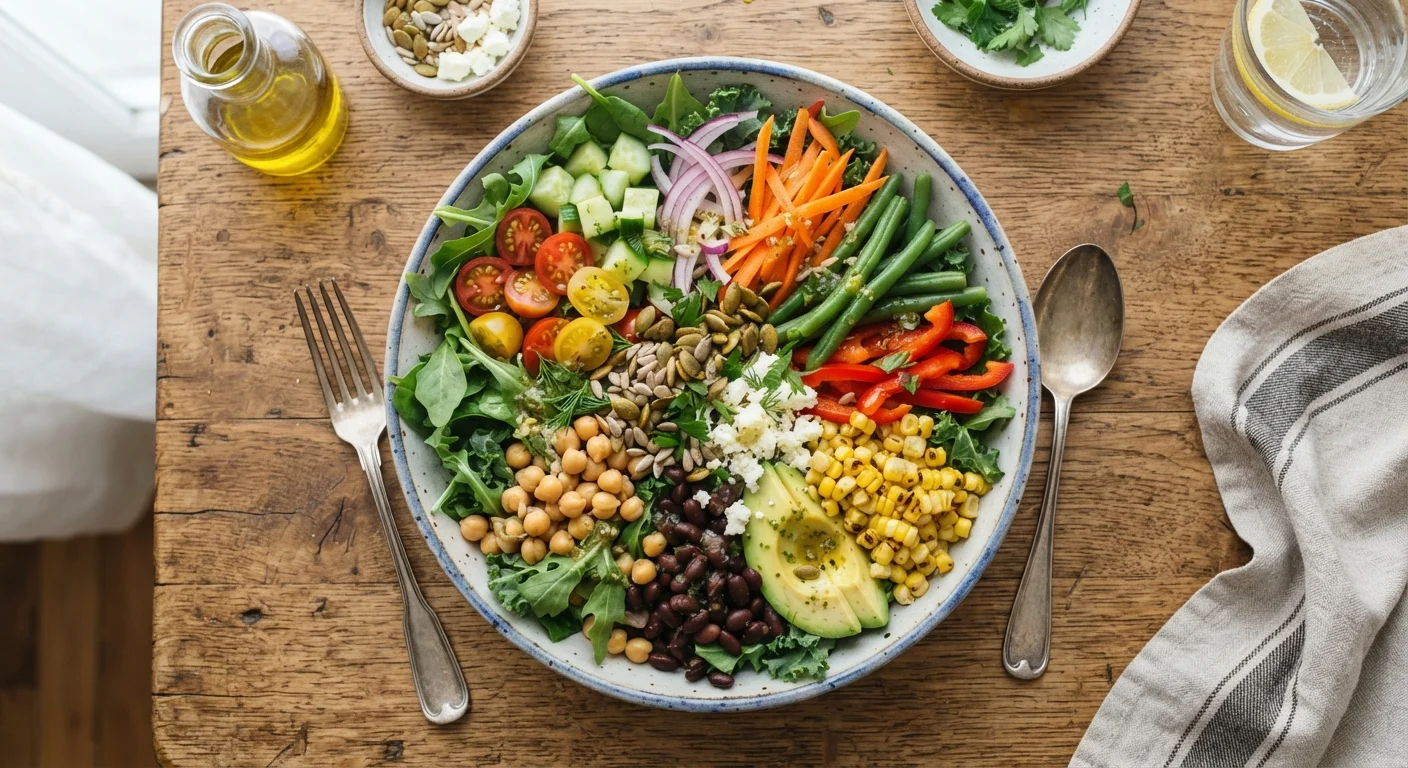
The Problem With "Healthy by Default" Thinking
Salads carry a strong health reputation - and much of the time, that reputation is deserved. But treating any salad as automatically nutritious can lead to some genuinely counterproductive habits. The ingredients, proportions, and preparation choices you make determine whether a bowl of greens is a nutritional win or a largely missed opportunity.
This isn't about perfectionism. It's about understanding a few common patterns that quietly reduce the value of an otherwise solid food choice. If you're building salads as a regular part of how you eat, it's worth knowing where the gaps tend to appear - and how easy most of them are to close. For a broader foundation on how food components work together, start with the basics of everyday nutrition.
Building the salad on a low-nutrient green like iceberg lettuce.
Why it happens: Iceberg is widely available, inexpensive, and familiar - most salad bars and fast-casual restaurants default to it. Its mild flavor and crunchy texture make it popular.
Using fat-free dressing on a vegetable-heavy salad.
Why it happens: Fat-free dressings are widely marketed as the "healthier" choice, and many people associate any dietary fat with poor health outcomes.
Skipping protein entirely, treating the salad as a side rather than a meal.
Why it happens: Salads are often thought of as light fare, and adding protein feels like it defeats the purpose of eating "light."
Overloading on high-calorie toppings without nutritional payoff.
Why it happens: Croutons, fried noodles, candied nuts, and heavy cheese crumbles are common default toppings that add appeal but can add significant calories and sodium with minimal nutritional benefit.
Assuming a restaurant salad is the lower-calorie, lower-sodium option.
Why it happens: The word "salad" on a menu implies health by default. Most diners don't anticipate that composed restaurant salads often contain substantial amounts of dressing, cheese, croutons, and cured proteins.
Building a Salad That Actually Delivers
Improving a salad's nutritional value doesn't require expensive ingredients or complicated preparation. A few structural changes go a long way.
95%
Americans not meeting fiber recommendations
Research published in the American Journal of Lifestyle Medicine has estimated that roughly 95% of Americans fail to meet daily fiber intake recommendations.
4x
More beta-carotene in spinach vs. iceberg
According to USDA nutritional data, spinach contains approximately four times the beta-carotene of iceberg lettuce per comparable serving.
Start with a more nutritious base. Swap iceberg for romaine, arugula, baby spinach, kale, or mixed greens. These darker leaves contain meaningfully higher levels of folate, vitamin K, and antioxidants. They also tend to have more fiber - a nutrient most Americans fall short on. For more on why fiber matters, see why fiber is the nutrient most Americans undereat.
Add a protein source. Eggs, legumes, grilled chicken, canned fish, edamame, or cheese all work. Protein slows digestion, helps maintain muscle, and keeps hunger at bay well past the meal.
Include a fat source - and use a real dressing. Avocado, nuts, seeds, or a small drizzle of olive oil-based dressing support absorption of fat-soluble vitamins A, D, E, and K present in your vegetables. If you're working within a food budget, these practical nutrition principles show how to do it without overspending.
Watch Out for Restaurant Salad Sodium
Many composed restaurant salads - especially those with cured meats, pickled toppings, or house dressings - contain well over 1,000 mg of sodium per serving. That's a significant portion of the generally recommended daily limit for most adults. Asking for dressing on the side and choosing simpler toppings can help moderate this without giving up the meal entirely.
Finally, vary your vegetables. Color variety - reds, oranges, purples, greens - generally reflects a wider range of micronutrients. Rotating what you include keeps the nutritional profile broad and makes salads far less monotonous. If you're skeptical of nutrition claims in general, this look at persistent nutrition myths is a useful companion read.
This article is for general informational purposes only and is not a substitute for personalized nutrition or medical advice. For guidance tailored to your health situation, consult a qualified healthcare or registered dietitian professional.
The content provided on our blog site traverses numerous categories, offering readers valuable and practical information. Readers can use the editorial team’s research and data to gain more insights into their topics of interest. However, they are requested not to treat the articles as conclusive. The website team cannot be held responsible for differences in data or inaccuracies found across other platforms. Please also note that the site might also miss out on various schemes and offers available that the readers may find more beneficial than the ones we cover.