

Why the Confusion Exists
Flexibility, mobility, and stretching show up constantly in fitness content - sometimes in the same sentence, often as if they mean the same thing. They don't. Each term describes something specific, and mixing them up can lead to training gaps that leave you stiff, limited, or prone to strain.
This confusion matters in practical terms. Someone who focuses only on stretching may improve muscle length but still struggle to move freely through daily tasks. Someone who works only on mobility drills may neglect the muscle extensibility that makes those drills sustainable. Understanding what each term actually refers to helps you build a more complete movement practice - one that supports functional fitness at any age or activity level.
| What flexibility measures | Passive muscle length - how far a muscle can stretch |
| What mobility measures | Active joint range of motion with control |
| What stretching is | A method or practice - not an outcome in itself |
| Can you be flexible but have poor mobility? | Yes - flexibility without strength or control limits usable range |
| Common mobility-focused practices | Yoga, dynamic warm-ups, joint circles, functional movement drills |
| Best time for static stretching | After activity, when muscles are warm (General guidance from exercise science literature) |
The Three Terms, Defined
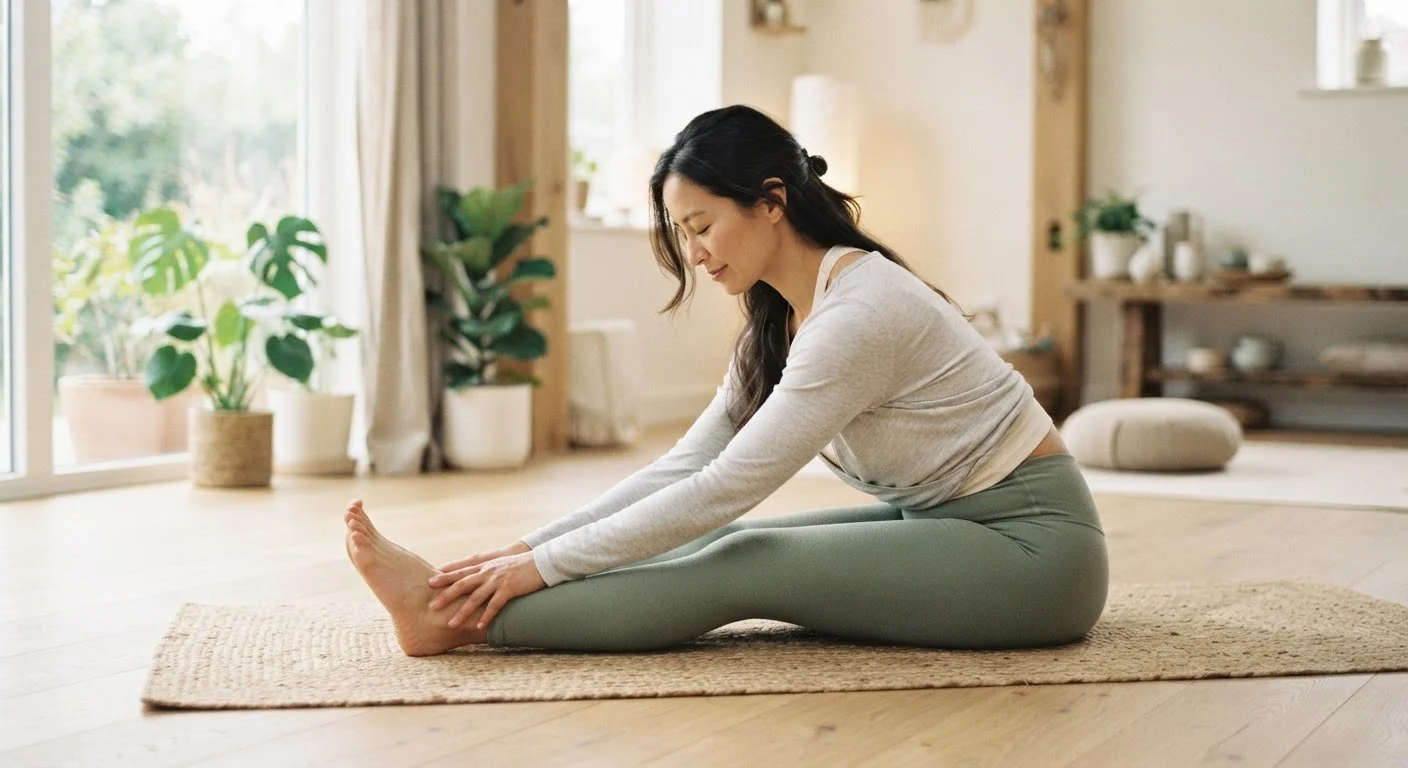
Flexibility refers to the ability of a muscle or group of muscles to lengthen passively through a range of motion. When you hold a hamstring stretch and feel the pull ease over time, that's flexibility at work. It's largely a property of the muscle tissue itself - how long it can become under tension.
Mobility is broader. It describes the ability of a joint to move actively through its full range of motion with control. Mobility involves muscles, tendons, ligaments, and the nervous system working together. You can be highly flexible (your muscles lengthen easily) but still have poor mobility if you lack the strength or neuromuscular control to use that range actively.
Stretching is a method - a category of physical practice used to influence flexibility and, depending on the type, contribute to mobility. Static stretching (holding a position), dynamic stretching (moving through a range), and proprioceptive neuromuscular facilitation (PNF) techniques are all forms of stretching, each with different effects and appropriate contexts.
Flexibility
The ability of a muscle or muscle group to passively lengthen through a range of motion. It reflects how much a muscle can stretch when an external force - like gravity or a partner - is applied.
Mobility
The ability of a joint to move actively and with control through its full intended range of motion. Mobility depends on flexibility, joint structure, strength, and neuromuscular coordination working together.
Stretching
A category of physical practice that applies tension to muscles or connective tissues to increase or maintain flexibility. Types include static, dynamic, and PNF stretching, each suited to different goals and timing.
Range of Motion (ROM)
The extent of movement possible at a given joint, measured in degrees. ROM can be active (self-generated) or passive (assisted), and is a key measure of both flexibility and mobility.
Static Stretching
A stretch held in a fixed position for a set duration, typically 20-60 seconds. It is most commonly used after activity to lengthen muscles and improve long-term flexibility.
Dynamic Stretching
Controlled movement through a joint's range of motion, typically used as a warm-up. Unlike static stretching, it keeps the body active and primes muscles for exercise.
How They Interact in Real Life
Think of mobility as the goal and flexibility as one of its inputs. A joint that moves freely and with control through a full range requires adequate muscle length (flexibility), joint health, and the muscular strength to stabilize that range. Stretching is one tool that helps develop flexibility - which, combined with strength and motor control work, contributes to better mobility overall.
For everyday Americans, this distinction has direct relevance. Reaching overhead without shoulder pain, bending to tie a shoe without lower-back strain, or getting up from the floor without difficulty - these are mobility challenges. Addressing them with stretching alone addresses only part of the picture. Low-impact movement practices such as yoga, tai chi, and swimming often train flexibility and mobility together, which is part of why they're so broadly recommended.
1 in 4
U.S. adults report chronic musculoskeletal pain
According to CDC national survey data, musculoskeletal conditions are among the most common reasons adults limit physical activity.
3×
More joints than muscles affected by mobility work
Mobility training targets the neuromuscular system and joint structures broadly, while flexibility training primarily addresses muscle extensibility.
This article is for general informational purposes only and does not constitute medical or exercise advice. Consult a qualified healthcare or fitness professional before beginning any new movement program, especially if you have an existing injury or health condition.
The content provided on our blog site traverses numerous categories, offering readers valuable and practical information. Readers can use the editorial team’s research and data to gain more insights into their topics of interest. However, they are requested not to treat the articles as conclusive. The website team cannot be held responsible for differences in data or inaccuracies found across other platforms. Please also note that the site might also miss out on various schemes and offers available that the readers may find more beneficial than the ones we cover.