

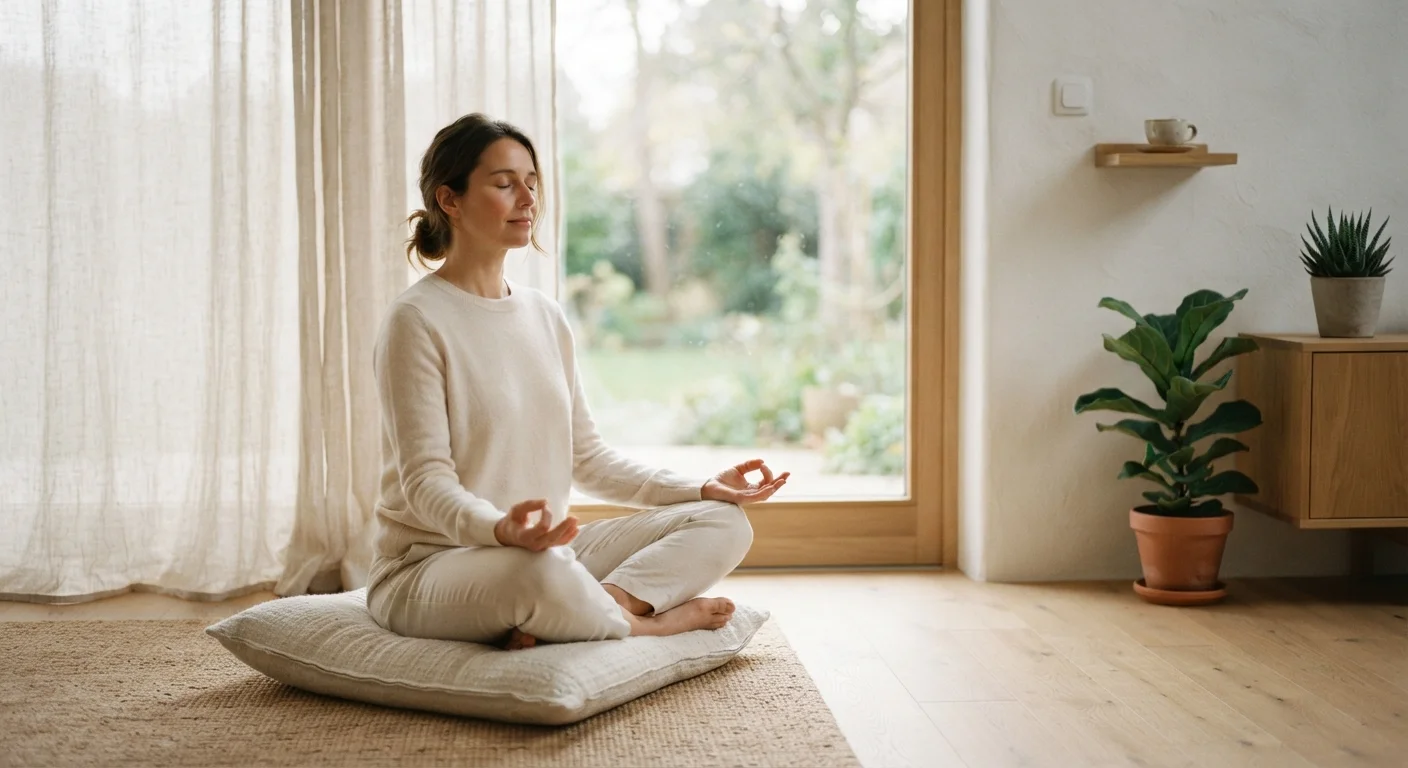
Option A
Mindfulness Meditation
The structured, awareness-building practice.
Best for: People seeking long-term emotional regulation and a deeper relationship with their own thought patterns.
Option B
Deep Breathing
The fast, accessible tool for immediate calm.
Best for: Anyone who needs quick, in-the-moment stress relief with minimal setup or prior experience.
How Each Practice Works
Mindfulness meditation and deep breathing both aim to calm an overactive nervous system, but they get there differently. Understanding the mechanism behind each helps you choose the right tool for the right moment.
Mindfulness meditation is a deliberate mental practice in which you focus attention - often on the breath, body sensations, or the present moment - and gently redirect it when the mind wanders. Over time, this trains the prefrontal cortex, the brain region involved in self-regulation, to respond more calmly to stressors. Research published in journals including JAMA Internal Medicine suggests that consistent mindfulness practice is associated with reduced symptoms of anxiety and depression, though individual results vary.
Deep breathing - sometimes called diaphragmatic or belly breathing - works more immediately. Slow, deliberate breaths stimulate the vagus nerve, triggering the parasympathetic nervous system's "rest and digest" response. This slows heart rate and lowers cortisol, the body's primary stress hormone, often within a single session. Techniques like box breathing (inhaling, holding, exhaling, and pausing in equal counts) or 4-7-8 breathing are commonly cited in clinical settings for their rapid calming effect.
| Criterion | Mindfulness Meditation | Deep Breathing |
|---|---|---|
| Time needed per session | Typically 10-45 minutes | 2-5 minutes |
| Learning curve | Moderate - benefits from guidance | Low - intuitive for most people |
| Primary mechanism | Attention training, cognitive reappraisal | Vagus nerve stimulation, nervous system reset |
| Speed of effect | Gradual over weeks of practice | Often noticeable within minutes |
| Ideal setting | Quiet, low-distraction environment | Virtually anywhere |
| Best use case | Building long-term emotional resilience | Immediate relief from acute stress |
| Evidence base | Strong for anxiety and depression | Strong for acute stress and heart rate |
Practical Differences in Daily Life
On paper, both practices sound straightforward. In practice, their demands on your time, environment, and attention differ considerably.
Mindfulness meditation generally benefits from consistency and a degree of quiet. Most evidence-based programs, such as Mindfulness-Based Stress Reduction (MBSR), recommend sessions of 20-45 minutes daily, though shorter sessions can still be useful for beginners. The payoff tends to build gradually - many practitioners report noticeable shifts in emotional steadiness after several weeks of regular practice. If you're exploring how daily habits shape your mental health, see small daily practices that support emotional steadiness for complementary micro-habits.
Deep breathing, by contrast, asks very little. You can practice it at your desk, in a parked car, or in a bathroom stall before a stressful meeting. Even two to three minutes of intentional breathing can measurably shift your physiological state. This portability makes it especially valuable as a first-response tool when stress spikes suddenly.
38%
Reduction in anxiety symptoms
A meta-analysis in JAMA Internal Medicine found mindfulness meditation programs associated with approximately a 38% reduction in anxiety symptoms across multiple studies.
< 60 sec
Time for breathing to reduce heart rate
Research in psychophysiology journals indicates slow diaphragmatic breathing can begin lowering heart rate in under a minute of practice.
8 weeks
Typical duration for measurable brain changes
Studies using neuroimaging have observed structural changes in stress-related brain regions after approximately eight weeks of consistent mindfulness practice.
Importantly, the two approaches are not in competition. Many people find that starting a meditation session with a few rounds of deep breathing helps the mind settle faster. If you're building an evening routine, an evening wind-down checklist can help you integrate both practices before bed.
Which One Is Right for You?
The honest answer is that most people benefit from having both in their toolkit - used at different times and for different needs. That said, your current circumstances matter.
If your stress tends to be acute and situational - a difficult conversation, a deadline, a commute - deep breathing is your most practical ally. It requires no learning curve and delivers results quickly. If, however, you're dealing with persistent low-grade anxiety, difficulty concentrating, or a sense of emotional reactivity that feels hard to manage, a structured mindfulness practice may offer more lasting support. Research consistently links meditation with improvements in attention and emotional regulation, particularly when practiced regularly over weeks. For context on how stress management needs shift across different life stages, stress management strategies across a lifetime offers a broader perspective.
It's also worth considering what might be working against you. Certain everyday habits can quietly undermine mental resilience before you even reach for a coping tool - everyday habits that erode mental resilience explores patterns worth examining.
These Practices Complement Each Other
You don't have to choose one and abandon the other. Many clinicians and mindfulness instructors recommend using deep breathing as a "gateway" technique - settling the body first - before moving into a longer meditation session. Combining both in a single daily routine can address both immediate stress spikes and longer-term emotional patterns.
This article is for general informational purposes only and is not a substitute for professional mental health advice, diagnosis, or treatment. If you are experiencing persistent anxiety, depression, or other mental health concerns, please consult a qualified healthcare provider.
The content provided on our blog site traverses numerous categories, offering readers valuable and practical information. Readers can use the editorial team’s research and data to gain more insights into their topics of interest. However, they are requested not to treat the articles as conclusive. The website team cannot be held responsible for differences in data or inaccuracies found across other platforms. Please also note that the site might also miss out on various schemes and offers available that the readers may find more beneficial than the ones we cover.