

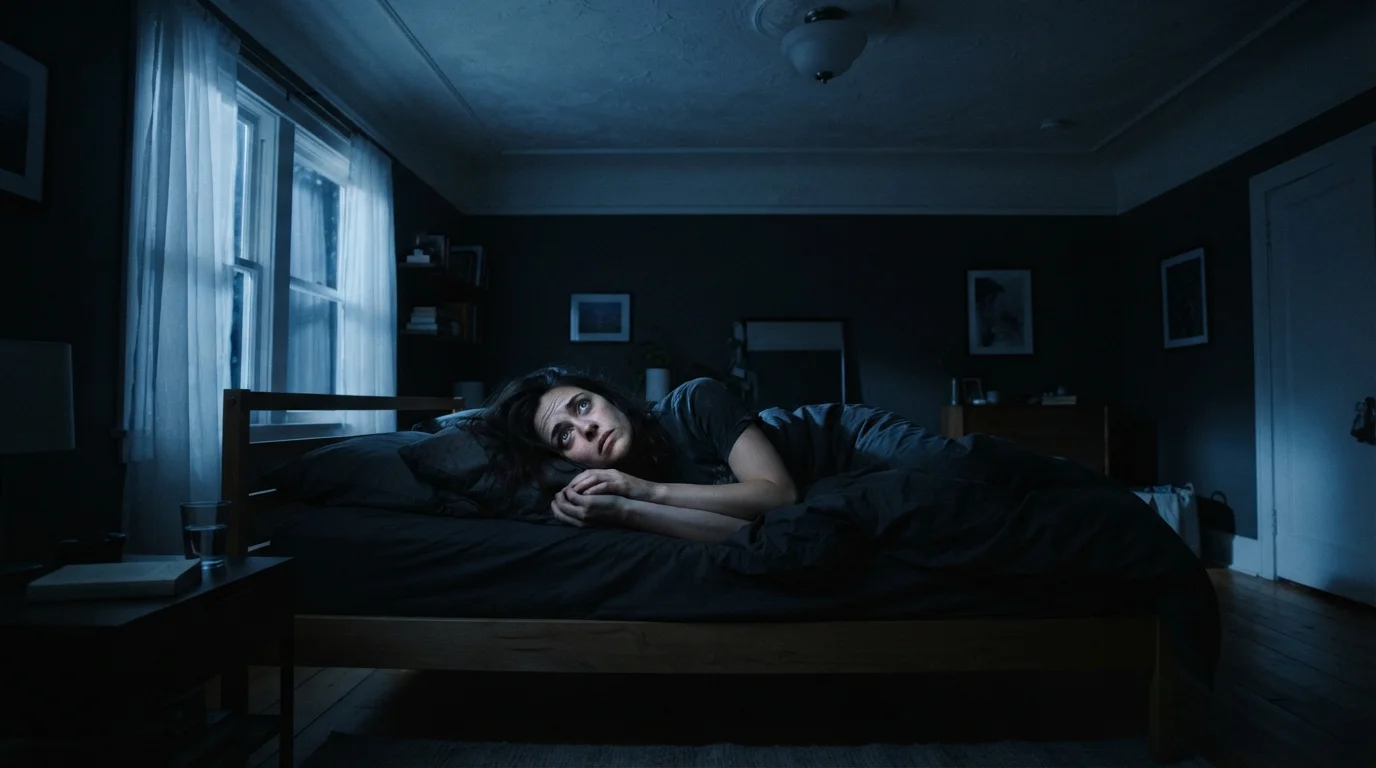
What Happens Inside a Sleep-Deprived Brain
When you don't sleep enough, the changes happening in your brain go far deeper than foggy thinking. Two regions are especially affected: the amygdala and the prefrontal cortex. The amygdala acts as the brain's threat detector, generating emotional responses to perceived danger or stress. The prefrontal cortex is the rational counterweight - it evaluates those responses and dials them back when they're out of proportion.
In a well-rested brain, these two regions communicate efficiently. After insufficient sleep, neuroimaging studies have documented a striking pattern: the amygdala becomes significantly more reactive, while the prefrontal cortex's regulating influence weakens. The connection between them is effectively loosened. This means your emotional responses fire faster and stronger, and your ability to talk yourself down is reduced - all without you making a conscious choice to react that way.
This isn't a character flaw or a matter of willpower. It's a neurological change driven by disrupted brain chemistry and reduced cellular restoration during sleep. Understanding that helps remove the self-blame that often accompanies a bad-mood day rooted in poor rest.
Individual Sleep Needs Vary
While seven to nine hours is the range commonly cited for adults, individual needs differ based on genetics, age, health status, and other factors. What matters most is how you function - not hitting a specific number. If you consistently feel rested and alert, your sleep is likely adequate for you. If you regularly rely on caffeine or alarms to function, it may not be.
The Role of REM Sleep in Emotional Processing
Not all sleep stages are equal when it comes to emotional health. REM sleep - the stage associated with vivid dreaming - plays a particularly important role in how we process and file away emotionally significant experiences.
Research led by sleep scientists, including work from the Center for Human Sleep Science, suggests that during REM sleep, the brain replays emotionally charged memories but in a neurochemical environment notably low in norepinephrine, a stress-related chemical. This may allow the brain to reprocess difficult experiences and reduce their emotional intensity - a kind of overnight emotional recalibration.
When REM sleep is cut short - which commonly happens when total sleep time is reduced, since REM is concentrated in the later hours of the night - this processing is incomplete. Memories retain more of their emotional charge, and the next day can feel heavier than circumstances alone would warrant.
~30%
Adults regularly sleeping less than 7 hours
Data from the Centers for Disease Control and Prevention (CDC) indicate that roughly 1 in 3 U.S. adults reports regularly getting less than the recommended amount of sleep.
2-3×
Greater amygdala reactivity when sleep-deprived
Neuroimaging research has documented amygdala responses two to three times more intense in sleep-deprived participants compared to well-rested controls when shown emotionally negative images.
20-25%
Proportion of sleep time spent in REM
In a typical healthy adult, REM sleep accounts for roughly a fifth to a quarter of total sleep time, concentrated in the latter part of the night - making early wake-ups particularly costly for emotional processing.
From Short-Term Grumpiness to Longer-Term Risk
Most people recognise that a poor night's sleep leaves them short-tempered. What's less appreciated is that this short-term mood disruption is part of a continuum. Research consistently shows that chronically insufficient sleep - habitually getting less than the commonly recommended seven to nine hours for adults - is associated with elevated risk for anxiety disorders and depression.
The relationship runs in both directions: mood disorders often disrupt sleep, and disrupted sleep worsens mood disorders. This bidirectional link means that sleep problems shouldn't be dismissed as merely a symptom to manage around. For many people, improving sleep is one of the most impactful levers available for mental wellbeing - alongside strategies like regular physical activity, which research also supports as beneficial for mood.
It's also worth noting that certain everyday habits quietly compound sleep-related mood erosion. Scrolling through stimulating content late at night, irregular sleep schedules, and high caffeine intake later in the day can all undermine sleep quality in ways that don't feel obviously connected to how you feel the next afternoon. Some of the most damaging patterns are the least obvious.
Practical Steps to Break the Cycle
The good news is that the brain's emotional regulation systems are responsive to recovery. Improving sleep - even incrementally - tends to produce measurable mood benefits relatively quickly. A few evidence-informed principles are worth applying:
- Consistency matters more than duration alone. Going to bed and waking at roughly the same time each day anchors your circadian rhythm, making it easier to fall asleep and spend more time in restorative sleep stages.
- Protect the final hours before bed. Bright light, emotionally activating content, and stimulants suppress the melatonin rise that signals sleep onset. A structured wind-down period - even 20 to 30 minutes - can meaningfully improve how quickly and deeply you fall asleep. See an evening wind-down checklist for practical guidance.
- Address stress directly. Heightened anxiety activates the same brain circuits that sleep deprivation destabilises. Pairing sleep hygiene with other mood-supportive habits - movement, social connection, and recovery time - creates a more resilient foundation. Research on how physical activity influences anxiety offers additional context here.
Start Small: One Consistent Bedtime
If overhauling your sleep routine feels overwhelming, focus on a single change first: pick a consistent wake time and hold to it every day, including weekends. A stable wake time anchors your circadian rhythm more reliably than any other single adjustment. Once that feels sustainable, layer in other habits gradually.
This article is for general informational purposes only and does not constitute medical advice. If you are experiencing persistent sleep difficulties, mood disturbances, or symptoms of anxiety or depression, please consult a qualified healthcare professional for personalised guidance.
Frequently Asked Questions
Short sleep leaves the amygdala - your brain's emotional alarm system - in a heightened state, while weakening the prefrontal cortex's ability to put the brakes on. The result is that minor frustrations feel disproportionately intense and hard to shake off.
Research suggests that even a single night of significantly reduced sleep can alter emotional reactivity the following day. Cumulative sleep debt, built up over multiple nights, compounds these effects and can make recovery slower.
Yes. While sleep problems can both cause and result from anxiety and depression, research consistently shows that chronic insufficient sleep increases the risk of developing these conditions. Addressing sleep is often considered an important part of mental health care.
REM (rapid eye movement) sleep appears especially critical. During REM, the brain reprocesses emotionally charged experiences in a way that reduces their intensity - essentially taking the sting out of difficult memories. Disrupted REM undermines this process.
Evidence consistently supports this. Even modest improvements in sleep duration and quality - achieved through consistent bedtimes, reduced screen exposure before bed, and a calming evening routine - tend to produce noticeable mood benefits over time.
The content provided on our blog site traverses numerous categories, offering readers valuable and practical information. Readers can use the editorial team’s research and data to gain more insights into their topics of interest. However, they are requested not to treat the articles as conclusive. The website team cannot be held responsible for differences in data or inaccuracies found across other platforms. Please also note that the site might also miss out on various schemes and offers available that the readers may find more beneficial than the ones we cover.