

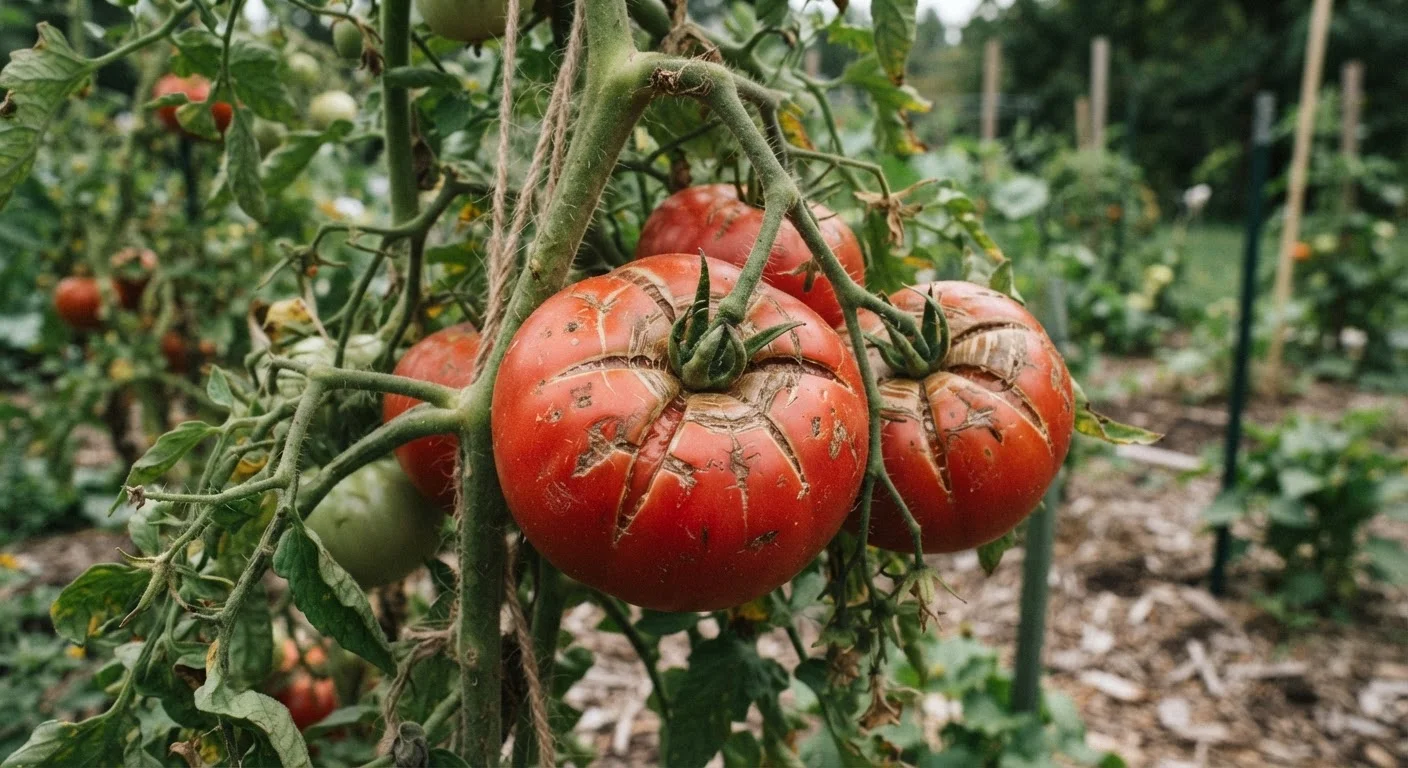
What's Actually Causing the Cracks
When a tomato cracks, it's the fruit's skin failing to keep up with rapid interior growth. The flesh expands quickly - usually after a heavy rain or a deep watering following a dry spell - and the skin, which has lost its elasticity from the stress of inconsistent moisture, simply splits. There are two main types: radial cracks that run from the stem downward, and concentric cracks that circle the fruit near the blossom end. Both share the same root cause: erratic water supply.
Understanding this mechanism matters because it shifts focus away from the fruit itself and onto your soil and watering habits - where the real fixes live. For a deeper look at how watering timing and technique affect all your plants, see our guide to garden watering habits that damage plants for context that applies well beyond tomatoes.
Watering deeply and infrequently - then skipping days during hot stretches.
Why it happens: Gardeners often water reactively, giving plants a big drink when they look stressed. This creates a feast-or-famine cycle in the soil.
Letting the soil dry out completely before a heavy rain or deep watering event.
Why it happens: Dry spells lead gardeners to delay watering, and then nature delivers a sudden downpour - exactly the scenario that causes fruit to swell and split overnight.
Skipping mulch or applying too thin a layer.
Why it happens: Mulching can feel like an optional extra step, especially early in the season when beds look tidy without it.
Over-fertilizing with high-nitrogen products through fruiting season.
Why it happens: The same fertilizers that build strong transplants early in the season are often continued without adjustment once fruit sets.
Leaving nearly ripe tomatoes on the vine during rainy stretches.
Why it happens: Gardeners naturally want fruit to fully ripen on the plant, assuming vine-ripened always means better quality.
Breaking the Cycle: Practical Fixes That Work
Once you understand the moisture-swing problem, the solutions become straightforward - though they do require consistency.
2-3"
Recommended mulch depth around tomatoes
University extension guidelines consistently recommend this depth to meaningfully buffer soil moisture and reduce temperature swings.
~80%
Of cracking cases linked to moisture fluctuation
Horticultural educators generally attribute the large majority of tomato fruit cracking to inconsistent irrigation rather than disease or variety issues.
Mulch Generously and Correctly
A 2-3 inch layer of organic mulch (straw, shredded leaves, or wood chips) acts as a moisture buffer, slowing both evaporation and the rate at which rain soaks into the root zone. Apply mulch a few inches away from the stem to prevent rot at the base.
Time Your Harvests Strategically
When a stretch of heavy rain is forecast and your tomatoes are close to ripe, harvest them at the breaker stage - when they've just begun to show color. They'll ripen indoors without cracking, and you won't lose the fruit to a downpour.
Watch Your Fertilizer
Heavy nitrogen feeding encourages rapid vegetative growth and thicker, faster-expanding flesh - a recipe for splitting. Scale back nitrogen once plants start flowering and fruiting, shifting toward a lower-nitrogen formulation to support fruit development rather than leaf growth.
Cracked Tomatoes Can Harbor Bacteria
A cracked tomato isn't just cosmetic - open splits expose the flesh to soil-borne bacteria and mold, especially in humid conditions. Use cracked fruit quickly and cut away any affected tissue before eating. If the crack is deep or the fruit smells off, discard it rather than risk foodborne illness.
The content provided on our blog site traverses numerous categories, offering readers valuable and practical information. Readers can use the editorial team’s research and data to gain more insights into their topics of interest. However, they are requested not to treat the articles as conclusive. The website team cannot be held responsible for differences in data or inaccuracies found across other platforms. Please also note that the site might also miss out on various schemes and offers available that the readers may find more beneficial than the ones we cover.