

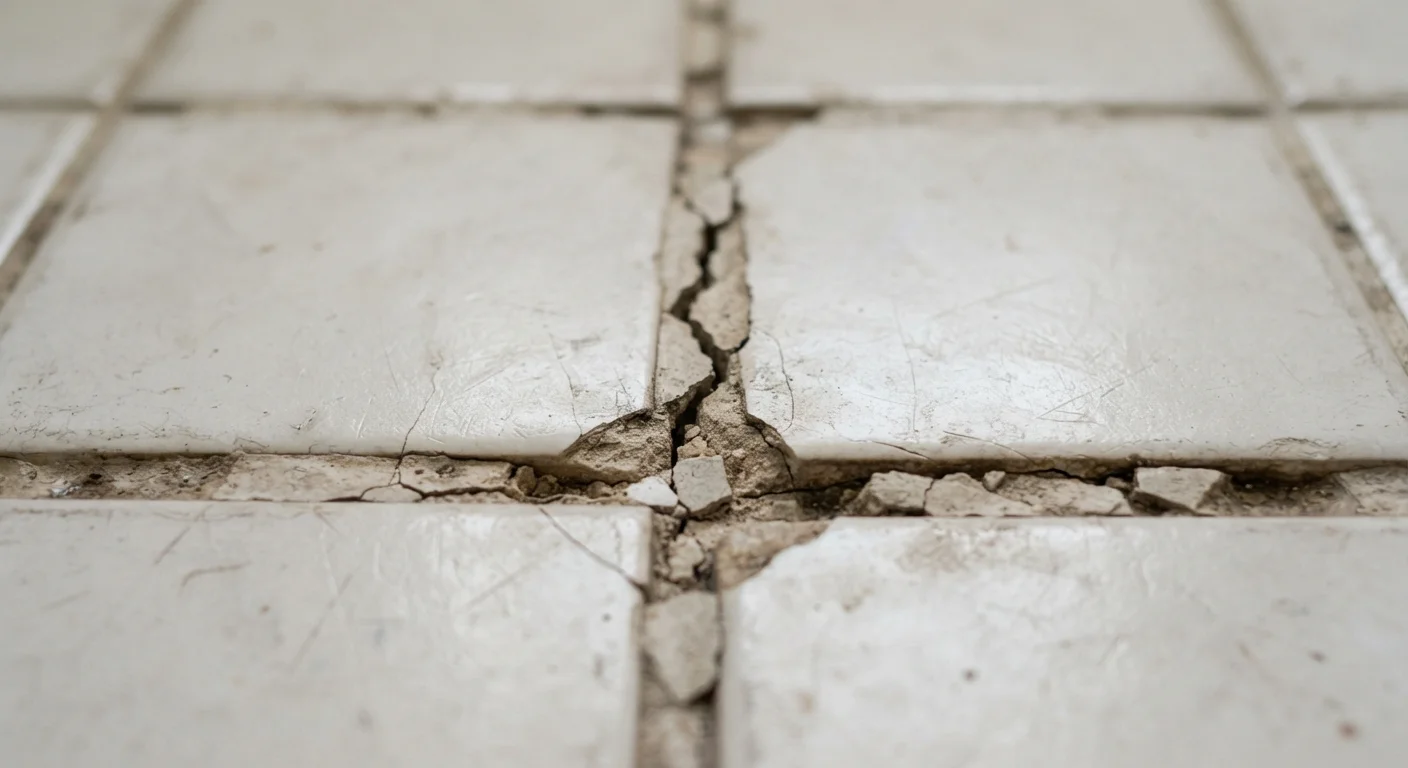
The Real Reason Grout Keeps Failing
Cracked grout is one of the most common tile complaints homeowners bring up - and one of the most misunderstood. Many people assume it's a cosmetic issue caused by age or cheap materials. In reality, recurring grout cracks are almost always a signal that something went wrong during installation, or that the structure beneath the tile is moving in ways the grout can't accommodate.
Grout is not an adhesive and it's not flexible by design. Its job is to fill the joints between tiles and resist moisture intrusion - but only when the conditions around it remain stable. When the substrate shifts, the grout mix is off, or installation steps are rushed, cracks follow. Understanding why the cracks appear is the only way to fix the problem for good.
Installing tile directly over a flexing or inadequately prepared substrate.
Why it happens: Homeowners often tile over existing flooring, drywall, or subfloor without assessing whether the base is rigid enough. Concrete board or uncoupling membranes are frequently skipped to save time or money.
Mixing grout with too much water to make it easier to spread.
Why it happens: Stiff grout is harder to work into joints, so it's tempting to add water until it flows more easily. This feels like a practical shortcut but fundamentally weakens the finished grout.
Grouting too soon after setting tiles, before the adhesive has fully cured.
Why it happens: Once the tiles look firmly in place, it's natural to want to move on. But tile adhesive - whether thinset mortar or mastic - requires adequate cure time, and disturbing it too early creates instability.
Omitting expansion joints in large tiled areas or along walls and transitions.
Why it happens: Many DIYers are unaware that tile installations need built-in space for the natural thermal expansion and contraction of the structure. Rigid grout throughout an entire floor gives movement nowhere to go.
Using excessive water when cleaning grout haze off the tile surface.
Why it happens: After grouting, a milky haze remains on the tile face. Homeowners often scrub aggressively with a soaking-wet sponge, not realizing the extra water is pulling into the fresh grout joints.
How to Approach Repairs the Right Way
Before regrouting any cracked area, take time to investigate the root cause. Press lightly on the tiles surrounding the cracks - if any tile flexes or feels hollow when tapped, the problem is underneath and regrouting over it will only fail again. A hollow-sounding tile (a condition called debonding) means the adhesive beneath has released and the tile needs to be reset before the joint is addressed.
Don't Regrout Over Debonded Tiles
If tiles flex, rock, or sound hollow when tapped, applying fresh grout will not solve the problem. The underlying adhesive failure will continue to cause movement, and new grout will crack within months. Debonded tiles must be removed, the substrate cleaned, and the tiles reset with fresh adhesive before any grouting takes place.
When the substrate is confirmed stable, remove all cracked grout completely using an oscillating tool with a grout removal blade or a manual grout saw. Never just apply fresh grout over existing cracked grout - the old material will continue to shift and pull the new grout apart. Clean the joints thoroughly, allow them to dry completely, then apply fresh grout following the manufacturer's water-to-powder ratio exactly.
For floors with large tile formats (12 inches or larger), consult a tile professional about whether movement joints - sometimes called control joints - should be incorporated into the layout. These are filled with flexible sealant rather than rigid grout and are specifically designed to absorb the natural expansion and contraction of a structure. Getting this right the first time saves significant rework later.
The content provided on our blog site traverses numerous categories, offering readers valuable and practical information. Readers can use the editorial team’s research and data to gain more insights into their topics of interest. However, they are requested not to treat the articles as conclusive. The website team cannot be held responsible for differences in data or inaccuracies found across other platforms. Please also note that the site might also miss out on various schemes and offers available that the readers may find more beneficial than the ones we cover.