

Start here
What a Budget Actually Is
Next
Step One: Know Your Income
Then
Step Two: List Your Expenses
Going deeper
Step Three: Handle Irregular Costs
Bring it home
Putting It All Together
What a Budget Actually Is
A budget is nothing more than a written plan for your money. It tells your dollars where to go before the month starts, instead of leaving you guessing where they went after it ends. That's really it.
Many people avoid budgeting because it sounds complicated or restrictive. In reality, a budget gives you more control, not less. When you know exactly what you have and what you owe, you make intentional choices rather than reactive ones. If you've heard that budgeting is only for people struggling with debt, that's one of several common budgeting myths worth setting aside before you begin.
Net income
The money you actually take home after taxes and payroll deductions are removed. This is the number your budget should be built on.
Fixed expense
A bill that stays the same amount each month, such as rent, a car payment, or a loan minimum. Easy to plan for because it doesn't change.
Variable expense
A cost that changes from month to month, like groceries or gas. You estimate these based on past spending rather than a set number.
Sinking fund
Money you set aside gradually each month to cover a known future expense - like annual car registration or holiday gifts - so it doesn't hit your budget all at once.
Discretionary spending
Money spent on wants rather than needs - dining out, entertainment, hobbies. This category is usually where a budget has the most flexibility.
Before diving into the mechanics, it helps to understand a handful of basic terms. Our plain-language budgeting glossary covers vocabulary like net income, discretionary spending, and sinking fund - words you'll encounter throughout this guide.
This article is for general informational and educational purposes only and does not constitute personalized financial advice. For guidance specific to your situation, consider consulting a qualified financial professional.
Step One: Know Your Income
The first number every budget needs is your net income - the amount deposited into your account after taxes, Social Security, and any other payroll deductions. Do not use your gross (pre-tax) salary here; spending money you haven't received is the most common beginner mistake.
List every reliable income source: your primary paycheck, a side gig, freelance payments, child support, or any other regular deposit. If your income varies - common for hourly workers, contractors, and tipped employees - use your lowest recent month as a conservative baseline rather than an average. This protects you in lean months.
Use Statements, Not Memory
Don't rely on your memory to estimate what you spend. Pull two or three months of actual bank or credit card statements and use those real numbers. Most people discover their estimates are noticeably lower than their actual spending, and accurate data makes for a far more useful budget.
Once you have a reliable monthly income figure, write it at the top of your budget. Every spending decision flows from that single number.
Step Two: List Your Expenses
Expenses fall into two broad categories, and treating them differently makes budgeting much easier.
Fixed Expenses
These stay the same amount each month: rent or mortgage, car payment, insurance premiums, and loan minimums. List them first - they are non-negotiable and predictable.
Variable Expenses
These fluctuate month to month: groceries, gas, utilities, dining out, clothing, and entertainment. Look back at two or three months of bank or credit card statements to find realistic averages. Most people underestimate this category significantly on their first attempt.
Subtract your total expenses from your net income. If the result is positive, you have room to direct money toward savings or debt. If it's negative, you're spending more than you earn - which the budget now makes visible so you can address it directly.
For a structured walkthrough of this calculation, a step-by-step budget guide can walk you through each stage in order.
Don't Forget Minimum Debt Payments
If you carry any debt - credit cards, student loans, personal loans - the minimum monthly payments must appear in your budget as fixed expenses before anything else. Missing these payments can trigger fees and damage your credit profile. If debt is a significant part of your picture, understanding how credit works is worth reading alongside this guide.
Step Three: Handle Irregular Costs
Irregular expenses are the budget-busters most people forget: annual car registration, holiday gifts, back-to-school supplies, quarterly insurance premiums, medical copays, and home repairs. They don't show up every month, so they feel like surprises - but they aren't really surprises if you plan ahead.
The practical solution is a sinking fund: divide each anticipated irregular expense by 12 (or however many months remain before it's due) and set that amount aside monthly. For example, if you expect to spend roughly $600 on holiday gifts, setting aside $50 per month starting in January means the money is ready in December - no scrambling, no credit card debt.
List your known irregular expenses for the year, estimate totals honestly, and build those monthly contributions into your budget as fixed line items. Over time, this single habit tends to dramatically reduce financial stress.
As your budgeting practice matures, you'll naturally start thinking about growth - how to build savings beyond just covering expenses. The Saving & Growth hub is a useful next step when you're ready to explore that.
Irregular Doesn't Mean Unpredictable
Many people treat irregular expenses as genuine surprises, but most of them are entirely foreseeable - you know your car registration comes due every year, and that the holidays happen in December. The only real variable is the exact dollar amount. A reasonable estimate, even if imperfect, is far better than no plan at all. Adjust the number next year once you have actual data.
Putting It All Together
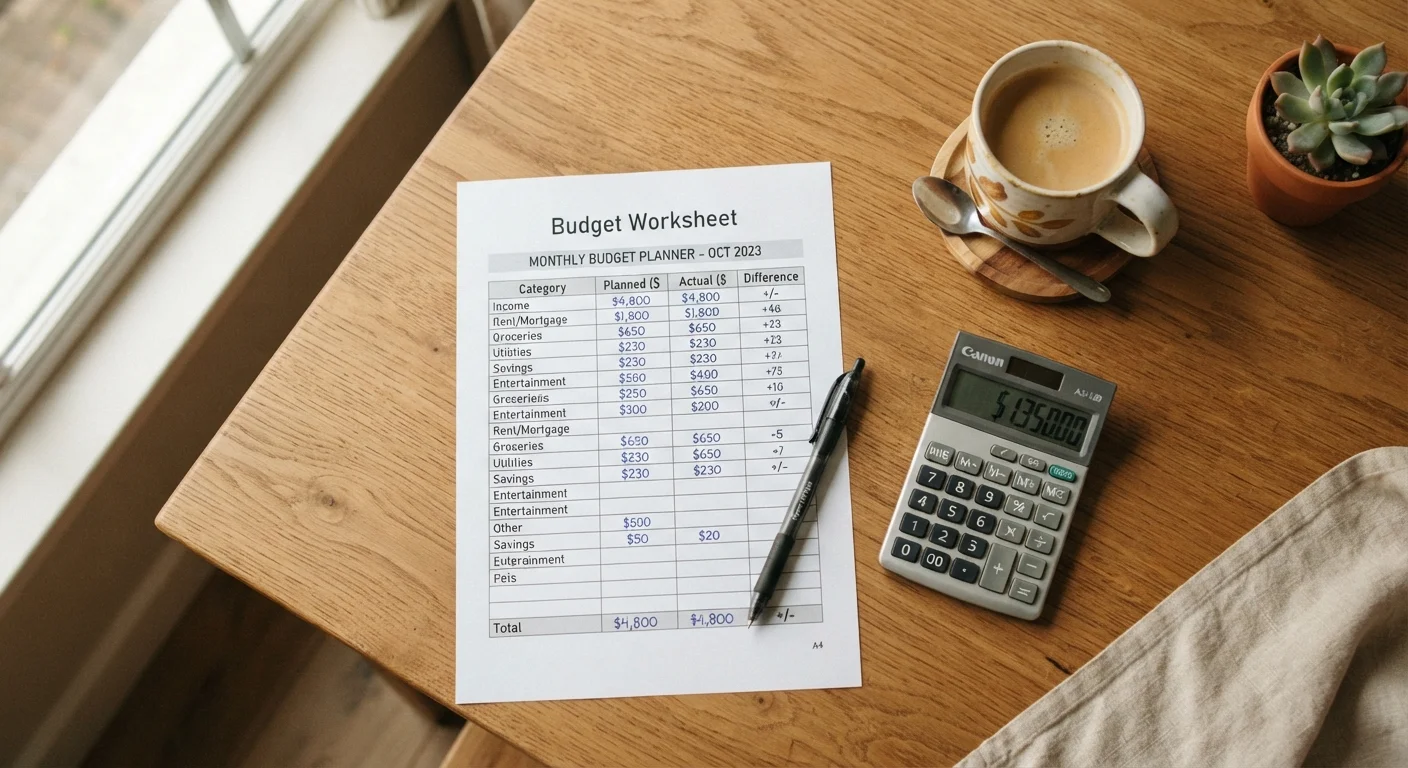
Once you have your income, fixed expenses, variable expenses, and irregular cost contributions mapped out, you have a working budget. It doesn't need to be elaborate - a single sheet of paper organized into those categories is enough to start.
Expect your first budget to be imperfect. Most are. The goal in month one is simply to have a plan and observe how closely reality matches it. After 30 days, compare your actual spending to your plan line by line. Where did you overshoot? Where did you have room to spare? That information is how you improve the budget, not a reason to feel bad about it.
A simple monthly budget health check can help you turn this review into a consistent habit, catching small problems before they grow. And if debt is part of your financial picture, the Debt & Credit hub covers how credit works and practical strategies for managing what you owe alongside your budget.
Budgeting is a skill, and like any skill it gets easier with practice. Give yourself permission to learn as you go.
Monthly Budget Health Check
A practical end-of-month checklist to compare your actual spending against your plan and catch small problems before they compound. Useful once you have your first budget running.
Budgeting Terms Every Beginner Should Know
A plain-language reference for common budgeting vocabulary - net income, sinking fund, discretionary spending - so unfamiliar terms never slow you down.
Saving & Growth Hub
Once your budget is stable, this hub covers practical strategies for building savings and growing financial security over time - the natural next step after budgeting fundamentals.
Frequently Asked Questions
Budgeting is useful at any income level - in fact, it matters most when money is tight. A budget helps you make deliberate choices rather than discovering at month's end that spending outpaced income. There is no minimum threshold to start.
Gross income is your pay before taxes and deductions. Net income is what actually lands in your bank account after those deductions. Always base your budget on net income, since that is the money you actually have to spend.
Use your lowest recent month's income as your baseline. Any extra income in a higher-earning month can be directed to savings or variable categories. This conservative approach prevents overspending in lean months.
A sinking fund is money you set aside gradually for a known future expense - like annual car registration or holiday gifts. Rather than scrambling when the bill arrives, you save a small amount each month. Most people find sinking funds significantly reduce financial stress.
A monthly review is a good habit for most people. Life changes - income shifts, new bills, lifestyle adjustments - mean your budget needs regular updates to stay accurate. A quick end-of-month check-in usually takes less than 30 minutes.
No. A notebook or a simple spreadsheet works just as well as any app. The best tool is the one you will actually use consistently. Apps can be convenient, but they are not a requirement for effective budgeting.
The content provided on our blog site traverses numerous categories, offering readers valuable and practical information. Readers can use the editorial team’s research and data to gain more insights into their topics of interest. However, they are requested not to treat the articles as conclusive. The website team cannot be held responsible for differences in data or inaccuracies found across other platforms. Please also note that the site might also miss out on various schemes and offers available that the readers may find more beneficial than the ones we cover.