

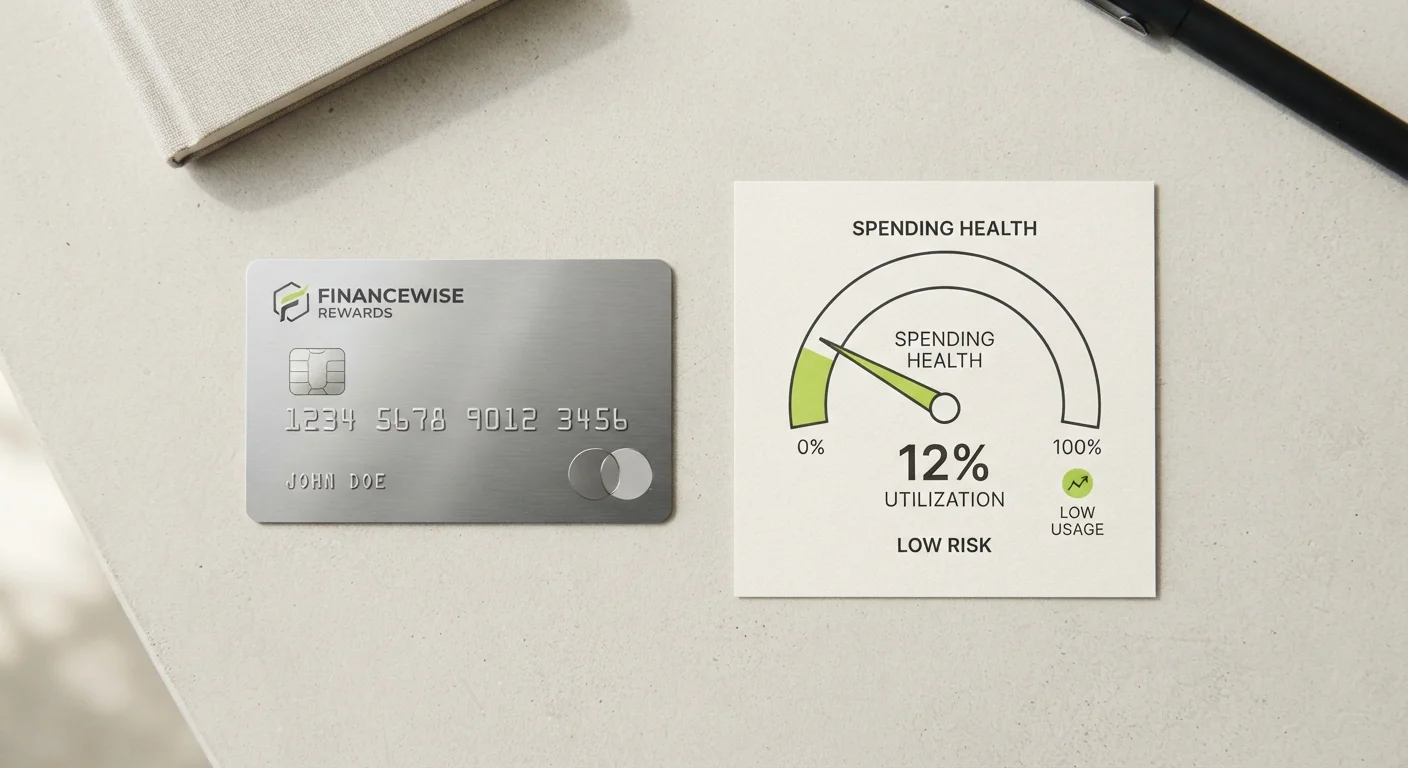
Why Utilization Carries So Much Weight
When people think about their credit score, they often focus on payment history - did you pay on time? That matters enormously. But the second-largest piece of the scoring puzzle is credit utilization, which accounts for roughly 30% of a standard FICO score. Many people are surprised to learn a number that can shift month to month holds that much influence.
The logic behind it is straightforward: lenders want to know whether you're heavily dependent on credit. Someone consistently using 90% of their available credit looks riskier than someone using 15%, even if both pay on time. High utilization can suggest financial strain, making lenders more cautious about extending new credit or favorable terms.
~30%
Share of FICO score tied to utilization
According to FICO's published scoring factor breakdowns, amounts owed - which centers on utilization - is the second-largest scoring category after payment history.
<30%
Commonly cited utilization benchmark
Consumer credit educators broadly suggest keeping utilization below 30% per card and overall, though lower rates are associated with higher scores.
2
Levels at which utilization is measured
Scoring models assess utilization both at the individual card level and across all revolving accounts combined, meaning both dimensions affect your score.
It's worth understanding that utilization only applies to revolving credit - primarily credit cards and lines of credit. Installment loans like mortgages or car loans are not factored into your utilization ratio. So when you're working to manage this number, the focus is squarely on your card balances relative to your card limits.
How the Math Actually Works
The calculation is simple: divide your total revolving balances by your total revolving credit limits, then multiply by 100 to get a percentage. If you owe $1,500 across all your cards and your combined limits total $10,000, your utilization is 15%.
But there's a layer most people miss: scoring models look at this ratio both overall and per card. That means a single maxed-out card can drag your score down even if your aggregate utilization looks fine. If you have four cards and three have zero balances but one is at its $500 limit, that card alone registers at 100% utilization - and scoring models notice.
Watch Your Statement Closing Date
The balance your card issuer reports to the bureaus is typically your statement balance - not what you owe mid-cycle. If you want a lower utilization to show up on your credit report, aim to pay down your balance before your statement closes, not just before the payment due date. These two dates are often weeks apart.
This is also why the timing of your payment matters. Most issuers report your balance to the credit bureaus on or around your statement closing date - not your payment due date. Paying down your balance before the statement closes means a lower balance gets reported, which typically translates to a lower utilization rate on your credit report. For more on reading what's actually on your report, see how to read your credit report.
Common Situations Where Utilization Shifts Unexpectedly
People are often caught off guard when their utilization spikes without spending more. A few common scenarios:
- A lender lowers your credit limit. If your limit drops from $5,000 to $3,000 but your balance stays at $1,500, your utilization jumps from 30% to 50% overnight.
- You close an old card. That card's limit disappears from your total available credit, instantly raising your utilization percentage on any remaining balances. This is a frequently misunderstood consequence - see common credit myths debunked for more on this and similar misconceptions.
- A large purchase hits before your statement closes. Even if you intend to pay it off in full, the reported balance may be high if it posts before your closing date.
The good news: utilization has no memory. Unlike a missed payment, which can stay on your report for years, a high utilization month doesn't linger once the balance is paid down. Your score can respond relatively quickly once reported balances drop.
Practical Ways to Keep Utilization in Check
There's no shortcut that changes the fundamental math - you either carry lower balances, have higher limits, or both. A few approaches worth understanding:
- Pay early or multiple times per month. Making a payment before your statement closing date reduces what gets reported. Some people pay mid-cycle specifically to manage this.
- Request a credit limit increase. If your issuer grants it without a hard inquiry, your limit rises while your balance stays the same - lowering your ratio. This is general information; whether to request one depends on your own situation and the issuer's policies.
- Spread balances across cards rather than concentrating them. Keeping any single card well below its limit helps manage per-card utilization alongside your overall rate.
Managing utilization connects to broader habits around tracking what you owe and when. If you're building structure around your spending, resources on budgeting basics can help you see where credit fits into your overall financial picture. And if you're newer to credit and working on establishing a profile, building credit from scratch covers the foundational concepts.
This article is for general informational and educational purposes only and does not constitute personalized financial or credit advice. Consider speaking with a qualified financial professional about decisions specific to your situation.
Frequently Asked Questions
Most financial guidance suggests keeping utilization below 30% as a reasonable benchmark. People with the highest credit scores often carry even lower utilization - sometimes in the single digits. There is no single magic number, but lower is generally better, all else being equal.
Yes. Utilization is calculated from the balances reported by your card issuers each billing cycle, typically the balance on your statement closing date. Paying down a balance before that date can reduce what gets reported, which may improve your score relatively quickly.
It can, and often negatively. Closing a card removes its credit limit from your total available credit, which raises your utilization rate if you carry any remaining balances. This is one reason financial educators generally caution against closing old accounts without considering the impact.
No. Utilization compares your balances to your credit limits and appears on your credit report. Debt-to-income (DTI) ratio compares your total monthly debt payments to your gross monthly income and is used by lenders when evaluating loan applications - it does not factor into credit scores directly.
A zero balance is generally fine and will not hurt your score on its own. However, if all your cards show zero activity for extended periods, some issuers may close accounts for inactivity, which could reduce your available credit. Light, regular use that you pay off fully is a common approach to avoid this.
The content provided on our blog site traverses numerous categories, offering readers valuable and practical information. Readers can use the editorial team’s research and data to gain more insights into their topics of interest. However, they are requested not to treat the articles as conclusive. The website team cannot be held responsible for differences in data or inaccuracies found across other platforms. Please also note that the site might also miss out on various schemes and offers available that the readers may find more beneficial than the ones we cover.