

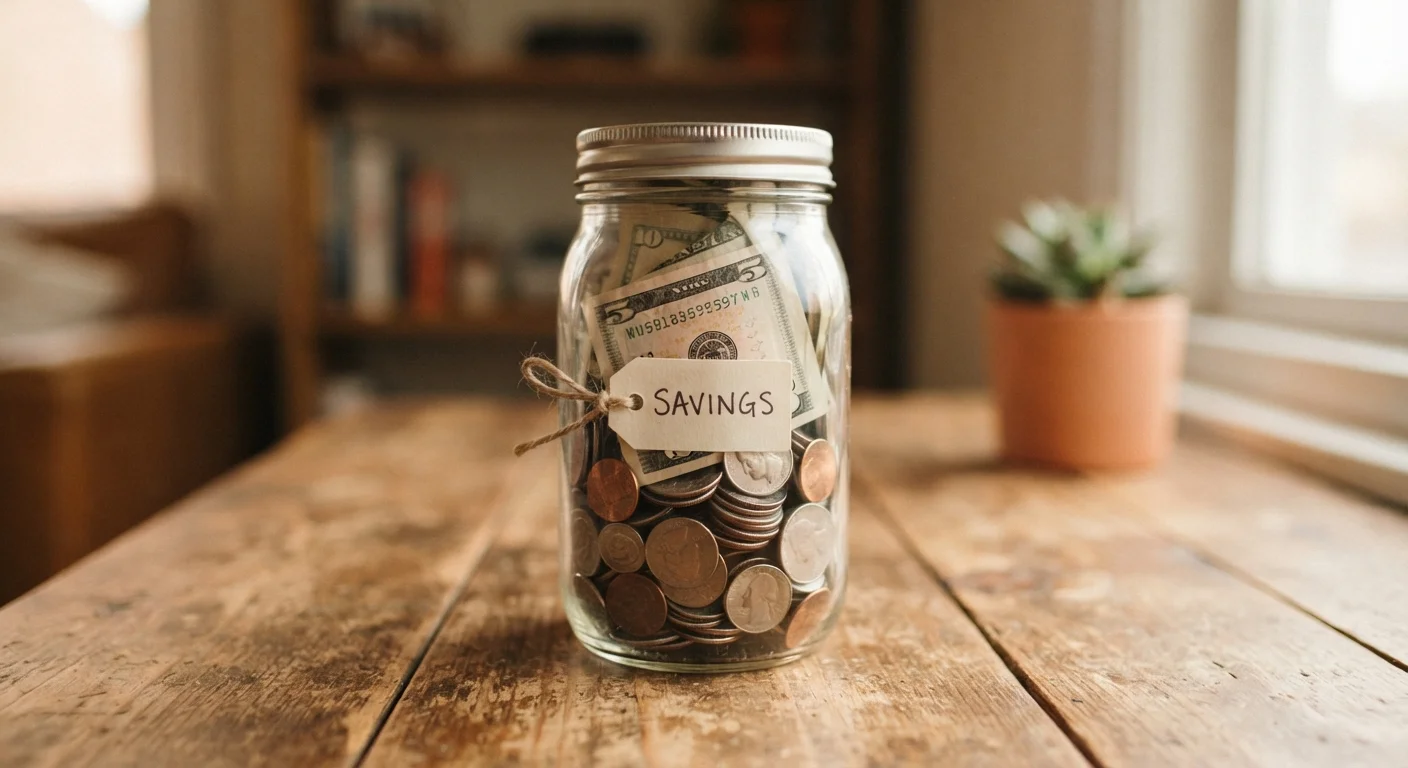
Why Saving Feels Hard (And Why That's Normal)
If saving money feels like a constant struggle, you're not failing - you're dealing with the same friction most Americans face. According to the Federal Reserve's Survey of Household Economics and Decisionmaking, a significant share of U.S. adults say they would struggle to cover an unexpected $400 expense from savings alone. That's not a personal flaw; it reflects how wages, costs, and financial education have all evolved in ways that make saving genuinely difficult.
The good news is that building savings isn't about willpower or math genius. It's mostly about structure - setting up the right habits, accounts, and automatic behaviors so that money gets set aside before you have a chance to spend it. This guide walks you through the core concepts, from your very first savings goal to understanding how different accounts and interest rates work in your favor over time.
FDIC Insurance: What It Covers
The Federal Deposit Insurance Corporation (FDIC) insures deposits up to $250,000 per depositor, per institution, per ownership category at member banks. This applies to checking accounts, savings accounts, money market accounts, and CDs - but not to investment products like stocks, bonds, or mutual funds, even if purchased through a bank.
This article is for general financial education only and is not personalized financial advice. For guidance specific to your situation, consider speaking with a licensed financial professional.
Your First Goal: The Emergency Fund
Before you think about growing money, focus on protecting it. An emergency fund is a pool of cash set aside specifically for unplanned expenses - a car repair, a medical bill, a sudden job loss. Without one, those surprises typically land on a credit card, which can start a cycle of debt that's hard to escape.
Most financial guidance suggests targeting three to six months' worth of essential living expenses. If your rent, utilities, groceries, and minimum debt payments add up to $2,500 a month, a solid emergency fund sits somewhere between $7,500 and $15,000. That range feels large at first, so start smaller: a $500 or $1,000 starter fund gives you a real cushion for minor emergencies while you build toward the full target.
Keep Your Emergency Fund Separate and Liquid
Your emergency fund should be easy to access within one to two business days but not so easy that you dip into it for non-emergencies. Storing it in the same account as your daily spending makes it nearly impossible to leave untouched. A dedicated savings account - ideally at a different institution - strikes the right balance between accessibility and separation.
Keep your emergency fund in a separate, liquid account - not mixed with your everyday checking. The goal is accessibility without temptation. A basic savings account at a different bank than your main checking works well for many people.
How Interest Works - and Why It Matters
Interest is the return your money earns simply by sitting in an account (or, on the flip side, what you pay when you borrow). For savers, understanding two types of interest makes a real difference:
- Simple interest is calculated only on your original deposit. If you deposit $1,000 at 5% simple interest annually, you earn $50 each year.
- Compound interest is calculated on both your original deposit and the interest already earned. Over time, this creates exponential growth - your earnings start earning their own earnings.
~37%
Adults who couldn't cover a $400 emergency from savings
Based on Federal Reserve Survey of Household Economics and Decisionmaking data, reflecting the ongoing savings gap among U.S. households.
3-6 months
Recommended emergency fund coverage
Standard guidance from financial educators and nonprofit counseling organizations for a baseline emergency savings target.
The practical takeaway: the earlier you start saving, even modestly, the more compound interest works in your favor. A person who saves $100 a month starting at age 25 will generally accumulate significantly more than someone who saves $200 a month starting at 45, assuming the same rate of return - time is the key variable, not just the amount.
Choosing the Right Account Type
Not all savings accounts are created equal. Here's a plain-language breakdown of the most common options:
- High-Yield Savings Account (HYSA)
- A standard savings account that pays a higher-than-average interest rate, typically offered by online banks. Good for emergency funds and short-term goals. Federally insured up to $250,000 per depositor at FDIC-member institutions.
- Money Market Account (MMA)
- Similar to a savings account but may offer check-writing or debit access. Often requires a higher minimum balance. Rates vary; compare carefully.
- Certificate of Deposit (CD)
- You deposit a fixed amount for a fixed term (e.g., 6 months, 1 year, 5 years) and earn a set interest rate. Early withdrawal typically incurs a penalty, so CDs work best for money you won't need until the term ends.
- Retirement Accounts (401(k), IRA)
- Tax-advantaged accounts designed for long-term savings. Withdrawals before retirement age generally trigger taxes and penalties. These are separate from your accessible savings and serve a different purpose.
When comparing savings accounts, look at the APY (Annual Percentage Yield), not just the stated interest rate. APY accounts for compounding frequency and gives you a true apples-to-apples comparison.
Many consumers focus on the headline rate and miss that compounding schedules differ across institutions, which meaningfully affects actual earnings over time.
If you're parking money in a CD, consider a 'CD ladder' - spreading funds across CDs with different maturity dates - so you maintain some liquidity without sacrificing all your rate advantage.
A single long-term CD locks up all your funds; a ladder gives you periodic access points while still capturing higher rates on longer-term portions.
Building a Habit That Sticks
The most effective savings strategy is one you'll actually maintain. Research in behavioral economics consistently shows that automating savings - scheduling a transfer the day after each paycheck - dramatically outperforms relying on manual effort or leftover money at month's end.
A few practical ways to build the habit:
- Pay yourself first. Treat your savings transfer like a bill. Set it up automatically so it happens before discretionary spending begins.
- Start with what you can. Even $25 or $50 per paycheck builds the habit and the account. Increase the amount when your income allows.
- Name your goals. Many banks let you label savings sub-accounts ("Emergency Fund," "Car Repair," "Vacation"). Named accounts reduce the temptation to dip in.
- Track progress monthly. A quick look at your balance once a month reinforces momentum without becoming an obsession.
Use a Separate Bank for Your Emergency Fund
Keeping your emergency savings at a different institution than your everyday checking creates a small but effective psychological barrier. The minor inconvenience of transferring money between banks gives you a pause - enough time to ask whether this is truly an emergency. Many online banks make this easy with no minimums and no monthly fees.
Moving Beyond the Basics
Once your emergency fund is in place and saving feels routine, you're ready to think bigger. That's where budgeting frameworks, investment accounts, and longer-term strategies come in. The 50/30/20 rule and other savings strategies can help you allocate income more intentionally once the foundational habits are locked in.
If you haven't yet built a full budget, our Budgeting Basics hub covers how to track spending and create a plan that works with your real income. And if managing debt is part of your picture - as it is for most Americans - it's worth understanding how credit works alongside saving. Our Debt & Credit hub explains credit scores, debt management, and how borrowing decisions affect your financial health. If you're just starting to establish credit, Building Credit From Scratch is a useful companion read.
Saving and growing money is rarely a straight line. Costs rise, emergencies happen, and income fluctuates. The goal isn't perfection - it's building enough structure that progress continues even when life doesn't cooperate.
“The secret to getting ahead is getting started. The secret to getting started is breaking your complex, overwhelming tasks into small manageable tasks, and then starting on the first one.”
— Mark Twain, Author and humorist, widely cited in personal development and financial education contexts
The content provided on our blog site traverses numerous categories, offering readers valuable and practical information. Readers can use the editorial team’s research and data to gain more insights into their topics of interest. However, they are requested not to treat the articles as conclusive. The website team cannot be held responsible for differences in data or inaccuracies found across other platforms. Please also note that the site might also miss out on various schemes and offers available that the readers may find more beneficial than the ones we cover.