

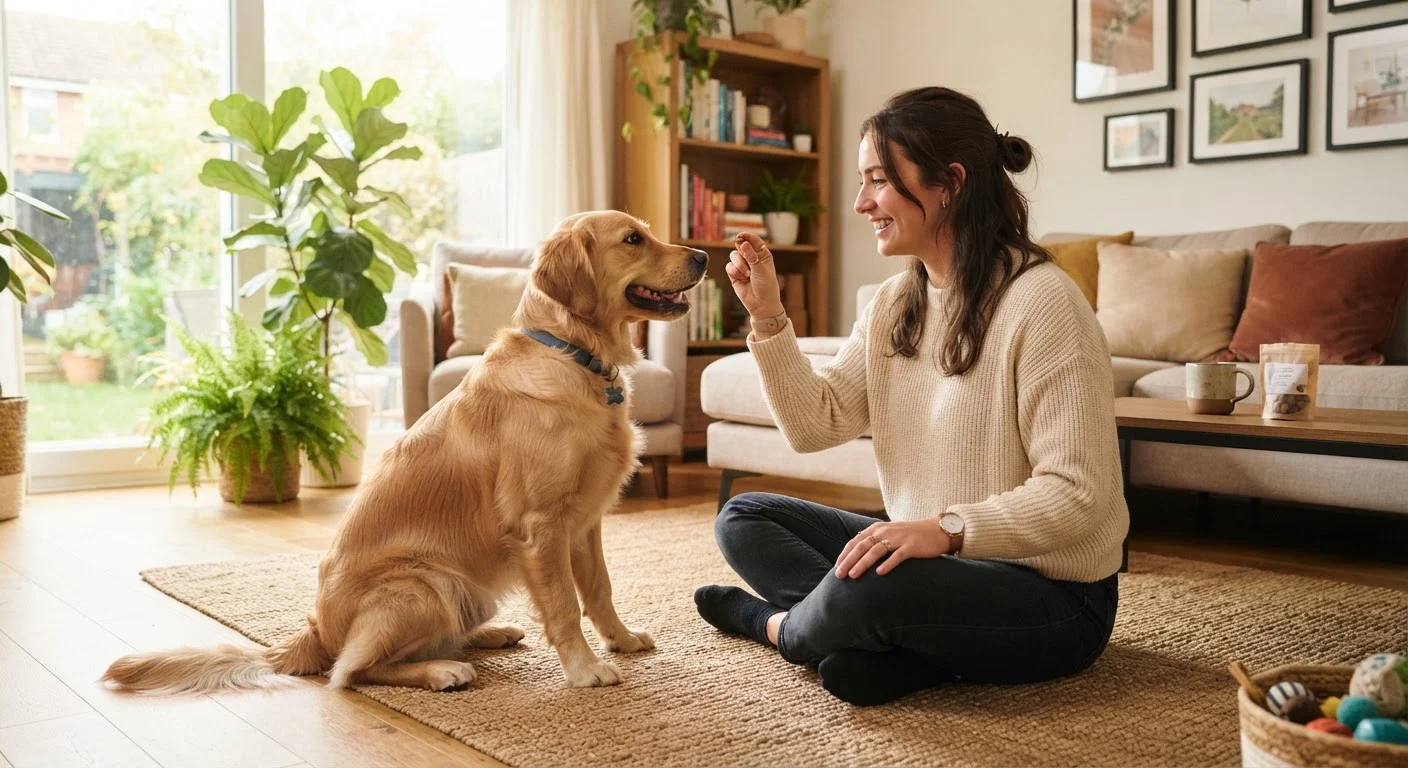
Summary
22 items · 20-40 minutes
Why Readiness Matters Before Training Begins
Most pet owners dive into training with enthusiasm but without a plan - and the first few sessions shape habits that can last for years. Jumping in unprepared often means inconsistent cues, wrong reinforcement timing, and growing frustration on both sides of the leash. A quick readiness audit before you begin can prevent all of that.
This checklist is designed for dogs and cats, though many items apply to birds, small mammals, and other companion animals. Whether you're addressing a new behavior or reinforcing an existing one, use these categories as your starting point. If you're also thinking about your own personal readiness for new habits, our personal readiness checklist covers similar preparation principles from a human health angle.
Health and Physical Readiness
Environment and Space
Tools and Reinforcers
Goals and Expectations
Your Own Readiness
Setting Up Your Environment and Tools
Training doesn't happen in a vacuum. The physical space, the tools you use, and the timing of your sessions all determine how quickly your pet makes progress. Distractions, unclear signals, and inconsistent reinforcers are among the most common reasons training stalls - and they're almost entirely preventable.
High-Value Training Treats
Small, soft, highly palatable treats serve as the primary reinforcer that motivates your pet to repeat desired behaviors.
Treat Pouch or Bait Bag
Keeps treats accessible at your hip so you can reward within the critical one-to-two-second reinforcement window.
Clicker or Verbal Marker
A precise sound or word that signals to your pet the exact moment a correct behavior occurred, bridging the gap before the treat arrives.
Standard 6-Foot Leash
Provides control and proximity during on-leash skill building without restricting your pet's movement more than necessary.
Training Log or Journal
Tracking which behaviors you worked on, session length, and your pet's response helps identify patterns and guide the next session.
Keep your training space as distraction-free as possible, especially in the early stages. A short session in a calm hallway beats a long session in a busy backyard. Once your pet is responding reliably, you can gradually introduce more challenging environments - this process, called generalization, helps behaviors stick across different contexts.
Avoid Training Through Fear or Pain
Techniques that use physical discomfort, startling, or intimidation to suppress behaviors may produce short-term compliance but often increase anxiety and erode trust over time. Evidence-based guidance from veterinary behavior organizations consistently supports positive reinforcement as the safest and most durable approach. If a trainer you're considering relies heavily on punishment-based methods, consult your veterinarian or a certified professional before proceeding.
If you've recently brought a new pet home, your environment checklist may need to start even earlier. Our new pet home checklist covers vet scheduling, safe spaces, and hazard-proofing that should happen before training even begins.
Managing Expectations for Lasting Results
Training is a relationship skill, not a quick fix. Even under ideal conditions, most pets need dozens of repetitions across multiple sessions before a new behavior becomes reliable. Owners who expect quick compliance often inadvertently punish normal learning curves - and that sets progress back further.
Consistency Across All Household Members Is Non-Negotiable
One of the most common reasons training fails is that different people in the household use different cues, allow different behaviors, or apply reinforcement inconsistently. Your pet cannot generalize rules that aren't stable. Before you begin any training program, sit down with everyone who interacts with your pet and agree on the exact words, gestures, and rules you'll all follow. Mixed signals don't just slow progress - they create confusion that can manifest as anxiety or resistant behavior.
Behavioral science consistently supports the value of short, positive sessions over marathon drilling. Most dogs learn best in 5-to-10-minute windows; cats often prefer even shorter bursts. Build training into your daily routine at the same time each day, when your pet is alert but not overstimulated. Consistency in timing helps your pet anticipate and engage with training rather than resist it.
If you're working with a younger animal, keep developmental stages in mind - puppies and kittens have shorter attention spans and reach behavioral milestones at different rates. If you're unsure whether a behavior issue has an underlying health or anxiety component, consult a veterinarian or a certified animal behaviorist rather than pushing through with training alone.
The content provided on our blog site traverses numerous categories, offering readers valuable and practical information. Readers can use the editorial team’s research and data to gain more insights into their topics of interest. However, they are requested not to treat the articles as conclusive. The website team cannot be held responsible for differences in data or inaccuracies found across other platforms. Please also note that the site might also miss out on various schemes and offers available that the readers may find more beneficial than the ones we cover.