

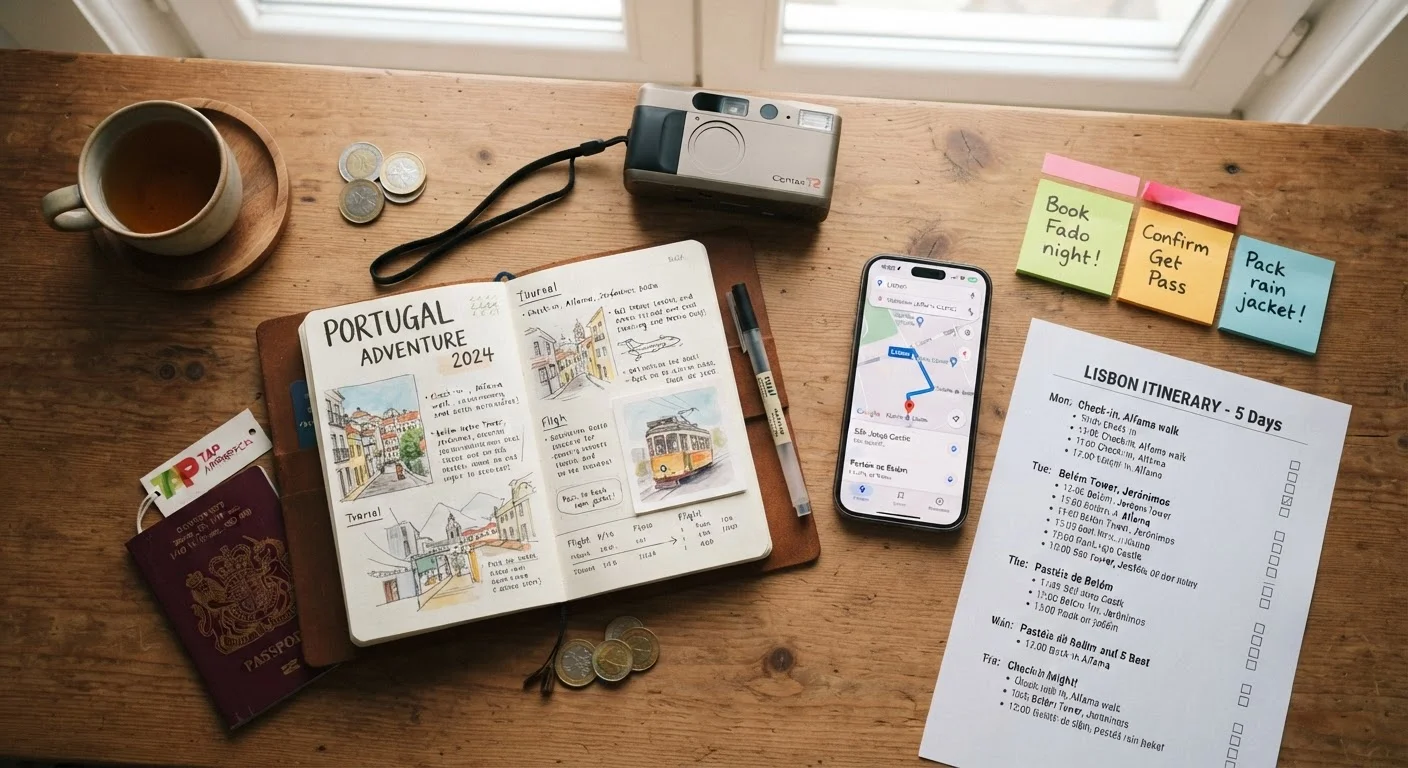
Why Organization Makes or Breaks a Trip
Even a well-researched trip can unravel fast when confirmations are scattered across a dozen emails, packing happens at midnight, or group members disagree on what was decided. Organization isn't about being rigid - it's about reducing the cognitive load so you can actually enjoy where you are.
Experienced travelers aren't necessarily more seasoned than you; they've simply built repeatable systems. The techniques below are practical, low-cost, and adaptable whether you're planning a solo weekend road trip or a two-week international journey. For a broader look at how all these pieces fit together, see our guide to planning a well-structured trip.
One Central Document for Everything
Experienced travelers consolidate all trip information - flights, hotel addresses, reservation numbers, activity notes, emergency contacts - into a single shared document. A cloud-based spreadsheet or document works well because it's accessible from any device and can be shared instantly with travel companions.
The key habit is updating it continuously during planning rather than trying to compile everything at the end. Include a tab or section for each day, and paste confirmation numbers directly into the relevant row. This eliminates inbox-hunting when you're standing in a check-in line.
One shared document eliminates inbox-hunting when you're standing in a check-in line.
Offline Maps Downloaded Before You Leave
Relying on live data abroad - especially in areas with spotty coverage or expensive roaming - is a common rookie mistake. Downloading offline maps for your destination before departure costs nothing and takes a few minutes. Many navigation apps allow you to save entire regions for use without a connection.
Pair this with screenshots of key addresses, transit routes, and attraction hours stored in your phone's photos. When connectivity fails, you still have everything you need to navigate confidently.
Downloading offline maps before departure costs nothing and takes only minutes.
A Simple Travel Budget Tracker
Overspending is one of the most common trip regrets, and it's almost always a result of not tracking in real time. Experienced travelers don't need elaborate finance apps - a basic spreadsheet with columns for category, planned amount, and actual spend works reliably.
Update it each evening during the trip rather than trying to reconstruct spending afterward. This keeps you aware of where you are without turning every purchase into a stressful calculation. For general budgeting habits that translate well to trip planning, our tracking spending guide covers the trade-offs between paper, spreadsheet, and app approaches.
Update your budget tracker each evening rather than trying to reconstruct spending afterward.
A Reusable Pre-Trip Packing Checklist
Frequent travelers maintain a master packing list they refine after every trip - adding what they forgot, removing what they never used. A checklist removes the mental burden of remembering everything from scratch each time and dramatically reduces last-minute scrambling.
Organize it by category (documents, toiletries, clothing, electronics, medications) rather than by bag. This structure makes it easy to verify completeness even when you're packing in a hurry. Our article on packing strategies that save time and reduce stress explains approaches like capsule wardrobes and the one-bag method in more detail.
A master packing list refined after every trip removes the mental burden of starting from scratch.
Built-In Buffer Time Between Activities
Back-to-back itineraries look impressive on paper but routinely collapse under real-world conditions - delayed trains, longer-than-expected meals, or simply wanting to linger somewhere. Experienced travelers deliberately schedule gaps of 30-60 minutes between commitments.
This buffer absorbs the unexpected without derailing the rest of the day. It also removes the anxious rush that makes travel feel more exhausting than enjoyable. Our piece on why itinerary padding matters goes deeper on why this habit pays off consistently.
Deliberate schedule gaps absorb the unexpected without derailing the rest of your day.
Folder-Based Digital Document Storage
Rather than searching email when you need a boarding pass or hotel confirmation, organized travelers maintain a dedicated trip folder - either in cloud storage or a document management app - where every confirmation, booking, and scanned document lives.
Create subfolders by trip phase: pre-departure, accommodation, transport, activities. Before leaving, save PDF copies of all confirmations so they're accessible without internet. If you're weighing how much to pre-book versus leaving room for spontaneity, our itinerary-first vs. book-as-you-go comparison can help you calibrate how many documents you'll actually need on hand.
A dedicated trip folder with PDF confirmations keeps every document accessible without internet.
Start Building Your System Before the Next Trip
None of these techniques require expensive software or hours of setup. The most effective travelers pick two or three methods that match their habits and use them consistently. Even adopting a single shared document or a pre-trip checklist can meaningfully reduce day-of stress.
Start Small and Build Consistency
You don't need to implement every technique at once. Pick one - a shared document or a packing checklist - and use it consistently for your next two trips. Once it feels automatic, layer in another habit. Systems built gradually tend to stick far better than overhauling your entire process before a single trip.
If you're traveling with others, coordinating early is the single biggest factor in smoother logistics - our article on group trip planning without the chaos walks through practical ways to manage decisions and differing expectations. And if you want to pair your organizational habits with smarter spending, explore travel on a budget for ways to stretch your trip further.
The content provided on our blog site traverses numerous categories, offering readers valuable and practical information. Readers can use the editorial team’s research and data to gain more insights into their topics of interest. However, they are requested not to treat the articles as conclusive. The website team cannot be held responsible for differences in data or inaccuracies found across other platforms. Please also note that the site might also miss out on various schemes and offers available that the readers may find more beneficial than the ones we cover.