

Summary
22 items · 30-60 minutes
Why a Pre-Trip Check Matters More Than You Think
Most road trip breakdowns and close calls are preventable. According to AAA, tens of millions of American drivers are stranded each year due to issues like dead batteries, flat tires, and overheating engines - problems that a systematic pre-departure inspection can often catch before they become roadside emergencies.
This checklist is built for drivers heading out on any trip longer than two hours. It covers four core areas: vehicle mechanical condition, route and navigation prep, driver readiness, and emergency supplies. Work through it the evening before departure or at least an hour before you leave - not five minutes before you back out of the driveway.
For year-round vehicle upkeep that supports this kind of readiness, see the seasonal car maintenance checklist to keep your vehicle in shape between trips.
Vehicle Mechanical Check
Route and Navigation Preparation
Driver and Passenger Readiness
Emergency Supplies and Documents
Tools and Resources to Have on Hand
You don't need a mechanic's toolkit to complete this checklist, but a few basic items make it faster and more thorough.
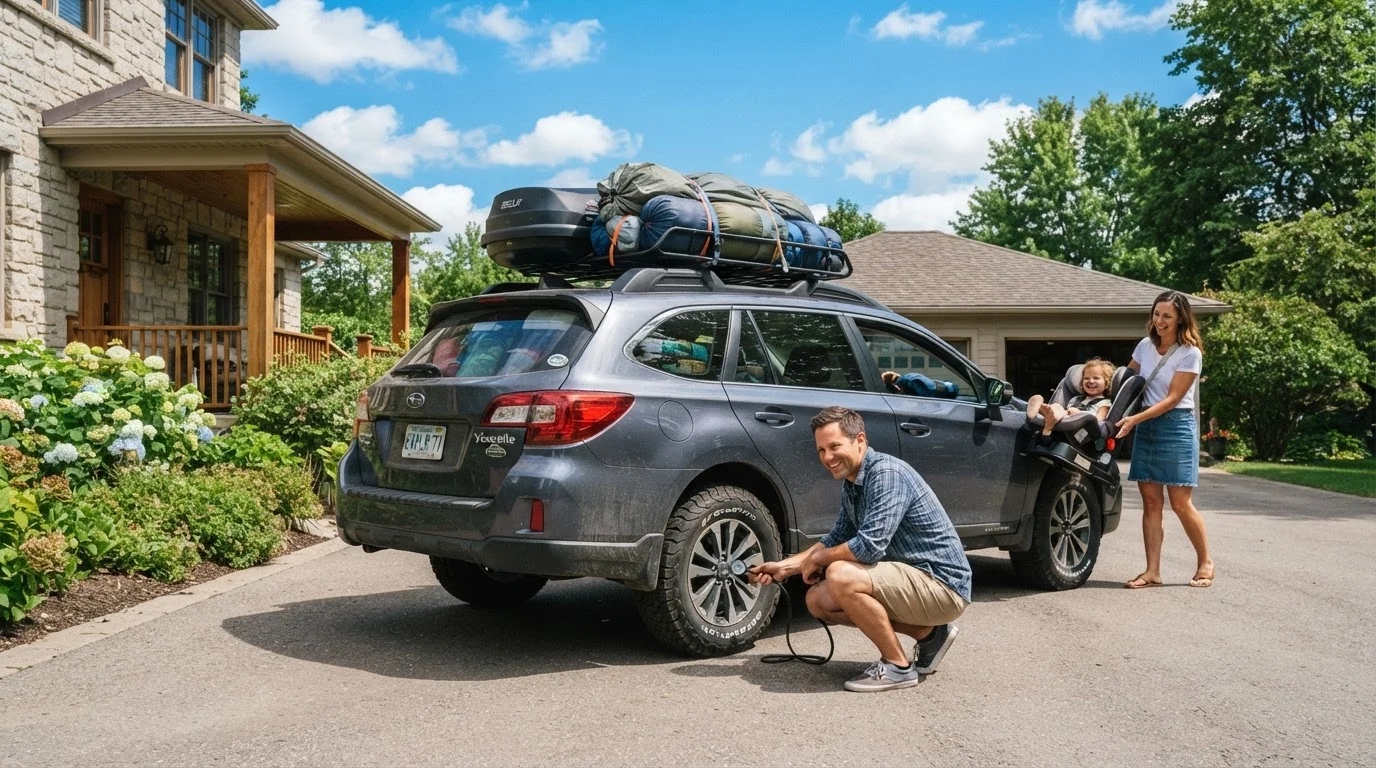
Tire Pressure Gauge
Accurately measures PSI in each tire so you can inflate to the manufacturer's specification before highway driving.
Portable Jump Starter
Allows you to restart a dead battery without needing another vehicle, especially useful in remote areas.
Basic First-Aid Kit
Provides supplies for minor injuries sustained during the trip or in a roadside emergency.
Offline Map App
Stores your route locally so navigation works without a cell signal in rural or mountainous areas.
Portable Battery Bank
Keeps phones charged for communication and navigation if the vehicle's power system is unavailable.
Reflective Warning Triangle or Road Flares
Alerts approaching traffic if your vehicle is stopped on or near a roadway due to a breakdown.
Emergency Preparedness and Final Verification
Never Skip the Tire and Brake Checks
Tire failures and brake problems are among the leading mechanical causes of serious highway crashes in the United States. Even if your vehicle feels fine during short local drives, high-speed sustained travel places significantly greater stress on both systems. Always check tire pressure with a gauge - visual inspection alone will not reveal underinflation. If you notice brake pedal softness, grinding, or pulling to one side, have the system inspected by a qualified mechanic before departing.
Once you've worked through the mechanical and driver-readiness items, take five minutes to confirm your administrative details. Make sure your insurance card (physical or digital), vehicle registration, and any roadside assistance membership cards are accessible in the car - not buried in a drawer at home.
If you're travelling with passengers, share your planned route and expected arrival time with a contact who isn't joining you. This simple step gives someone reliable information to act on if you don't check in as expected.
Planning the full scope of your trip beyond the drive? The complete trip-planning checklist walks through logistics from initial idea to departure day.
Drowsy Driving Is a Serious Safety Risk
The National Highway Traffic Safety Administration (NHTSA) recognizes drowsy driving as a significant factor in thousands of crashes each year. Caffeine and energy drinks provide only temporary alertness and are not substitutes for sleep. If you feel genuinely sleepy while driving, pull over safely and rest - even a 20-minute nap in a well-lit rest area is a more effective countermeasure than continuing to push through fatigue.
The content provided on our blog site traverses numerous categories, offering readers valuable and practical information. Readers can use the editorial team’s research and data to gain more insights into their topics of interest. However, they are requested not to treat the articles as conclusive. The website team cannot be held responsible for differences in data or inaccuracies found across other platforms. Please also note that the site might also miss out on various schemes and offers available that the readers may find more beneficial than the ones we cover.