

Summary
24 items · 30-90 minutes per seasonal check
Why Seasonal Maintenance Is Different From Routine Service
Oil changes and filter swaps follow mileage intervals. Seasonal maintenance follows the calendar - and for good reason. Temperature extremes stress different vehicle systems in predictable, preventable ways. A battery that holds a charge fine in July may struggle to turn over an engine when January temperatures drop below freezing. Tires inflated correctly in the fall lose pressure as winter cold sets in. Wiper blades that work perfectly in dry conditions become smeared and ineffective once freezing rain hits.
Treating your car like your home - with structured, season-by-season attention - is one of the most reliable ways to stay ahead of costly repairs. If you already use a seasonal approach for your property, the mindset translates directly to your vehicle. See our end-to-end roadworthiness guide for the full picture of what long-term vehicle care involves.
This checklist is organized by season, but the underlying principle is consistent: inspect before conditions change, not after problems appear.
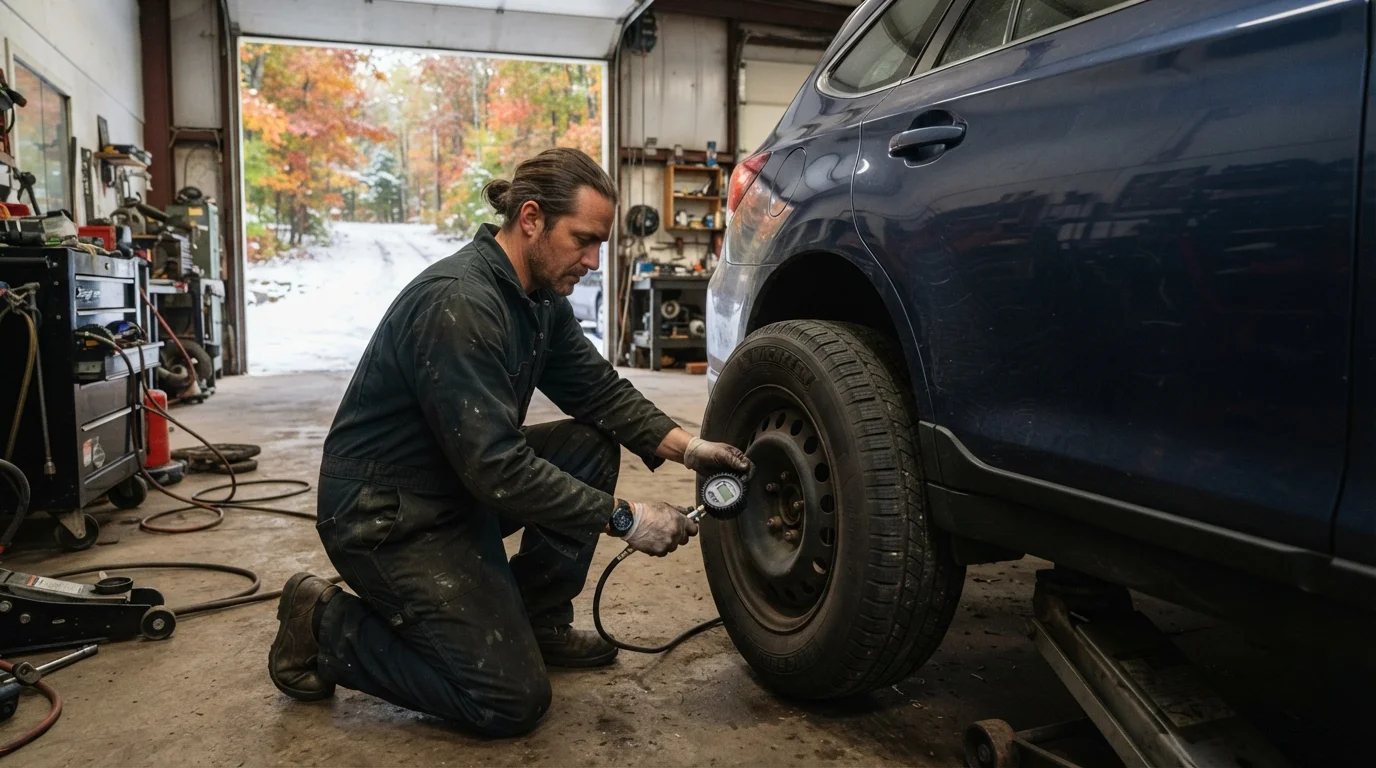
Tire Pressure Gauge
Accurately measures tire inflation so you can adjust to the door-placard specification each season.
Tread Depth Gauge or Penny
Checks whether tire tread is above the 2/32-inch safety minimum - a penny inserted upside-down reveals unsafe wear.
Battery Load Tester
Tests battery capacity under simulated load to identify a failing battery before it leaves you stranded.
Coolant / Antifreeze Tester
Measures the freeze and boil-over protection level of your coolant mixture.
Flashlight or Headlamp
Illuminates the engine bay, undercarriage, and tight spaces during visual inspections.
Fluid Top-Off Kit (oil, coolant, washer fluid)
Keeps common fluids on hand so small shortfalls can be corrected immediately during inspection.
Winter Emergency Kit
Includes ice scraper, jumper cables, blanket, and traction aid for use if you become stranded in cold weather.
How to Use This Checklist
Work through each seasonal group when conditions in your region are about to shift - typically 4-6 weeks before the season peaks. If you're newer to vehicle ownership, our guide on building foundational maintenance habits is a strong starting point before diving into seasonal specifics.
Items marked must are non-negotiable safety checks. Should items are strongly recommended and help prevent avoidable wear. Nice-to-have items optimize performance and comfort but can be scheduled when time allows.
Always cross-reference your owner's manual for manufacturer-specific fluid specs, tire ratings, and service intervals. Generic timelines are useful guides, but your vehicle's documentation is the authoritative source.
Your Owner's Manual Overrides Generic Timelines
Manufacturer-specified intervals for oil changes, coolant flushes, transmission service, and timing belt replacement vary significantly between makes and models. The seasonal timelines in this checklist are general guidelines based on common patterns - they are not a substitute for the service schedule in your vehicle's owner's manual. Always defer to the manufacturer's specifications for your specific year, make, and model.
After completing each seasonal pass, log what you inspected, what you replaced, and any concerns flagged for follow-up. A consistent service record protects resale value and helps mechanics diagnose future issues faster. Learn more about why maintenance records matter more than most drivers realize.
Spring (February-April)
Summer (May-August)
Fall (September-November)
Winter (December-February)
When to Call a Professional
Most seasonal checks on this list are visual inspections or straightforward fluid top-offs that an attentive driver can handle independently. However, several items - brake system inspection, suspension and alignment checks, timing belt assessment, and any work involving the emissions or exhaust system - should be performed or confirmed by a qualified mechanic.
Don't Skip Professional Brake and Suspension Checks
Brakes, steering, and suspension directly determine your ability to control the vehicle in an emergency. Visual inspection can reveal obvious wear, but internal brake components and suspension joints require hands-on evaluation by a qualified mechanic. If you notice pulling, vibration, grinding noise, or unusual handling at any point in the year, stop driving and have the vehicle inspected before continuing.
If you do take your vehicle in for service, review our pre-approval checklist for the service lane before authorizing any work. It helps you ask the right questions and avoid unnecessary upsells. For a broader look at safe driving habits that complement good vehicle condition, explore the Driving & Safety hub.
Seasonal maintenance is most powerful when it becomes a habit rather than a reaction. Schedule a reminder at the start of each quarter and treat these checks as a fixed appointment - not something you get around to only after a warning light appears.
The content provided on our blog site traverses numerous categories, offering readers valuable and practical information. Readers can use the editorial team’s research and data to gain more insights into their topics of interest. However, they are requested not to treat the articles as conclusive. The website team cannot be held responsible for differences in data or inaccuracies found across other platforms. Please also note that the site might also miss out on various schemes and offers available that the readers may find more beneficial than the ones we cover.