

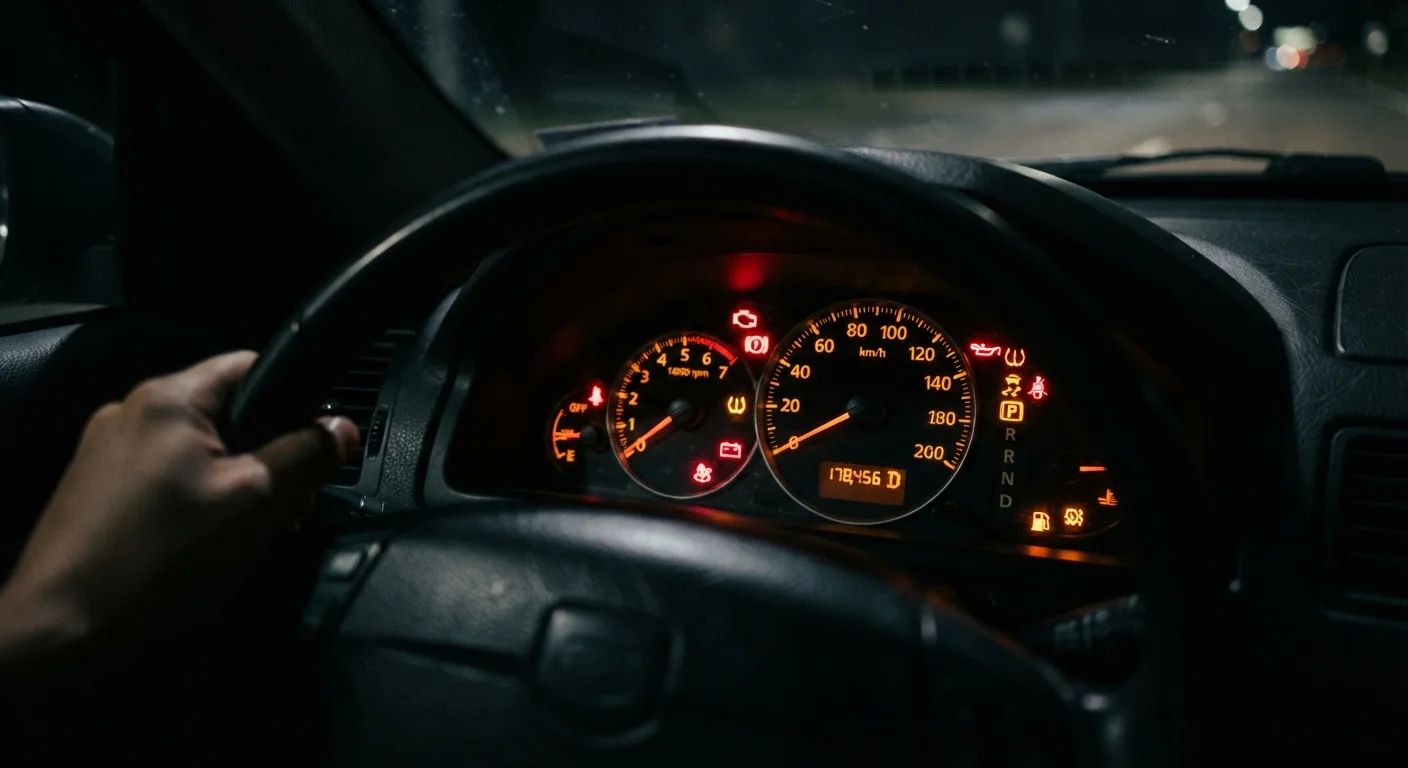
Understanding the Color Code System
Before diving into individual symbols, it helps to understand the universal language dashboards already speak: color. Most modern vehicles follow a consistent color hierarchy that tells you how urgently a situation demands your attention.
- Red: Stop and act now. Red lights signal conditions that can cause immediate damage to your vehicle or pose a safety risk - low oil pressure, overheating, or a brake system failure.
- Amber or Orange: Caution required. These lights indicate a system that needs attention but typically isn't an emergency. Examples include your check engine light (when steady) or low tire pressure.
- Yellow: Monitor the situation. Similar to amber, yellow lights suggest a developing issue worth tracking and scheduling for service.
- Blue or Green: Informational only. These confirm that a feature is active - headlights, high beams, cruise control - and require no action.
This color framework is the foundation. Once you understand it, you're already better positioned to respond correctly to any light that appears.
| Number of OBD-II fault codes | Thousands (standardized since 1996) (Society of Automotive Engineers (SAE) standardization) |
| Recommended tire pressure range | 32-35 PSI (varies by vehicle) (Check driver's door jamb sticker for your specific vehicle) |
| TPMS federally required since | 2008 (all new US passenger vehicles) (TREAD Act, U.S. Federal Regulation) |
| Oil pressure warning response time | Pull over within minutes (Engine damage can occur within a short drive at low pressure) |
| Check engine light steady vs. flashing | Steady = caution; Flashing = urgent (Standard OBD-II diagnostic protocol) |
The Lights That Demand Immediate Attention
Certain dashboard warnings should prompt you to safely pull over as soon as possible. Continuing to drive can lead to costly mechanical failure or create a safety hazard.
Oil Pressure Warning
This red light - often shaped like an oil can - means your engine isn't receiving adequate oil pressure. Driving with low oil pressure can cause catastrophic engine damage within minutes. Pull over safely, turn off the engine, and check your oil level before proceeding. If the level is normal and the light persists, have the vehicle towed to a mechanic.
Engine Temperature Warning
A red thermometer symbol indicates your engine is overheating. Turn off the air conditioning, and if the temperature gauge doesn't stabilize quickly, pull over and let the engine cool. Do not open the radiator cap while the engine is hot. This is a job for a qualified mechanic to diagnose.
Battery Warning
A red battery icon doesn't necessarily mean your battery is dead - it often signals that your charging system has failed. Your vehicle may be running entirely off battery power, which will eventually leave you stranded. Reduce electrical load (AC, radio) and head to a service center promptly.
Brake System Warning
If this red light appears while driving (not just at startup or when the parking brake is engaged), it can indicate low brake fluid or a more serious hydraulic failure. For safety guidance on brake wear and related warning signs, see recognizing brake wear early. Test brakes gently and pull over if stopping power feels reduced.
Your Owner's Manual Is Your Best Reference
Dashboard warning symbols are not fully universal - some manufacturers use proprietary icons that differ from common depictions. Your vehicle's owner's manual contains an illustrated guide to every light specific to your make, model, and trim level. If you don't have a physical copy, most manufacturers make digital versions available through their official websites. Keeping this reference accessible can save you time and unnecessary worry.
Amber Lights: Schedule Service, Don't Panic
These indicators flag issues that are real but typically allow you time to arrange a proper service appointment.
Check Engine Light (CEL)
Perhaps the most misunderstood symbol on any dashboard, the check engine light covers hundreds of possible fault codes. A steady light usually means the issue is present but not immediately critical. A flashing CEL is more serious and often indicates an active misfire that could damage your catalytic converter. For a detailed breakdown of how to interpret the difference, see how to tell whether the check engine light is an emergency.
Tire Pressure Monitoring System (TPMS)
An exclamation point inside a U-shape (representing a tire cross-section) signals that one or more tires are significantly underinflated. Check tire pressure at a gas station as soon as possible. Driving on underinflated tires increases blowout risk and reduces fuel efficiency.
Traction Control / Stability Control
A car with wavy lines beneath it means your traction or stability control system has activated. If it flashes briefly, it's working as intended on a slippery surface. If it stays on, the system may be deactivated or malfunctioning.
OBD-II
On-Board Diagnostics II - a standardized system built into all U.S. passenger vehicles since 1996 that monitors engine and emissions systems, storing fault codes when a problem is detected.
TPMS
Tire Pressure Monitoring System - a federal safety requirement on all new U.S. vehicles since 2008 that alerts drivers when one or more tires are significantly underinflated.
Fault Code (DTC)
Diagnostic Trouble Code - an alphanumeric code stored by the OBD-II system when a sensor or component falls outside normal operating parameters. A mechanic or OBD-II scanner can retrieve and interpret these codes.
Charging System
The combination of the alternator, battery, and related wiring that keeps your vehicle's electrical systems powered while the engine is running. Failure typically triggers the battery warning light.
Catalytic Converter
An emissions control device in your exhaust system that converts harmful combustion byproducts into less harmful gases. A misfiring engine can overheat and damage this component, which is why a flashing CEL is treated as urgent.
How to Respond When a Light Comes On
When a warning light illuminates, resist the instinct to either ignore it or panic. Here's a practical approach:
- Note the color. Red means act now; amber means schedule service; green or blue is informational.
- Note any symptoms. Does the car feel different? Are there noises, smells, or changes in handling? Symptoms paired with a warning light give a mechanic far more to work with.
- Consult your owner's manual. Your vehicle's manual has a dedicated section explaining every warning light specific to your make and model. It's the most accurate reference available.
- Use an OBD-II reader if appropriate. For amber lights like the CEL, an inexpensive OBD-II scanner (available at auto parts stores) can pull the specific fault code, giving you more information before visiting a shop.
- Don't delay on red lights. When in doubt, having a qualified mechanic inspect the vehicle is always the safest course of action.
Staying informed about your car's systems connects directly to broader safe driving habits and supports a consistent car maintenance routine that keeps your vehicle reliable for the long haul.
The content provided on our blog site traverses numerous categories, offering readers valuable and practical information. Readers can use the editorial team’s research and data to gain more insights into their topics of interest. However, they are requested not to treat the articles as conclusive. The website team cannot be held responsible for differences in data or inaccuracies found across other platforms. Please also note that the site might also miss out on various schemes and offers available that the readers may find more beneficial than the ones we cover.