

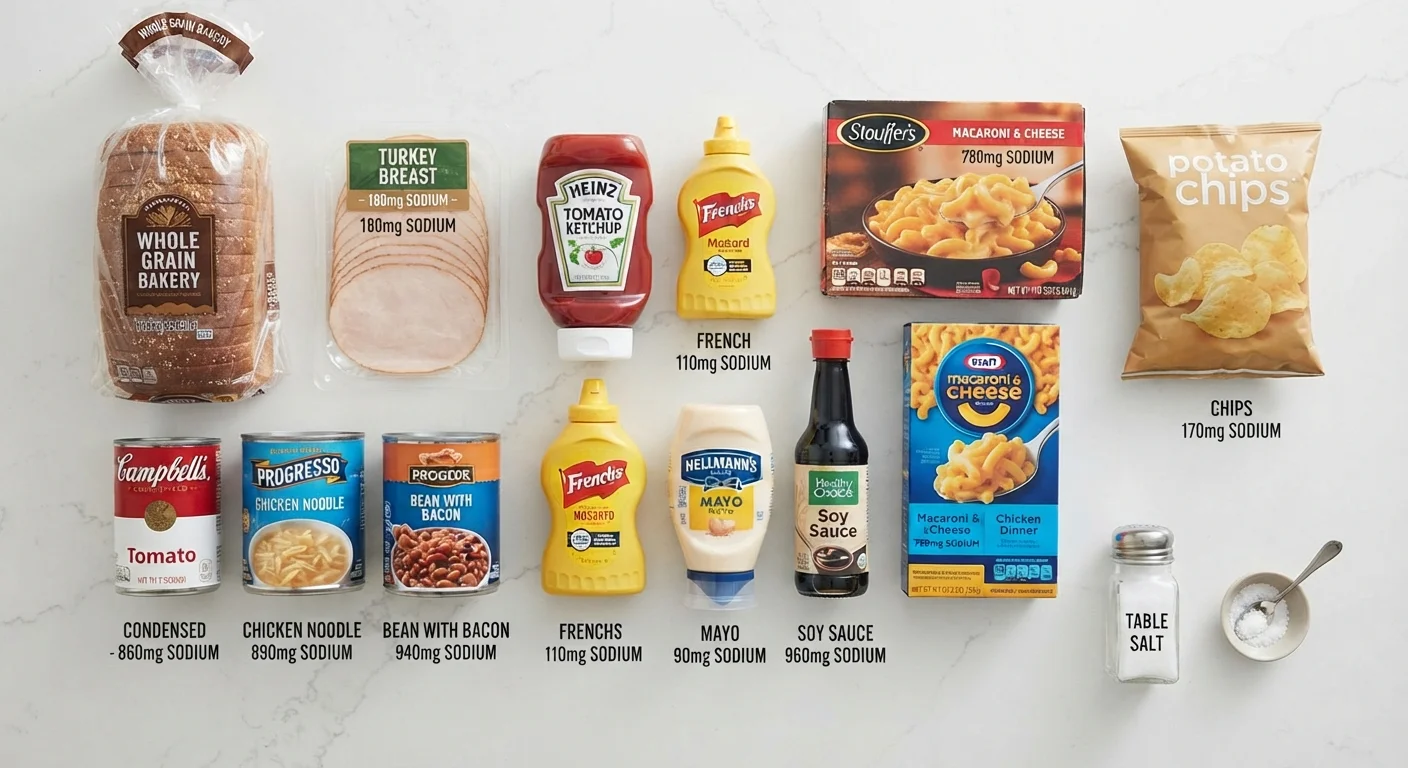
The Salt Shaker Is Not the Problem
Ask most people where their sodium comes from, and they'll point to the shaker on the dinner table. In reality, adding salt at the table accounts for only a small fraction of daily sodium intake. According to the Centers for Disease Control and Prevention (CDC), roughly 70% of the sodium Americans consume comes from packaged, processed, and restaurant foods - food that already has sodium built in before it ever reaches your kitchen.
This matters because it shifts the focus away from willpower at mealtime and toward informed choices at the grocery store and restaurant. You can leave the salt shaker completely unused and still consume far more sodium than recommended if your diet relies heavily on canned goods, deli meats, fast food, or frozen meals.
~3,400 mg
Average daily sodium intake for American adults
The CDC estimates this figure, compared to the Dietary Guidelines recommendation of less than 2,300 mg per day.
~70%
Share of sodium from packaged and restaurant foods
According to the CDC, the majority of dietary sodium comes from processed and prepared foods, not home cooking or table salt.
10
Food categories accounting for most dietary sodium
The CDC identifies ten food categories - including bread, cold cuts, pizza, and soups - as the dominant sources of sodium in the American diet.
The Foods That Actually Add Up
Sodium in the American diet doesn't come predominantly from obviously salty foods like chips and pretzels. The biggest contributors are often everyday staples that people don't think of as sodium-heavy. The CDC has identified bread and rolls as one of the top sources - not because a single slice is very high in sodium, but because most people eat multiple servings throughout the day.
Other major contributors include:
- Cured and deli meats - cold cuts, sausage, bacon, and hot dogs are cured with salt as a preservative
- Soups - a single can of condensed soup can contain more than 800 mg of sodium per serving, and cans often contain two servings
- Pizza - combines high-sodium crust, tomato sauce, and processed cheese
- Savory snacks - crackers and chips contribute more sodium per ounce than many people expect
- Condiments and sauces - soy sauce, ketchup, salad dressings, and hot sauce can add hundreds of milligrams per tablespoon
Notably, some foods with significant sodium content don't taste particularly salty. Bread, cottage cheese, and breakfast cereals are common examples. Taste alone is not a reliable guide to sodium content.
Reading Labels With Sodium in Mind
The Nutrition Facts label is your most practical tool. For sodium specifically, look at three things:
- The serving size - sodium is listed per serving, and packages often contain two or more servings. If you eat the whole package, multiply accordingly.
- Milligrams of sodium - the raw number is more useful than the % Daily Value alone, since the DV is based on 2,300 mg per day and individual needs vary.
- Label claims - 'low sodium' means 140 mg or less per serving under FDA rules; 'reduced sodium' means at least 25% less than the original product, which may still be substantial.
For a broader understanding of how to decode what's on packaged food, see our guide to the Nutrition Facts label - it covers serving sizes, % Daily Values, and what the numbers actually mean for everyday eating.
Quick Label Check Before You Buy
When comparing two similar products, look for options with 140 mg of sodium or less per serving, which meets the FDA's 'low sodium' threshold. If that isn't available, choose the option with the lower milligram count per serving. Over dozens of weekly purchases, these small comparisons add up to a meaningful reduction.
Practical Ways to Reduce Sodium Without Overhauling Your Diet
Lowering sodium intake doesn't require an extreme overhaul or flavor sacrifice. Small, consistent shifts tend to be far more sustainable than dramatic dietary changes. Some evidence-based starting points:
- Choose lower-sodium versions of canned goods where available, or rinse canned beans and vegetables under water before cooking - this can reduce sodium by roughly 40% or more.
- Cook more from whole ingredients when possible; it gives you direct control over sodium levels without counting every milligram.
- Build flavor with sodium-free tools - citrus juice, fresh or dried herbs, vinegar, garlic, and pepper all add complexity without salt.
- Compare products before you buy - sodium content in similar products (such as different brands of chicken broth or canned tomatoes) can vary by several hundred milligrams per serving.
It's also worth knowing that sodium doesn't exist in a vacuum. Dietary patterns matter, and fiber intake is another area where small, consistent improvements can support overall health. A diet higher in whole, minimally processed foods often addresses both concerns simultaneously.
If you have questions about a specific sodium target based on your health history - particularly if you have high blood pressure, kidney disease, or heart disease - a healthcare provider or registered dietitian is the right resource.
This article is for general informational purposes only and is not a substitute for personalized medical or nutritional advice. Consult a qualified healthcare professional for guidance specific to your health situation.
Frequently Asked Questions
Sodium plays a necessary role in fluid balance and nerve function, but consistently high intake is associated with elevated blood pressure, which is a risk factor for heart disease and stroke. Most Americans consume well above the levels major health organizations consider appropriate. Individual sodium needs vary, so consult a healthcare provider about your personal situation.
The U.S. Dietary Guidelines for Americans recommend that most adults consume less than 2,300 milligrams of sodium per day. However, average actual intake is considerably higher - often estimated around 3,400 mg per day. These are population-level guidelines; a doctor or registered dietitian can advise on your individual needs.
According to the CDC, the top sources are bread and rolls, pizza, sandwiches, cold cuts and cured meats, soups, burritos and tacos, savory snacks, chicken dishes, cheese, and eggs and omelets. These ten categories collectively account for a large share of total dietary sodium intake.
Rinsing canned beans and vegetables under running water for about 30 seconds can meaningfully reduce their sodium content - some research suggests reductions of roughly 40% or more. However, this doesn't apply to canned soups or other liquid-based products where sodium is dissolved throughout.
Under FDA regulations, 'low sodium' means the product contains 140 mg or less of sodium per serving. 'Reduced sodium' means at least 25% less sodium than the regular version of that product - but the starting sodium level may still be high. Comparing the actual milligrams per serving is always more informative than relying on label claims.
Yes. Herbs, citrus zest, vinegar, garlic, and spices can enhance flavor without adding sodium. Cooking more meals from whole ingredients gives you direct control over how much sodium ends up in a dish, and taste preferences for less salty food tend to adjust over time as intake decreases.
The content provided on our blog site traverses numerous categories, offering readers valuable and practical information. Readers can use the editorial team’s research and data to gain more insights into their topics of interest. However, they are requested not to treat the articles as conclusive. The website team cannot be held responsible for differences in data or inaccuracies found across other platforms. Please also note that the site might also miss out on various schemes and offers available that the readers may find more beneficial than the ones we cover.