

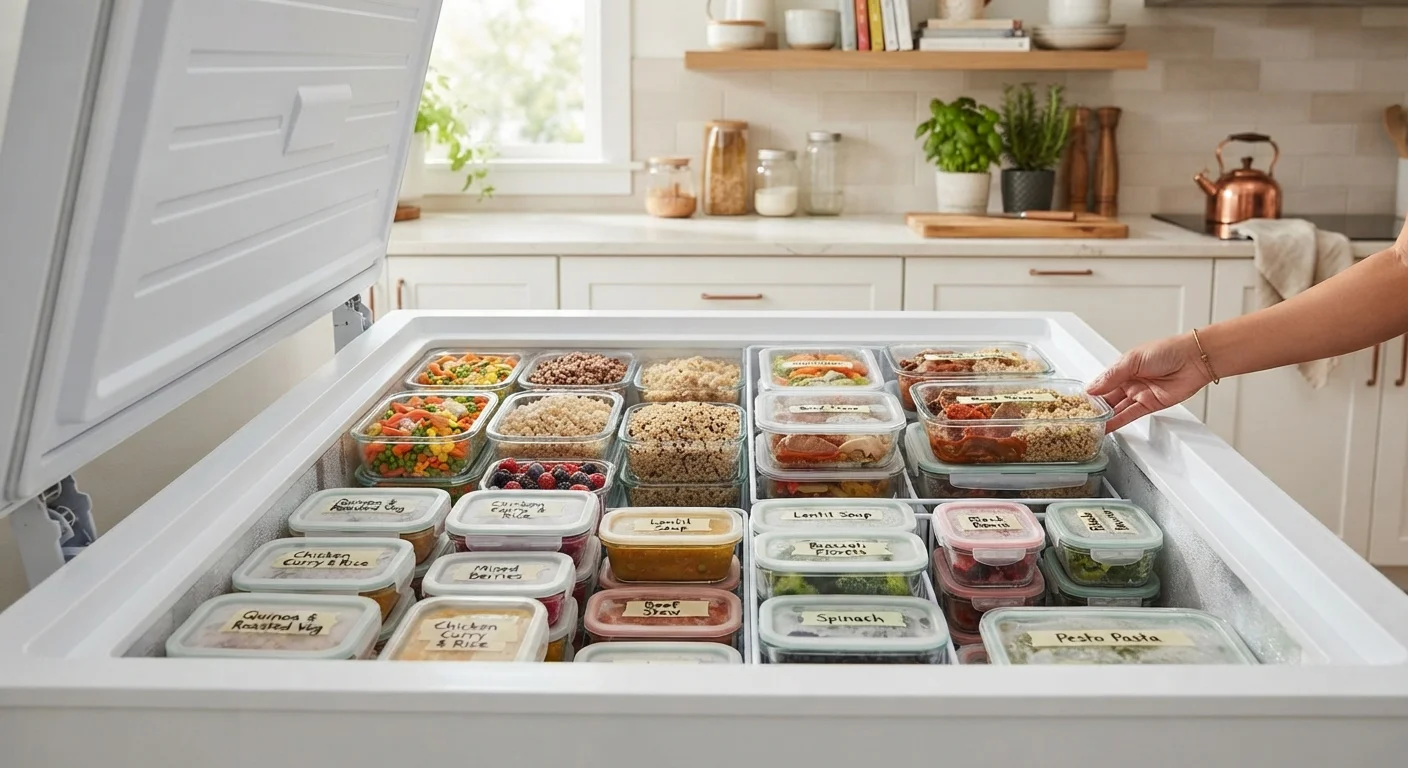
Why the Freezer Deserves More Credit
For many households, the freezer is an afterthought - a place where things get stored and forgotten. That's a missed opportunity. Used well, the freezer is one of the most practical tools for eating nutritiously without requiring daily trips to the grocery store or hours of cooking every evening.
The core insight is this: nutritious eating is largely a logistics problem. When healthy food is accessible and ready to use, people eat it. When it requires extra effort, they don't. The freezer directly solves that logistics problem. If you're new to thinking systematically about what you eat, the foundational nutrition concepts guide is a useful starting point before building your freezer strategy.
Frozen Doesn't Mean Processed
Plain frozen vegetables, fruits, and unseasoned proteins are minimally processed foods - they're simply preserved by temperature. The 'processed' concern applies to frozen meals loaded with sodium, added sugars, or refined ingredients. Reading the ingredient list on any frozen product takes seconds and tells you most of what you need to know.
What to Keep in a Nutritionally Stocked Freezer
A well-stocked freezer doesn't require a long shopping list - it requires the right categories. Aim to keep at least one item from each of the following groups available at all times:
- Vegetables: Leafy greens, peas, edamame, broccoli, corn, and mixed stir-fry blends work well frozen.
- Fruits: Berries, mango chunks, and peeled bananas are freezer staples for smoothies and quick desserts.
- Whole grains: Cooked and portioned brown rice, quinoa, or farro.
- Legumes: Cooked lentils, chickpeas, or black beans in half-cup servings.
- Proteins: Portioned poultry, fish fillets, or plant-based protein patties.
This framework gives you the building blocks for balanced meals at any time of week. For more guidance on building a cart that supports this kind of pantry, see grocery shopping with nutrition in mind.
Up to 80%
Nutrients retained in flash-frozen vegetables
Research published in the Journal of Food Composition and Analysis found frozen vegetables retained the majority of key vitamins compared to fresh produce stored for several days.
40%
Of all food in the U.S. is wasted
According to the USDA Economic Research Service, food loss and waste account for roughly 30-40% of the U.S. food supply - much of which occurs at the household level.
Best Practices for Freezer-First Nutrition
Knowing what to freeze is only part of the picture. How you freeze, organize, and use those items determines whether the strategy actually works in your daily life.
Stock frozen vegetables as your nutritional baseline, not a fallback.
Vegetables are frozen shortly after harvest, locking in vitamins and minerals that can degrade during extended transit and shelf time for fresh produce. Treating frozen vegetables as a primary pantry category - not a last resort - ensures you always have nutrient-dense options on hand regardless of your grocery schedule.
Batch-cook grains and legumes, then freeze in single-serving portions.
Whole grains like brown rice, farro, and quinoa, along with legumes like lentils and black beans, provide fiber, plant protein, and key micronutrients - but their long cook times are a common barrier during busy weeks. Preparing large batches and freezing them in portioned containers eliminates that friction entirely.
Freeze proteins intentionally rather than reactively.
Most people freeze meat only when it's about to expire, which leads to a disorganized freezer full of unlabeled packages. Proactively portioning and labeling proteins at purchase - and knowing what you intend to use them for - reduces waste and makes meal assembly more deliberate and less stressful.
Use your freezer to preserve produce at peak nutrition.
Berries, bananas, and herbs can be frozen when ripe to preserve both nutrition and flavor. This also reduces food waste from produce that would otherwise go soft before you can use it, extending the value of your grocery budget.
Organize your freezer so nutritious foods are immediately visible.
Convenience drives food choices more than most people realize. If the most nutritious items in your freezer are buried under other things, you'll reach for them less often. A visible, accessible layout removes that friction and reinforces healthier defaults without requiring willpower.
Label Everything Before It Goes In
Use masking tape and a permanent marker to label every container with contents and the date frozen. Most cooked foods maintain quality for two to three months in the freezer. This small habit prevents the mystery-container problem and ensures you rotate items before quality declines.
Quick Actions to Start Today
You don't need to overhaul your kitchen to start using your freezer more intentionally. A few small habits, applied consistently, create meaningful change in how easy nutritious eating feels day to day.
If budget is a factor - and for most households it is - pairing smart freezer use with broader cost-conscious strategies makes nutrient-dense eating genuinely sustainable. The article on eating well on a budget covers the principles that hold up over time. And once your freezer system is in place, connecting it to a simple weekly meal plan makes the whole approach click - see meal planning for beginners for a realistic starting point.
This article is for general informational and educational purposes only and is not a substitute for personalized nutrition or medical advice. Consult a qualified healthcare or nutrition professional for guidance tailored to your individual health needs.
The content provided on our blog site traverses numerous categories, offering readers valuable and practical information. Readers can use the editorial team’s research and data to gain more insights into their topics of interest. However, they are requested not to treat the articles as conclusive. The website team cannot be held responsible for differences in data or inaccuracies found across other platforms. Please also note that the site might also miss out on various schemes and offers available that the readers may find more beneficial than the ones we cover.