

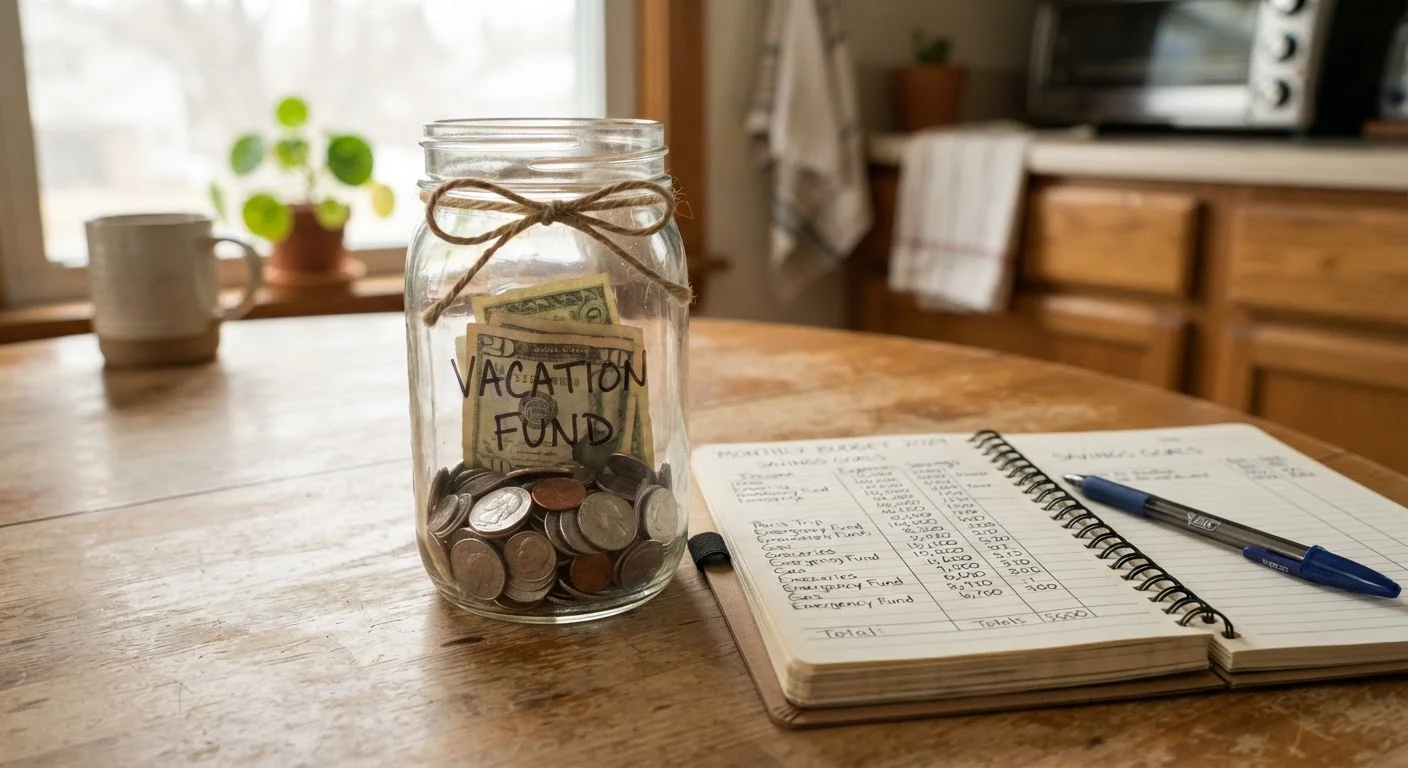
Why an Emergency Fund Is the First Budget Priority
Most budgeting advice focuses on categories - housing, food, transportation, entertainment. But the single most stabilizing financial move most households can make isn't about any of those categories. It's about having a cushion when things go sideways.
Without an emergency fund, one unexpected expense - a $400 car repair, an ER visit, a sudden reduction in hours - can cascade into credit card debt, missed payments, and a months-long recovery. With even a modest emergency fund in place, the same expense is an inconvenience rather than a crisis.
The emergency fund isn't a reward for getting your budget right. It's the foundation that makes budgeting sustainable. For a broader look at how emergency savings fits into an overall financial picture, see this end-to-end savings guide.
This Is General Information, Not Financial Advice
This article provides general financial education for informational purposes only. It is not personalized financial advice. Your situation is unique - consider speaking with a licensed financial professional before making significant changes to your saving or budgeting strategy.
What You'll Need Before You Start
Building an emergency fund doesn't require financial expertise, but it does require a clear picture of where you stand. Gather the following before working through the steps below.
What you will need
Recent Pay Stubs or Bank Statements
Used to identify your actual take-home income and establish a realistic savings baseline.
Monthly Expense List
Helps pinpoint where money currently goes so you can find room for an emergency fund contribution.
Separate Savings Account
Keeps emergency funds physically separate from everyday spending money to reduce accidental use.
Budgeting Spreadsheet or App
Tracks income, expenses, and savings progress in one place to keep the plan visible.
Once you have these in hand, the process becomes straightforward. You're not creating something complicated - you're carving out a protected slice of money that already flows through your household.
How to Build It Step by Step
Treat Your Emergency Fund Like a Bill
Assign your emergency fund contribution a specific line in your budget the same way you would rent or a utility payment. When it's labeled and scheduled, it's far less likely to get quietly skipped. Automating the transfer on payday removes the decision entirely.
Set a Realistic First Target
Before you save a single dollar, decide what you're aiming for. A common starting goal is $500 to $1,000 - enough to cover a car repair, a medical copay, or a busted appliance without putting it on a credit card. Once you reach that, the longer-term target most financial educators recommend is three to six months of essential living expenses, but that number can feel paralyzing when you're starting from zero.
Write down one concrete, achievable number. That's your Phase 1 goal.
Map Your Current Income and Expenses
Pull up your last two or three bank statements and note what actually came in and what actually went out. Categorize expenses as either fixed (same amount each month - rent, car payment, insurance) or variable (groceries, dining, subscriptions, entertainment).
You're looking for two things: your true monthly take-home, and where variable spending is higher than expected. Most people find at least one or two categories - often food delivery, subscriptions, or impulse buys - where spending is quietly elevated.
Identify a Savings Amount You Can Sustain
Look at your variable expenses and identify a realistic reduction. You don't need to eliminate anything enjoyable - just trim. Cutting $30 from dining out and $20 from subscriptions you barely use frees up $50 per month. That's $600 over a year, which clears many starter emergency fund targets entirely.
Pick a contribution amount that's small enough that you won't quit and large enough to move the needle. That sweet spot is different for everyone, but even $25 per paycheck is a legitimate starting point.
Open a Dedicated Savings Account
Your emergency fund should live in its own account, separate from your checking account. This separation serves two purposes: it removes the temptation to dip into it for non-emergencies, and it makes the balance visible and trackable.
Look for an account with no monthly maintenance fees. Many federally insured institutions offer basic savings accounts with no minimums. The goal here is separation and accessibility - not high returns.
Automate the Transfer
Set up an automatic transfer from your checking account to your emergency fund savings account on the same day you get paid - or the day after. Even a small scheduled transfer that happens automatically is more reliable than manually moving money when you remember to do it.
Most banks and credit unions let you schedule recurring transfers for free through online banking. Set it, label it clearly, and leave it alone.
Define What Counts as an Emergency
Before you need the fund, decide what it's for. A true emergency is an unexpected, necessary expense - a job loss, a medical bill, a car repair that affects your ability to work. A sale on concert tickets or a vacation opportunity is not an emergency.
Writing down two or three scenarios that would qualify helps you hold the boundary when temptation hits. Your emergency fund protects your financial stability; guard it accordingly.
Once your fund hits its first milestone, don't stop - adjust your contribution upward if your income allows, and continue building toward three to six months of essentials. For a complementary approach to saving for planned future expenses, the sinking fund method pairs well with your emergency fund strategy.
Common Obstacles and How to Handle Them
"I genuinely have nothing left over." If your budget is truly stretched, focus first on finding even $10-$15 per paycheck. That still builds a fund over time and - critically - it builds the habit. As circumstances shift (a raise, a paid-off debt, a reduced expense), redirect that freed cash to your emergency fund immediately before lifestyle spending absorbs it.
Don't Let 'Not Enough' Stop You From Starting
Many people delay building an emergency fund because they feel they can't save a meaningful amount yet. Waiting until conditions feel perfect often means never starting. Even $10 per paycheck establishes the habit and begins building a cushion.
"I keep raiding my fund for non-emergencies." This is usually a sign that your main budget is missing a category. Many non-emergency "emergencies" - holiday gifts, annual subscriptions, car registration - are actually predictable. A sinking fund handles those planned irregular expenses so your emergency fund stays reserved for genuine surprises.
"My income is irregular." If your paycheck varies month to month, set your automatic transfer as a percentage of each deposit rather than a fixed dollar amount. Even 3-5% of each paycheck moved automatically keeps the habit consistent regardless of income swings. For more strategies on stretching variable income, smarter spending habits can help reduce pressure on tight months.
This article is for general informational and educational purposes only and does not constitute personalized financial advice. Consult a licensed financial professional for guidance specific to your situation.
The content provided on our blog site traverses numerous categories, offering readers valuable and practical information. Readers can use the editorial team’s research and data to gain more insights into their topics of interest. However, they are requested not to treat the articles as conclusive. The website team cannot be held responsible for differences in data or inaccuracies found across other platforms. Please also note that the site might also miss out on various schemes and offers available that the readers may find more beneficial than the ones we cover.