

Why Feeding Mistakes Are So Easy to Miss
Most feeding errors aren't dramatic. There's no single bad meal that derails a pet's health - it's the accumulation of small, well-meaning habits that quietly shift a pet's weight, digestive balance, or nutrient status over months and years. That's what makes them genuinely difficult to catch.
Pet food marketing adds another layer of confusion. Labels use terms like "complete and balanced," "natural," and "premium" in ways that don't always correspond to nutritional superiority. For a deeper look at how to decode what's actually in the bag, see our guide on reading the ingredient list like a nutritionist. Understanding those labels is the first step toward making better daily decisions.
The mistakes below are the ones veterinary professionals see most often - not because pet owners are careless, but because the guidance available is genuinely confusing.
Small Errors Compound Into Real Health Consequences
Gradual weight gain, nutrient deficiencies, and chronic digestive stress rarely appear overnight. By the time a pet shows obvious symptoms, the underlying feeding pattern may have been in place for months or years. Regular weigh-ins and annual vet checkups that include a nutritional conversation are your best early-warning system.
The Most Common Feeding Errors - and How to Correct Them
These five mistakes span portion control, meal timing, food transitions, and life-stage awareness. Each one is correctable once you know what to look for.
Treating the package feeding guide as a precise daily target.
Why it happens: Feeding guides are printed for the average pet at an assumed activity level, making them feel authoritative. Most owners follow them without adjusting for their specific pet's size, metabolism, or energy output.
Ignoring the caloric contribution of toppers, treats, and table scraps.
Why it happens: Each individual addition seems small and harmless in isolation, so owners rarely account for them as part of daily intake. Over weeks, these extras can add hundreds of untracked calories.
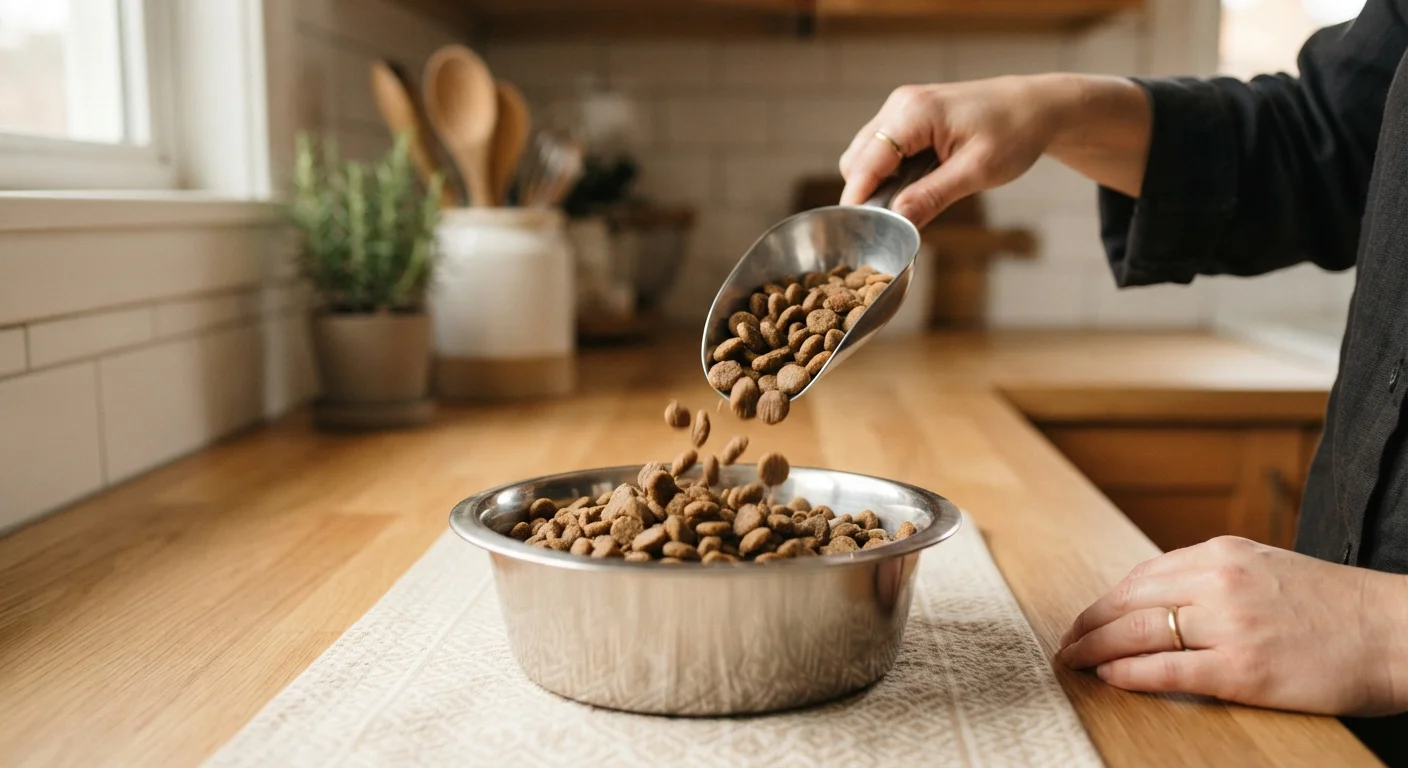
Free-feeding dry kibble without monitoring consumption.
Why it happens: Leaving food out all day feels convenient and reassuring, giving owners confidence their pet won't go hungry. It's especially common in multi-pet households.
Continuing an adult maintenance diet through senior years without reassessment.
Why it happens: If a pet appears healthy and the food hasn't caused obvious problems, owners naturally stick with what works. The metabolic and physical changes of aging happen gradually and are easy to miss.
Switching foods abruptly when a pet refuses a meal or a new option seems better.
Why it happens: When a pet turns its nose up at dinner or a new food looks more appealing, owners often swap immediately with good intentions. The digestive consequences aren't always immediate, making the connection easy to miss.
If overfeeding and weight creep are already a concern, our companion piece on healthy weight and portion habits walks through the practical strategies that support a healthy body condition long term.
Don't Self-Diagnose Nutritional Gaps
If you suspect your pet has a deficiency or needs a therapeutic diet, resist the urge to add supplements without veterinary guidance. Over-supplementing certain nutrients - particularly fat-soluble vitamins like A and D - can cause toxicity over time. Always consult your veterinarian before making significant changes to your pet's diet.
Feeding Across Life Stages: When to Reassess
One of the most overlooked dimensions of pet feeding is that a diet appropriate for one life stage can become inadequate - or even harmful - at another. Puppies and kittens have dramatically different protein, fat, and calcium requirements than adult animals. Senior pets often need fewer calories but more joint and cognitive support.
59%
Pet obesity prevalence in the U.S.
According to the Association for Pet Obesity Prevention, an estimated 59% of cats and 55% of dogs in the U.S. were classified as overweight or obese in recent annual surveys.
10% rule
Maximum treat contribution to daily calories
Veterinary nutritionists broadly recommend that treats, toppers, and extras should not exceed 10% of a pet's total daily caloric intake to avoid unintended weight gain.
Many owners recognize the puppy-to-adult transition but miss the adult-to-senior shift entirely. Breed size matters here too: large-breed dogs typically reach senior status earlier than small breeds. Our full guide on feeding your pet at every life stage breaks down what changes and when to make the switch.
It's also worth knowing that some feeding habits that feel nurturing - sharing food, adding homemade meals without nutritional balancing - can introduce subtle but cumulative problems. Our piece on well-intentioned habits that can quietly harm your pet covers several of these in detail.
This article is for general informational purposes only and does not constitute veterinary or medical advice. Consult a licensed veterinarian for guidance specific to your pet's health and nutritional needs.
The content provided on our blog site traverses numerous categories, offering readers valuable and practical information. Readers can use the editorial team’s research and data to gain more insights into their topics of interest. However, they are requested not to treat the articles as conclusive. The website team cannot be held responsible for differences in data or inaccuracies found across other platforms. Please also note that the site might also miss out on various schemes and offers available that the readers may find more beneficial than the ones we cover.