

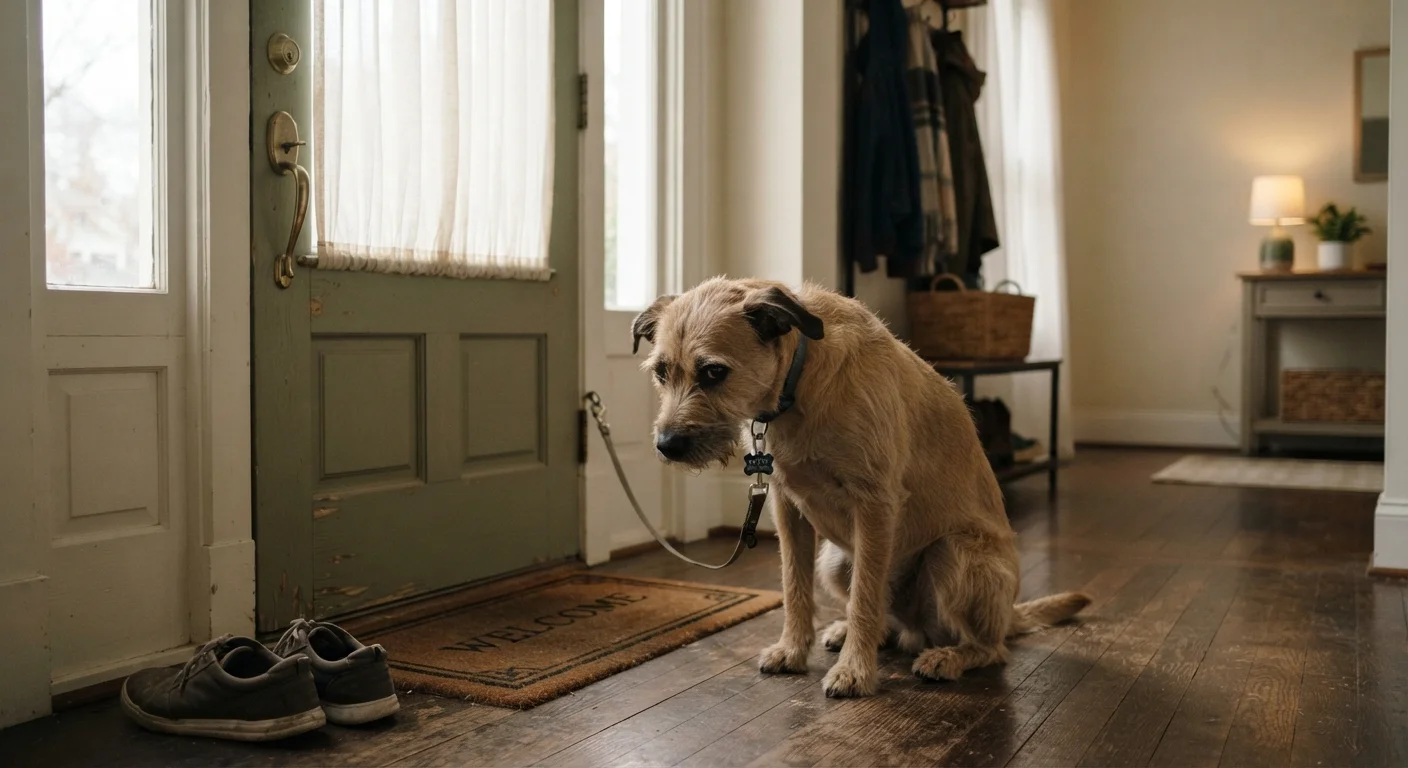
Why Separation Anxiety Is So Often Misunderstood
When a dog chews through a door frame, howls for hours, or urinates indoors only while their owner is away, the instinct for many people is to reach for words like "spoiled," "manipulative," or "spiteful." These interpretations feel intuitive - but they're fundamentally wrong, and acting on them makes the problem worse.
Dogs do not have the cognitive architecture to plan revenge or act out of spite. What looks like retaliation is almost always an emotional response to genuine distress. Separation anxiety is driven by fear - specifically, fear of being without the person or people a dog has bonded to most closely. The behavior is a symptom, not a character flaw.
This misreading is common enough that it delays effective intervention in a large proportion of cases. Owners try solutions aimed at boredom - more toys, longer walks - or punishment, neither of which addresses the actual mechanism behind the behavior. Understanding what separation anxiety actually is changes the entire approach.
Separation Anxiety Is Not the Dog's Fault
Dogs develop separation anxiety for many reasons - genetics, early socialization history, prior rehoming, or significant schedule disruptions. It is not a product of an owner being "too soft" or a dog being "too needy." Framing it as a character flaw delays treatment and adds unnecessary guilt to both ends of the leash.
What Separation Anxiety Actually Looks Like
The behavioral signals of separation anxiety tend to cluster around departures and the period immediately after. Common signs include:
- Excessive vocalization (howling, barking, whining) that begins when you leave or prepare to leave
- Destructive behavior focused near exits - doors, windows, or wherever an owner was last seen
- House soiling that occurs only in the owner's absence, in a dog that is otherwise reliably trained
- Pacing, panting, drooling, or restlessness before or during alone time
- Shadowing - following the owner from room to room and becoming distressed at even minor separations
Importantly, these behaviors tend to peak in the first 30 to 60 minutes after departure, not gradually over several hours as boredom-related behavior might. Video monitoring can be a revealing tool: owners who watch footage of their dog often see a level of distress they hadn't anticipated.
Understanding your dog's body language during these moments matters. Our guide to dog body language covers the stress signals - flattened ears, tucked tails, excessive yawning - that often appear before full-blown anxiety takes hold.
~14%
Dogs estimated to have separation-related disorders
Research published in veterinary behavioral journals estimates that separation-related disorders affect a meaningful proportion of the domestic dog population, though figures vary by study methodology.
First 30 min
When most anxiety behavior peaks after departure
Behavioral studies consistently show that distress in dogs with separation anxiety is most intense within the first half-hour after an owner leaves, distinguishing it from boredom-related behavior.
The Difference Between Anxiety, Boredom, and Incomplete Training
Not every dog who misbehaves alone has separation anxiety. True separation-related distress is defined by its emotional quality - fear - and its specific connection to the absence of an attachment figure. Boredom, by contrast, is an energy and stimulation problem. A bored dog gets into the trash or shreds a pillow. An anxious dog trembles by the front door.
Incomplete or inconsistent training is a third variable. A dog that hasn't learned reliable house manners may soil or chew for reasons unrelated to emotional distress. The distinction matters because the interventions are entirely different.
Some dogs also exhibit what researchers call "simulated separation anxiety" - attention-seeking behavior that resembles anxiety but lacks the physiological stress component. These cases can often be resolved with consistent training and boundary-setting, while true separation anxiety typically requires more structured behavioral intervention.
Owners of consistently well-behaved pets tend to establish clear, predictable routines early - which helps prevent both anxiety and training gaps from developing.
Why Punishment Backfires - and What to Do Instead
Punishing a dog for anxiety-driven behavior is not only ineffective - it actively worsens the condition. A dog that is already in a fear state and then faces punishment upon an owner's return experiences heightened unpredictability and threat. This increases overall anxiety levels and can erode the bond that is central to effective behavioral work.
Keep Departures and Returns Low-Key
One of the simplest adjustments owners can make is to neutralize the emotional weight of leaving and returning. Long, drawn-out goodbyes and excited reunions signal to your dog that departures are significant events - reinforcing the idea that something worth worrying about is happening. A calm, matter-of-fact approach helps your dog learn that your comings and goings are ordinary and manageable.
Effective approaches focus on systematically reducing the fear response itself. This typically involves:
- Desensitization: Gradually exposing the dog to departure cues (picking up keys, putting on shoes) without actually leaving, so those cues lose their predictive power.
- Counterconditioning: Pairing brief departures with highly positive experiences so that being alone begins to predict good things rather than threat.
- Graduated absences: Starting with very short departures the dog can tolerate without distress and slowly building duration over time.
Severe cases benefit significantly from guidance by a certified applied animal behaviorist or veterinary behaviorist. In some situations, a veterinarian may discuss pharmaceutical support as part of a broader treatment plan - this is a clinical conversation, not a shortcut. If you notice physical signs that may accompany your dog's stress response, our guide to hidden pain signals can help you determine when a vet visit is warranted.
This article is for general informational purposes and does not constitute veterinary or behavioral advice. If your dog shows signs of significant distress, consult a licensed veterinarian or certified animal behavior professional.
Frequently Asked Questions
Bored dogs typically destroy things or get into mischief during the day, but they're otherwise calm when alone. Anxious dogs show distress specifically tied to departure - pacing, whining, or destructive behavior that begins the moment they sense you're leaving. Video monitoring while you're away can help clarify the pattern.
Mild cases often respond well to behavior modification alone, including desensitization and counterconditioning protocols. More severe cases may benefit from a combination of behavioral therapy and medication prescribed by a veterinarian. A certified professional can help determine the right approach for your dog.
Not reliably. Separation anxiety is typically attached to a specific person, not to being alone in general. A dog in genuine panic may not be comforted by another dog's presence. Adding a pet before addressing the root issue can complicate rather than resolve the problem.
Crating a dog that already has separation anxiety can intensify distress, sometimes causing injury as the dog tries to escape. Crates are valuable training tools in many contexts, but for a dog in active panic, confinement tends to escalate the response. Consult a veterinary behaviorist before using this approach.
Keep greetings calm and low-key. Enthusiastic reunions - while well-intentioned - can reinforce the idea that departures and returns are high-stakes emotional events. A quiet, matter-of-fact greeting helps signal to your dog that being alone is normal and manageable.
The content provided on our blog site traverses numerous categories, offering readers valuable and practical information. Readers can use the editorial team’s research and data to gain more insights into their topics of interest. However, they are requested not to treat the articles as conclusive. The website team cannot be held responsible for differences in data or inaccuracies found across other platforms. Please also note that the site might also miss out on various schemes and offers available that the readers may find more beneficial than the ones we cover.