

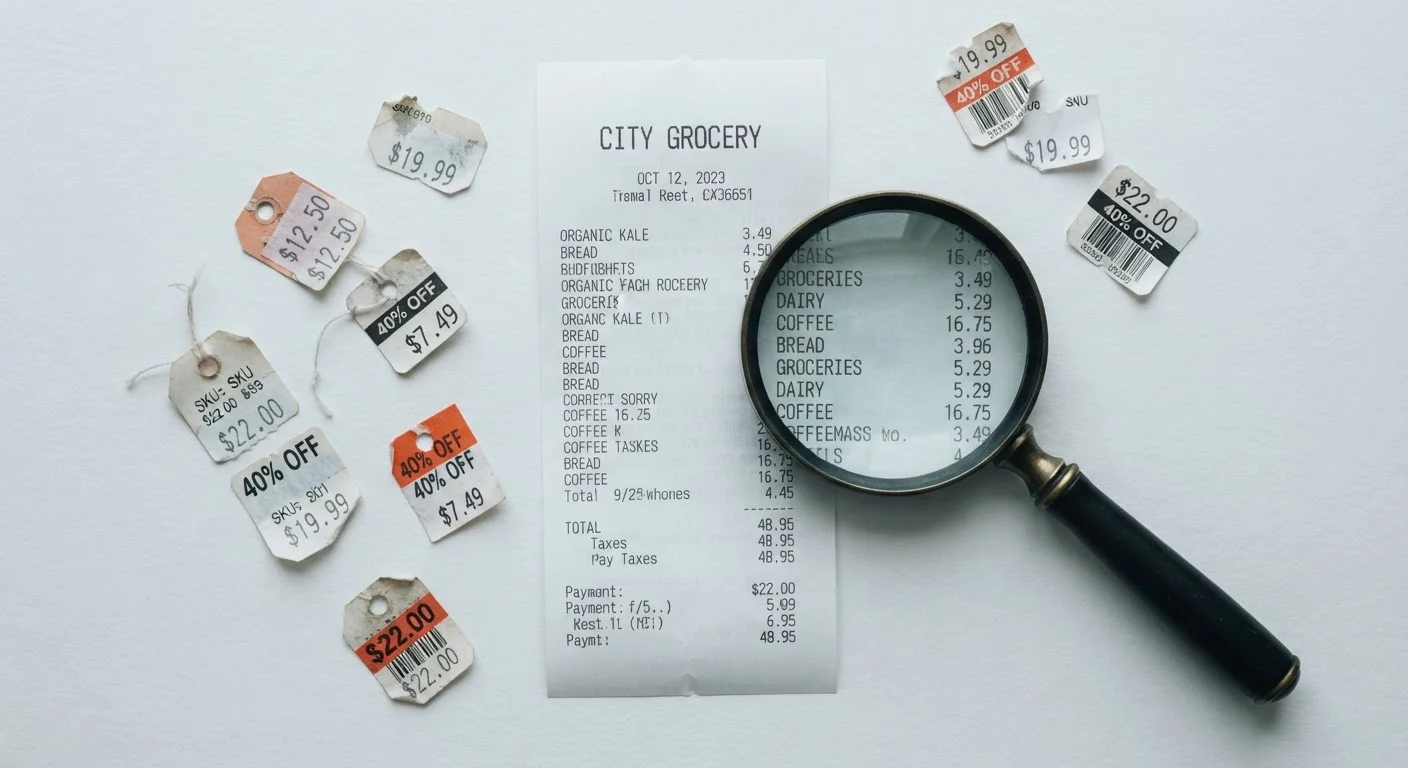
The Price Illusion: Why the Number You See Isn't the Deal You're Getting
Most bad deals begin with a number - specifically, with a number designed to make a second number look extraordinary. The 'was $199, now $79' format is ubiquitous because it works: it plants an anchor in your mind that makes $79 feel like a rescue, not a transaction.
The problem is that the original price is frequently not a real market price. It may reflect a brief, token sale period, a manufacturer's suggested retail price that nobody ever paid, or simply a figure chosen to make the discount percentage look impressive. When the reference point is fictional, so is the savings.
Deceptive pricing tactics like phantom markdowns and charm pricing ($9.99 instead of $10) are built into the retail environment precisely because they shift your evaluation from 'is this worth what I'm paying?' to 'how much am I saving?' That's a fundamentally different question - and a much easier one to manipulate.
37%
Shoppers who regret an impulse purchase
A survey by CreditCards.com found that roughly 37% of Americans reported making a purchase they regretted in the prior three months, with price expectations vs. reality being a leading factor.
$5,400
Average annual impulse spending per U.S. adult
Slickdeals' consumer research has estimated American adults spend thousands annually on unplanned purchases, a significant portion of which are driven by perceived - rather than actual - savings.
60%
Consumers who don't read warranty terms
Research by Consumer Reports has consistently found that a majority of buyers do not fully read warranty documents before purchase, leaving them unaware of key exclusions.
The Hidden Cost Problem: What the Sticker Price Leaves Out
A purchase price and a total cost are rarely the same thing. Sellers have strong incentives to make the entry price as low as possible and to disclose additional costs as late - or as quietly - as possible. This is sometimes called drip pricing: the practice of revealing fees, shipping charges, required accessories, or ongoing subscriptions only after you're emotionally committed to buying.
The categories where this pattern is most damaging include electronics (where cables, adapters, or service plans dramatically raise the real price), appliances (where installation, extended warranties, and energy costs compound over years), and subscription-based products (where a low monthly figure balloons when multiplied by a realistic usage period).
Before committing, it's worth identifying every cost layer in an 'affordable' purchase - not just what you pay today, but what you'll pay to own, operate, and eventually dispose of the item.
Calculate Total Cost of Ownership First
Before any significant purchase, add up every cost you'll incur within the first two years of ownership: accessories, maintenance, installation, subscriptions, and disposal. This single exercise catches most drip-pricing traps before they become expensive regrets. If the seller makes this calculation difficult, that difficulty is itself a signal worth noting.
Warranty Gaps and Quality Signals You're Trained to Ignore
A warranty should transfer risk from buyer to seller. In practice, many warranties do the opposite - they list so many exclusions, require such specific conditions for claims, or cover such a short window that they offer almost no practical protection.
Red flags to look for: warranties that exclude 'normal wear and tear' broadly, require return shipping at the buyer's expense, or mandate service through a single authorized provider who charges high diagnostic fees. These terms essentially render the warranty decorative.
Quality signals embedded in product descriptions are equally manipulated. Phrases like 'premium construction,' 'heavy-duty,' and 'professional-grade' carry no standardized definitions. They're aspirational language, not specifications. Reliable quality indicators are measurable: materials listed with specific grades, verified third-party certifications, or independently tested performance claims.
For a broader framework on evaluating what you're actually buying, the product evaluation hub covers how to assess quality and value systematically before any purchase.
The Urgency Trap and What It's Really Telling You
Artificial urgency is one of the most reliable markers that a seller is prioritizing your impulse over your judgment. 'Only 3 left,' 'Sale ends tonight,' and countdown timers are mechanisms designed to compress your decision window - because a shopper who takes time to compare, research, and reflect is a harder shopper to oversell.
Genuine scarcity occasionally exists. But when urgency language appears consistently across a retailer's catalog, or when a 'final day' sale rolls back into another promotion the following week, the scarcity is manufactured. The psychological mechanism it exploits - loss aversion, the fear of missing out - is well documented, and your gut feeling in these moments is often the least reliable guide you have.
A useful rule of thumb: if a deal genuinely requires you to skip your normal evaluation process, it's worth pausing to ask why that condition exists. Sound purchasing decisions rarely require urgency.
“The goal of many retail environments is to move you from browsing to buying as quickly as possible. Every mechanism that shortens that window - urgency, scarcity, social proof - is working against your ability to make a rational decision.”
— Consumer Behavior Research Consensus, Synthesized from peer-reviewed retail psychology literature on decision compression tactics
For a complete framework covering research habits, transaction safety, and what to do when a purchase goes wrong, see our smart shopping protection guide.
Frequently Asked Questions
The most common flaw is a misleading price reference - where the 'original' or 'was' price is inflated to make a discount appear larger than it actually is. This is sometimes called a phantom markdown. It creates a false anchor that distorts your sense of value before you've even compared options.
Calculate the full cost of ownership, not just the sticker price. Factor in shipping, required accessories, installation, ongoing maintenance, and any subscription fees. Our guide on <a href="/smart-shopping/smarter-spending/hidden-costs-that-make-affordable-purchases-more-expensive-than-they-look">hidden costs that flip bargains into burdens</a> walks through this process category by category.
Not always. Some are the result of poor product design or incomplete disclosure rather than deliberate deception. However, structural features like vague warranties, drip pricing, and urgency messaging are industry-tested techniques - they tend to appear together precisely because they work.
A significant one. Anchoring, loss aversion, and social proof are cognitive patterns that retailers deliberately exploit to override rational comparison. When you feel excited, rushed, or afraid to miss out, those emotions are doing work that analysis should be doing instead.
Not strictly financial, though money is the most common metric. A bad deal can also mean buying something that wastes your time, clutters your space, or fails to solve the problem you originally had - even if it cost very little.
Document everything: receipts, product descriptions, warranty terms, and any communication with the seller. Then review the return policy, dispute options through your payment provider, and where relevant, report deceptive practices to the FTC or your state attorney general's consumer protection office.
The content provided on our blog site traverses numerous categories, offering readers valuable and practical information. Readers can use the editorial team’s research and data to gain more insights into their topics of interest. However, they are requested not to treat the articles as conclusive. The website team cannot be held responsible for differences in data or inaccuracies found across other platforms. Please also note that the site might also miss out on various schemes and offers available that the readers may find more beneficial than the ones we cover.