

The Pricing Game Is Rigged by Design
Retail pricing is rarely neutral. The numbers on a shelf tag, the strikethrough beside a sale price, and the fees that surface at checkout are all engineered to produce a specific emotional response - the feeling that you're getting a deal. That feeling is the product. The item is secondary.
Understanding the mechanics behind these techniques doesn't require a marketing degree. It requires knowing which patterns to look for and what questions to ask before your credit card leaves your wallet. This guide covers the most common deceptive pricing tactics and the practical habits that neutralize them. For a deeper look at the psychological levers retailers pull, see why your gut feeling about a great deal is often wrong.
This Is General Consumer Education
The practices described here are widely documented patterns in retail and e-commerce pricing. Individual experiences vary, and pricing regulations differ by state and sector. This article does not constitute legal or financial advice. If you believe you have been the subject of deceptive pricing, consult your state attorney general's consumer protection office or a qualified legal professional.
Phantom Markdowns and Reference Price Manipulation
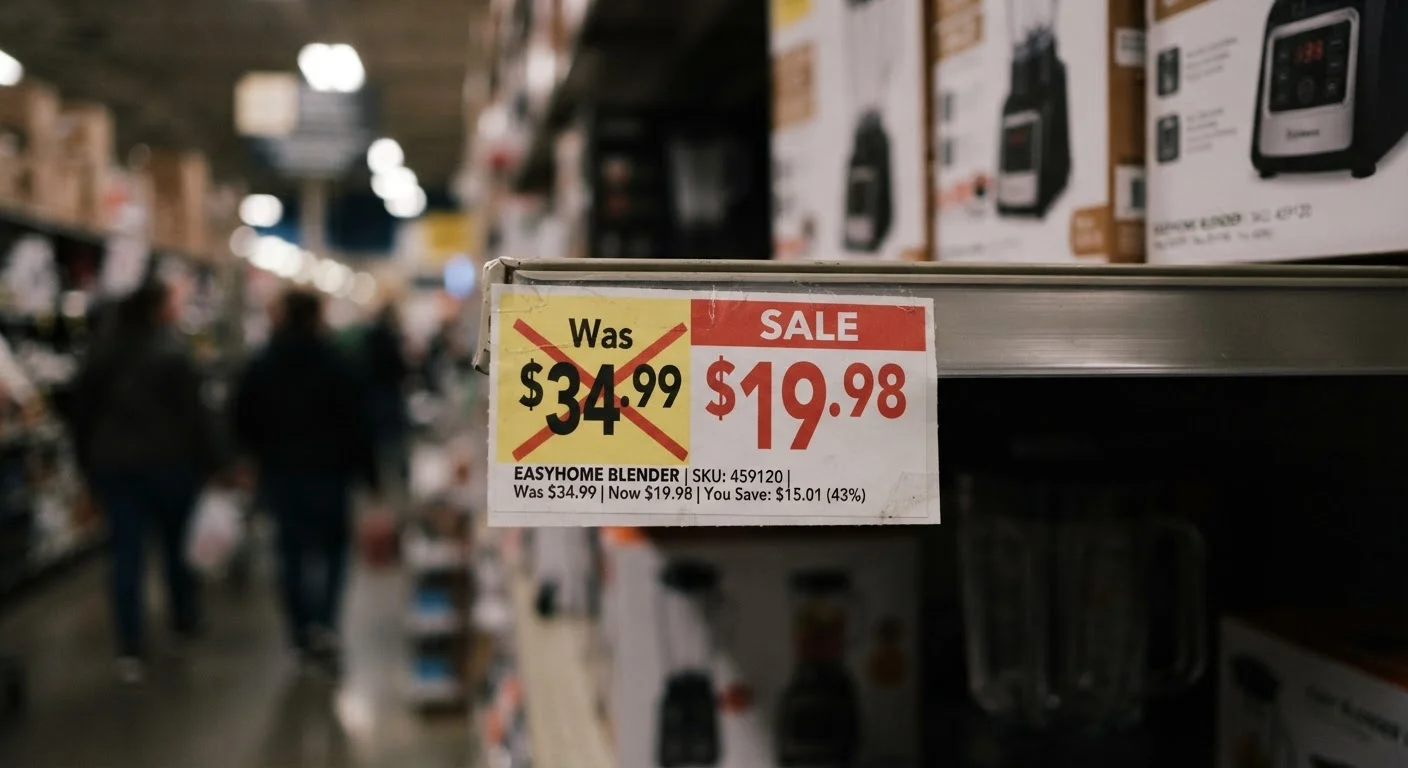
A phantom markdown is a discount off a price that was never real. A retailer sets an inflated 'original' or 'compare at' price - sometimes for a legally brief window, sometimes never actually charged - then advertises a steep percentage off. The 40% savings is mathematically accurate but practically meaningless if no one ever paid the starting price.
This tactic works because of anchoring: the first number you see shapes every evaluation that follows. A $200 item marked down from $400 feels like a bargain even when it was always priced at $200. Regulatory agencies in several states have pursued cases against retailers for this practice, but enforcement is uneven and the techniques keep evolving.
How to counter it: Search the item's price history using independent tools. If the 'original' price appears only on the retailer's own site and the current price matches what competitors charge regularly, the markdown is likely manufactured. Also check whether the structural red flags of a bad deal - such as vague warranty terms - accompany the inflated price tag.
~40%
Consumers who check prices elsewhere before buying
Consumer surveys consistently find that fewer than half of shoppers verify a 'sale' price against an independent source before purchase, leaving the majority exposed to phantom markdown tactics.
Up to 30%
Share of checkout total drip fees can add
In ticketing and travel sectors, mandatory fees added during checkout have been documented to represent up to 30% of the advertised headline price, according to consumer advocacy research.
Charm Pricing, Bundle Confusion, and Other Perception Tricks
Prices ending in .99 or .95 are so common they register as background noise - which is precisely why they remain effective. Research in consumer psychology consistently finds that the left-most digit dominates price perception: $9.99 reads as meaningfully cheaper than $10.00 even though the difference is a penny. Retailers know this and price accordingly.
Bundle pricing adds another layer of confusion. When items are grouped together, individual value becomes harder to assess. A bundle that saves you $8 on three items you would have bought anyway is a legitimate deal. A bundle that nudges you toward two items you don't need to save $3 on one you wanted is not. The relevant question is always: what would each item cost me separately, from a source I'd actually use?
For a related pattern - products that quietly shrink in quantity while the price holds steady - see shrinkflation and skimpflation. Unit pricing on the shelf label is your best tool here; a guide to reading it is at unit pricing explained.
Always verify a 'sale' price against at least one independent source before treating it as a genuine discount.
A retailer controls its own reference prices, making self-reported markdowns unreliable by definition. Third-party price trackers and competitor listings provide a neutral baseline that exposes phantom markdowns quickly.
Calculate total checkout cost before emotionally committing to a headline price.
Drip fees are designed to be revealed after psychological commitment has formed. Treating the final total as the only real price prevents the sunk-cost feeling that keeps buyers from abandoning overpriced carts.
Use unit price rather than package price to compare grocery and household products.
Larger packages are not always cheaper per unit, and bundle deals can obscure the per-item cost. The unit price (cost per ounce, count, or measure) is the only apples-to-apples comparison available on a shelf.
Apply a 24-hour pause to any purchase framed with urgency or scarcity language.
Countdown timers, 'only 3 left' warnings, and flash-sale framing are designed to override deliberate reasoning. A mandatory pause exposes whether the urgency was real or manufactured - most 'limited' deals reappear.
Separate the bundle into its individual components before evaluating a bundle deal.
Bundle pricing hides whether you actually need - or would buy - every item included. Savings are only real if they apply to items you would have purchased independently at full price.
Drip Pricing: The Cost That Builds at Checkout
Drip pricing is the practice of advertising a low headline price and revealing mandatory fees - processing charges, service fees, resort fees, delivery surcharges - only late in the checkout process. By that stage, the buyer has already committed psychologically and mentally budgeted around the lower number. Abandoning the cart feels like a loss.
This tactic is especially common in travel booking, ticketing, and subscription services, but it appears in retail too. A product listed at $29 with $12 in mandatory 'handling' fees is a $41 product. The Federal Trade Commission has flagged drip pricing as a deceptive practice, and proposed rulemaking has targeted it - but it remains widespread in practice.
The defense is simple but requires discipline: treat the checkout total, not the headline price, as the real price. Before beginning any purchase, identify the hidden costs that make affordable purchases more expensive so you aren't surprised at the final screen.
Building Habits That Make These Tactics Less Effective
The tactics above share a common mechanism: they compress your decision-making window and load it with emotional signal. The antidote is deliberate friction - small habits that slow the process down and shift judgment from feeling to data.
Before any non-routine purchase, ask three questions: What is the total cost including all fees and accessories? What does this item cost at a neutral comparison point? Would I pay this price if there were no sale framing or countdown timer present? A 'no' to any of these is a signal to pause.
If you're shopping online, learn the warning signs that a good deal isn't - inflated review counts, suspiciously perfect ratings, and pressure-based copy often accompany deceptive pricing. And always read what the return policy actually says before committing; a restrictive return window is a direct cost if the item disappoints.
“The best protection against manipulative pricing is knowing it exists. Once you understand that a reference price is a marketing tool rather than a neutral fact, the spell it casts weakens considerably.”
— Consumer pricing researchers, Behavioral economics and retail pricing scholarship
This article is for general informational and educational purposes only. It does not constitute financial, legal, or consumer legal advice. Readers should consult qualified professionals for guidance specific to their circumstances.
The content provided on our blog site traverses numerous categories, offering readers valuable and practical information. Readers can use the editorial team’s research and data to gain more insights into their topics of interest. However, they are requested not to treat the articles as conclusive. The website team cannot be held responsible for differences in data or inaccuracies found across other platforms. Please also note that the site might also miss out on various schemes and offers available that the readers may find more beneficial than the ones we cover.