

Our Verdict
Feature creep is a genuine consumer trap - it inflates sticker prices, introduces unnecessary complexity, and can make a product less reliable than a stripped-down alternative. That said, not every added capability is useless; some features solve real friction points. The discipline is in separating functions you'll use regularly from ones that exist primarily to justify a higher price tag.
Consumers who want durable, reliable products that do one or two things exceptionally well, rather than a dozen things adequately.
What Feature Creep Actually Means
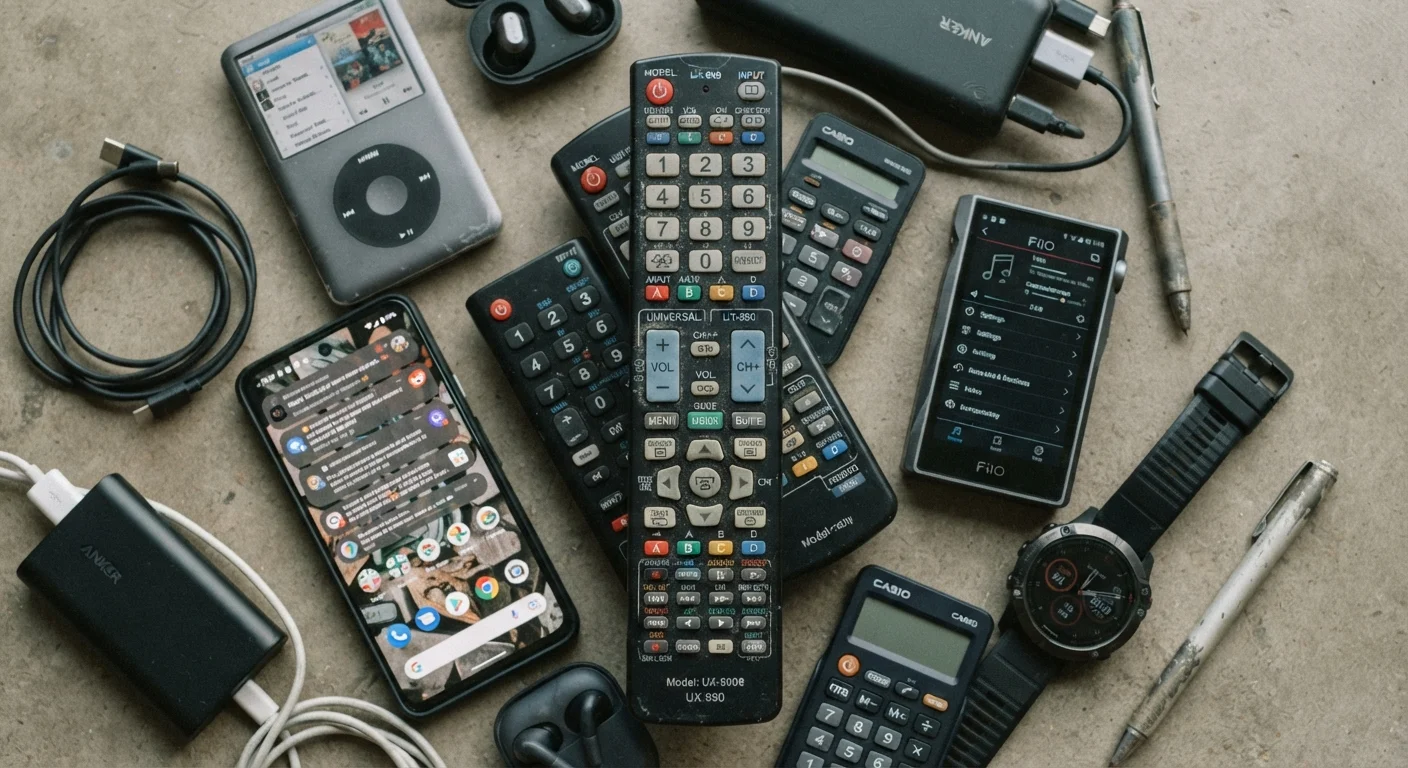
Feature creep - sometimes called scope creep in product development - describes the gradual accumulation of functions, modes, and settings that expand a product's complexity beyond what its core purpose demands. It happens across categories: kitchen appliances with seventeen cooking presets, fitness trackers that monitor metrics no casual user will ever interpret, or televisions requiring a software tutorial just to adjust the picture.
The pattern is predictable. Manufacturers compete on spec sheets because specs are easy to compare at the point of sale. Adding features is a low-cost way to appear superior on paper, even if those features see little real-world use. For a deeper look at categories where this pattern is most entrenched, see where marketing routinely outpaces reality.
The result is a market where consumers routinely pay for complexity they didn't ask for and won't benefit from.
The Genuine Upside: When Extra Features Earn Their Place
Not every added function is filler. Some features represent genuine engineering solutions to documented friction points.
Consolidates multiple devices into one
A single multi-function product can genuinely reduce clutter and cost when the combined capabilities would otherwise require separate purchases. This is only true value when all functions are used regularly.
Addresses edge cases some users genuinely need
Features that seem niche to most buyers may solve a specific, recurring problem for a subset of users. The issue is when niche features are priced into a product for everyone.
Can future-proof a purchase
Some added capabilities - connectivity standards, compatibility modes - extend a product's useful life as surrounding technology evolves. This is worth factoring in for long-use purchases.
May reflect genuine engineering improvement
Occasionally, added features are the byproduct of better underlying design rather than marketing padding. Improved sensors, smarter defaults, or more durable materials sometimes accompany expanded functionality.
The honest question before purchase: which of these features reflects a problem I actually have? If you can answer that specifically, the added capability may justify its cost. If the honest answer is "none of them," that's useful information too.
The Real Costs: Why More Functions Often Mean Worse Products
The downsides of feature creep are concrete, not theoretical. They show up in your wallet, your repair bills, and your daily frustration.
Higher purchase price for unused functionality
Consumers pay for every feature on a spec sheet, whether they use it or not. This is a direct transfer of money toward functions that deliver zero personal utility.
More components means more failure points
Every additional function introduces circuitry, software, or mechanical parts that can fail. Products with simpler designs consistently show lower repair rates in consumer reliability studies.
Steeper learning curve reduces core usability
Complex interfaces slow down everyday tasks. When a product requires users to navigate multiple menus to perform a basic function, it has failed at its primary job.
Software features can degrade over time
Connected features often depend on manufacturer server support or ongoing software updates. When support ends, those features stop working - leaving a product worth less than what you paid.
Harder to repair or maintain
Multi-function products are frequently more difficult and more expensive to service. Parts are less interchangeable, and repair technicians charge more for complex diagnostics.
~85%
Features in software that are rarely or never used
Research by the Standish Group found that a large majority of software features go unused by most users - a pattern that translates broadly to consumer hardware and appliance design.
2-3×
Higher repair cost for multi-function appliances
Consumer repair services consistently report that combination or multi-function appliances cost significantly more to diagnose and fix than single-purpose equivalents.
These costs compound. A product that costs more upfront, breaks sooner, and requires more troubleshooting represents poor value even if its spec sheet looks impressive. Feature-heavy products can also generate hidden costs that make purchases more expensive than they first appear.
How to Separate Useful Features From Marketing Filler
A few practical filters cut through most of the noise:
- List the problem first, then match features to it. Define what you need the product to do before reading any spec sheet. Features that don't address your list are candidates to ignore.
- Check which features appear in user reviews - not press releases. If a highlighted capability is never mentioned by actual owners, that's a signal it's rarely used or poorly implemented.
- Prefer products with a clear primary function. Products designed around one or two use cases tend to execute them better than those engineered to cover every scenario.
- Ask how the feature is controlled. A useful function buried in a four-level menu is effectively not available. Ease of access is part of the feature's value.
Learning to read product descriptions critically is a related skill - reading between the lines of any product description walks through how marketing copy obscures what actually matters.
The 'I Might Use It' Trap
One of the most reliable ways feature creep gets justified at the point of sale is the phrase "I might use that someday." Research on consumer behavior suggests people consistently overestimate how often they'll use optional features compared to their actual usage patterns. If a feature doesn't address a current, specific need, it's worth treating it as a cost rather than a benefit. Applying this filter before purchase - not after - is where the real savings happen.
Feature creep is part of a broader pattern of value erosion worth tracking. While it inflates complexity and price, other forms - like shrinkflation and skimpflation - quietly degrade quality instead. Both reward the consumer who pays close attention before buying. For general strategies on spending with intention, the Smarter Spending hub is a practical resource.
The content provided on our blog site traverses numerous categories, offering readers valuable and practical information. Readers can use the editorial team’s research and data to gain more insights into their topics of interest. However, they are requested not to treat the articles as conclusive. The website team cannot be held responsible for differences in data or inaccuracies found across other platforms. Please also note that the site might also miss out on various schemes and offers available that the readers may find more beneficial than the ones we cover.