

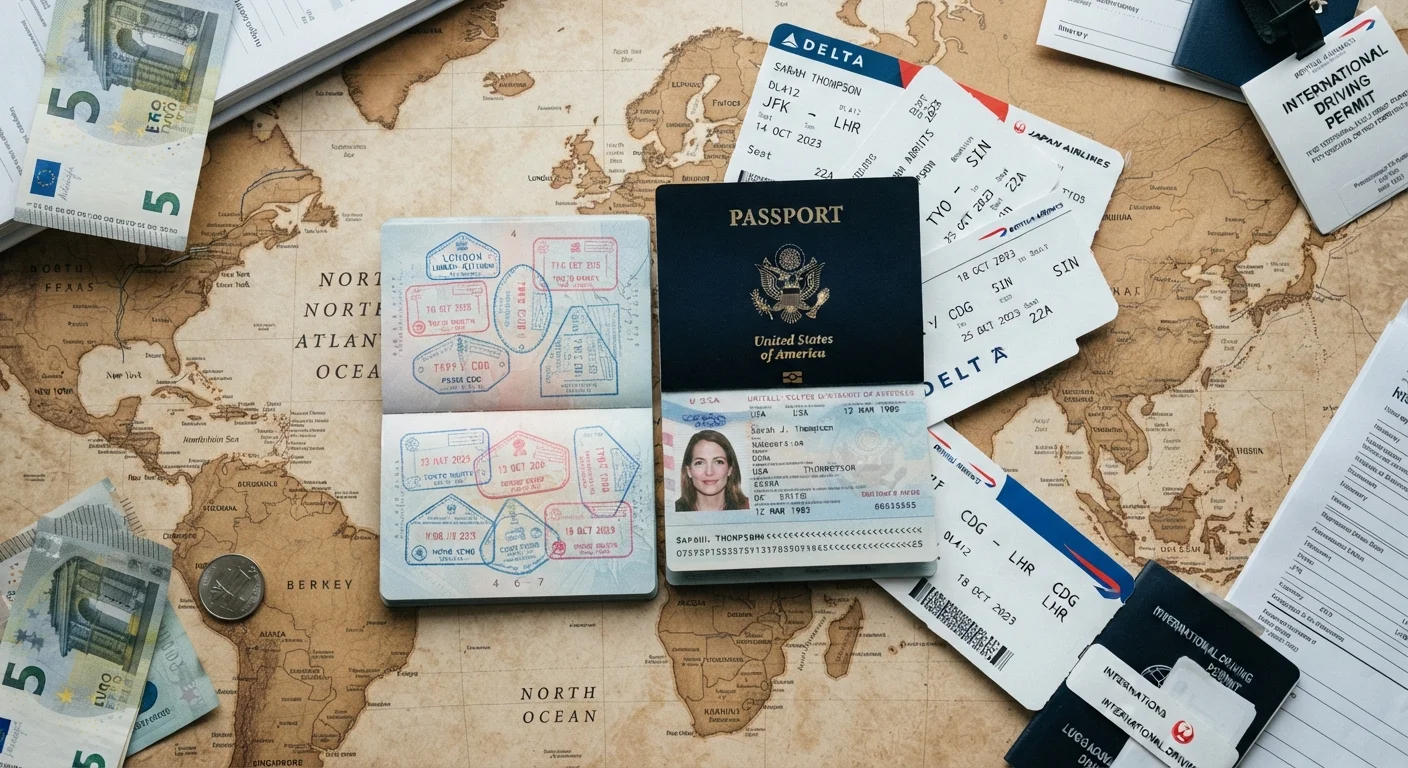
Why Entry Requirements Confuse So Many American Travelers
Americans enjoy visa-free or visa-on-arrival access to a large number of countries, which can create a false sense of simplicity. The reality is that entry rules operate on a spectrum - and the gaps between categories catch travelers off guard every year. Missing an eTA, carrying a passport too close to expiration, or misreading a visa-on-arrival policy can result in denied boarding or rejection at the border.
This reference breaks down the main entry categories you'll encounter, where to verify requirements for specific destinations, and which rules Americans most commonly overlook. As always, verify current requirements directly with official government sources before booking - policies change, and no third-party source is a substitute for official guidance.
For a broader look at common planning errors, see common travel planning myths that frequently mislead U.S. travelers.
The Main Entry Categories Decoded
Entry systems generally fall into a handful of categories, each with different lead times, costs, and requirements:
- Visa-free access: U.S. passport holders enter without any pre-arranged travel authorization. This applies to many European, Latin American, and Asia-Pacific destinations, typically for stays up to 90 days. Passport validity and proof of onward travel may still be required.
- Electronic Travel Authorization (eTA): A digital pre-screening system used by countries including Canada, Australia, and several others. An eTA is not a visa - it's a quick online application linked to your passport. Most approvals are near-instant, but applications should be submitted before booking flights. Fees are generally modest but vary by country.
- Visa on arrival (VOA): You apply at the port of entry itself, paying a fee and completing paperwork upon landing. Some destinations require pre-registration or a reference number even for VOA, so check destination-specific rules carefully.
- Visa required in advance: Must be obtained from an embassy or consulate before you travel. Processing times range from days to several weeks. This applies to countries including China, India, Russia, and several others depending on your travel purpose.
eTA (Electronic Travel Authorization)
A pre-travel digital authorization required by some countries before a traveler boards a flight. It is linked electronically to your passport and is not the same as a visa. Most are approved quickly online.
Visa on Arrival
A visa obtained at the port of entry (airport or border crossing) rather than from an embassy before departure. Some countries require online pre-registration even for this category.
Passport Validity Buffer
The number of months a passport must remain valid beyond your planned return date, as required by the destination country. Many countries require three or six months of remaining validity.
Port of Entry
The official location - such as an airport, seaport, or land border crossing - where travelers pass through immigration and customs inspection.
Visa Required in Advance
A category where travelers must apply for and receive a visa from the destination country's embassy or consulate before departure. Processing times and documentation requirements vary significantly.
For a complete pre-travel document checklist, see the pre-departure planning checklist for U.S. travelers.
Passport Rules Americans Routinely Miss
Having a valid passport isn't always enough. Several countries require your passport to remain valid for a specific period beyond your departure date - commonly three or six months. Arriving with a passport that expires two months after your return flight can mean denied boarding, regardless of whether the passport is technically valid the day you travel.
3-6 months
Passport validity buffer required by many destinations
Several popular destinations in Asia, Africa, and the Middle East require a passport valid for at least six months beyond your departure date - a rule many travelers discover too late.
~20%
U.S. adults estimated to hold a valid passport
State Department data has historically suggested that a minority of American adults hold a currently valid passport, meaning many travelers are working with limited or expired documents.
A few other passport rules worth knowing:
- Blank pages: Some countries require one or two blank visa pages. Heavy travelers who've collected many stamps may need a passport renewal earlier than expected.
- Damaged passports: A water-damaged, torn, or significantly worn passport may be rejected at border control, even if technically readable. If yours is in poor condition, renew before your trip.
- Name mismatches: Your passport name must exactly match your airline ticket. Even minor discrepancies can cause problems at check-in.
If you're preparing for your first international trip, the ground-up guide to getting there smoothly covers passport basics alongside customs and logistics.
Where to Verify Official Entry Requirements
No travel blog, booking platform, or peer review is an authoritative source for entry requirements. Policies shift - sometimes with minimal public notice - due to diplomatic changes, health regulations, or administrative updates.
Reliable, official sources for U.S. travelers include:
- U.S. Department of State (travel.state.gov): Country-specific information pages covering entry requirements, safety advisories, and local laws. Updated regularly by U.S. embassy staff on the ground.
- Destination country's official embassy or consulate website: The definitive authority on visa types, fees, and documentation. Look for the embassy website relevant to U.S. citizens specifically.
- IATA Travel Centre (used by airlines): Airlines reference this database to determine boarding eligibility. It's publicly accessible and destination-specific.
Requirements Can Change Without Much Notice
Diplomatic shifts, public health developments, and policy updates can alter entry requirements for a destination within days. Always check official sources within 30 days of your departure, even if you researched requirements when you first booked. Your airline may also have additional document checks beyond what immigration requires.
Before finalizing any trip, it also pays to research beyond entry rules. The destination research guide covers climate, local customs, safety advisories, and accessibility - factors that shape whether a destination is the right fit, not just whether entry is permitted.
And for a reality check on assumptions travelers bring abroad, see travel logistics myths that catch Americans off guard abroad.
This article provides general travel information for educational purposes only. Entry requirements change frequently; always verify current rules directly with official government sources and your airline before traveling. This content does not constitute legal or immigration advice.
The content provided on our blog site traverses numerous categories, offering readers valuable and practical information. Readers can use the editorial team’s research and data to gain more insights into their topics of interest. However, they are requested not to treat the articles as conclusive. The website team cannot be held responsible for differences in data or inaccuracies found across other platforms. Please also note that the site might also miss out on various schemes and offers available that the readers may find more beneficial than the ones we cover.