

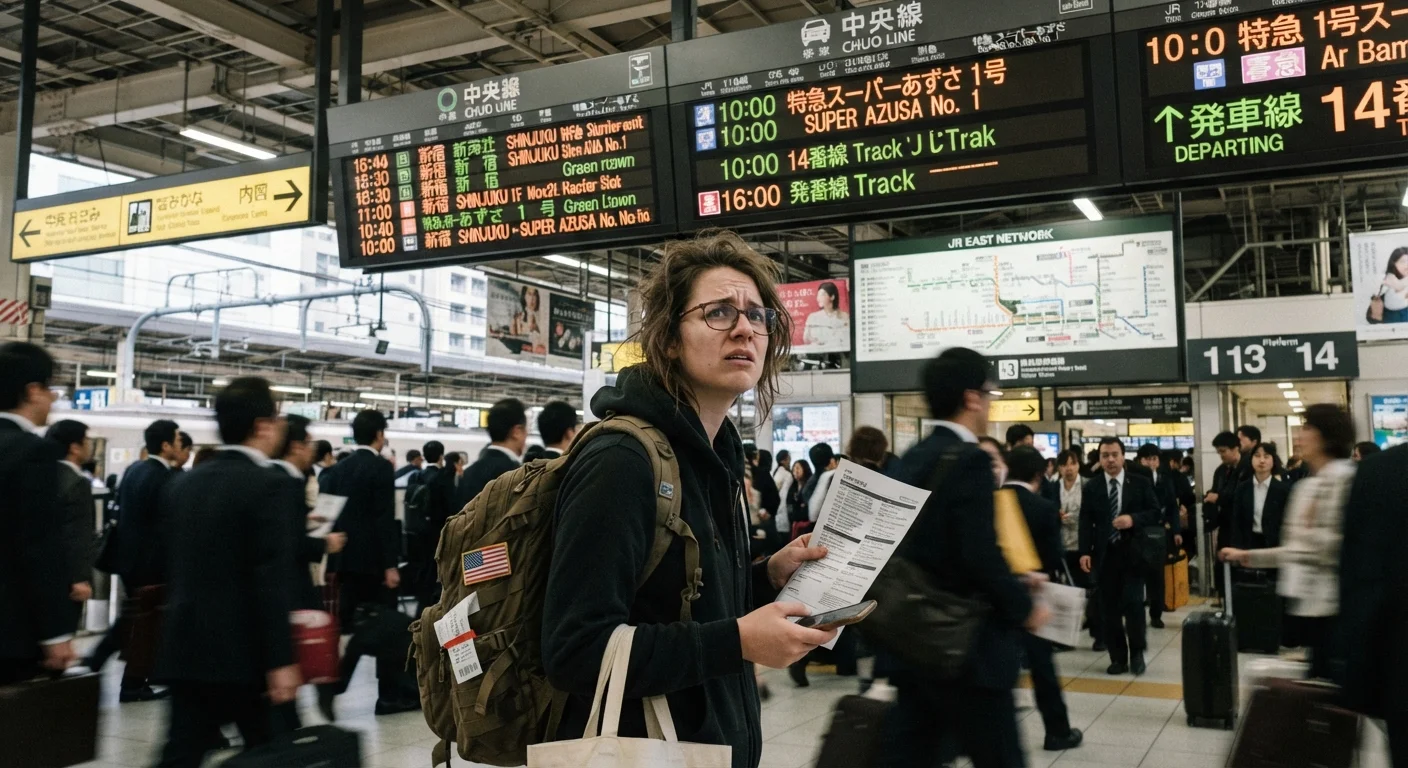
Why American Assumptions Break Down Abroad
Most travel mistakes aren't caused by bad luck - they're caused by assumptions carried over from home. American travelers often apply domestic expectations to international contexts, and those gaps between expectation and reality create real problems: missed trains, declined cards, unexpected fees, and tense interactions at borders.
The myths below aren't obscure edge cases. They represent some of the most common logistical traps reported by U.S. travelers. Understanding where the assumptions go wrong is the first step toward avoiding them. For a broader look at how planning misconceptions can derail a trip before it starts, see our travel planning myths breakdown.
Myth
English is spoken everywhere tourists go, so I don't need to prepare.
Fact
English fluency varies enormously by country, city, and even neighborhood - including in popular tourist destinations.
In major international hubs like Amsterdam, Reykjavik, or Singapore, English is widely spoken. But step outside the urban center - or visit destinations in rural Japan, southern Italy, or much of Latin America - and English proficiency drops significantly. Even in tourist areas, assuming English will carry you through pharmacies, train ticket windows, or medical situations can lead to real difficulties. Learning a handful of key phrases, downloading an offline translation app, and keeping written translations of critical information (your accommodation address, allergies, emergency contacts) are low-effort preparations that pay off reliably.
Myth
My U.S. debit or credit card will work fine everywhere without any issues.
Fact
Many U.S. cards carry foreign transaction fees, and some international merchants or ATMs don't accept them at all.
Foreign transaction fees - typically 1-3% per purchase - can add up across a two-week trip. Some U.S. cards also carry ATM withdrawal fees on top of whatever the foreign bank charges. Additionally, certain countries still rely heavily on cash (Germany and Japan, for example, have strong cash cultures despite being highly developed economies), and some merchants abroad don't accept Visa or Mastercard at all. Before traveling, contact your bank about international fee structures, notify them of your travel dates to prevent fraud blocks, and plan to carry some local currency from the start.
Myth
Public transit abroad works similarly to what I'm used to in the U.S.
Fact
Transit systems in many countries are more extensive and more complex than most American travelers expect.
In cities like Tokyo, London, or Paris, subway systems involve multiple overlapping lines, zone-based pricing, and peak-hour crowding that differs greatly from most U.S. metro experiences. Rail passes marketed to tourists don't always cover every train type - high-speed or premium trains often require a separate seat reservation even with a pass. Intercity buses may operate from different terminals than local buses. Timetables in rural areas can be sparse. The math of long-haul travel and time zones also affects connection planning in ways travelers routinely underestimate.
Myth
Tipping works the same internationally as it does in the U.S.
Fact
Tipping customs vary widely by country - in some places it's expected, in others it's unnecessary or even impolite.
In the United States, tipping 18-20% at restaurants is a widely understood norm, often essential to service worker income. In Japan, tipping is generally considered rude and can cause confusion or discomfort. In many European countries, rounding up the bill or leaving small change is typical, while a full American-style tip may be seen as unusual. In some parts of Southeast Asia and the Middle East, tipping practices vary by context and establishment type. Researching local norms before you arrive - rather than applying a universal rule - avoids awkward moments and unintended offense.
Myth
A valid U.S. passport gets me into any country with no advance paperwork.
Fact
Many countries require visas, eTAs, or other pre-approved documentation even for short tourist visits.
While U.S. passport holders enjoy visa-free or visa-on-arrival access to many destinations, the list is not unlimited and changes over time based on diplomatic agreements. Countries including Australia, Canada, and members of the European Union's Schengen area have implemented or are implementing electronic travel authorization systems that require registration before boarding - even for trips of a few days. Some countries require visas that must be obtained weeks in advance. Airlines are responsible for checking documentation before boarding and will deny boarding to travelers without correct paperwork. Always verify requirements directly through the U.S. Department of State's travel website and the official immigration authority of your destination country well before your departure date.
The Practical Side: Cards, Transit, and Entry Rules
Beyond language and culture, the logistical mechanics of international travel - how you pay, how you get around, and how you cross borders - carry their own set of widely misunderstood rules.
1-3%
Typical foreign transaction fee per purchase
Most U.S. bank cards charge a percentage-based fee on every international transaction, according to general banking industry disclosures.
195+
Countries with varying U.S. visa requirements
The U.S. Department of State maintains country-specific entry requirement pages for all recognized nations, each with distinct rules.
40+
Countries using electronic travel authorization systems
A growing number of destinations have introduced pre-travel eTA or eVisa systems that apply even to short tourist visits.
Entry requirements are particularly prone to misunderstanding. Americans often assume that a valid passport is sufficient for nearly any destination. In reality, a growing number of countries require either a pre-approved visa or an Electronic Travel Authorization (eTA), sometimes for very short visits. Failing to secure the right documentation before departure can mean being denied boarding or turned away at the border. Always verify current entry requirements directly through official government sources before booking. Our article on decoding visa and eTA rules walks through what to check and where.
Ground transportation is another area where domestic expectations mislead. Many American cities are car-dependent, so travelers may underestimate how functional - and how complex - train and bus networks are in other countries. Tickets often aren't interchangeable across operators, seat reservations may be required separately from a rail pass, and regional systems may not connect intuitively to intercity lines. Our ground transportation comparison guide offers a clearer picture of what to expect.
Don't Rely on Airport Currency Exchange Booths
Airport currency exchange kiosks typically offer significantly less favorable rates than bank ATMs at your destination. While it can make sense to arrive with a small amount of local currency for immediate needs (transit, tips, a taxi), exchanging large sums at the airport will cost more than necessary. Research your destination's ATM availability and local banking norms before departure.
Building these realities into your planning - rather than discovering them on arrival - keeps small surprises from becoming expensive disruptions. For help estimating the full cost picture before you book, see our guide to building a realistic travel budget.
The content provided on our blog site traverses numerous categories, offering readers valuable and practical information. Readers can use the editorial team’s research and data to gain more insights into their topics of interest. However, they are requested not to treat the articles as conclusive. The website team cannot be held responsible for differences in data or inaccuracies found across other platforms. Please also note that the site might also miss out on various schemes and offers available that the readers may find more beneficial than the ones we cover.