

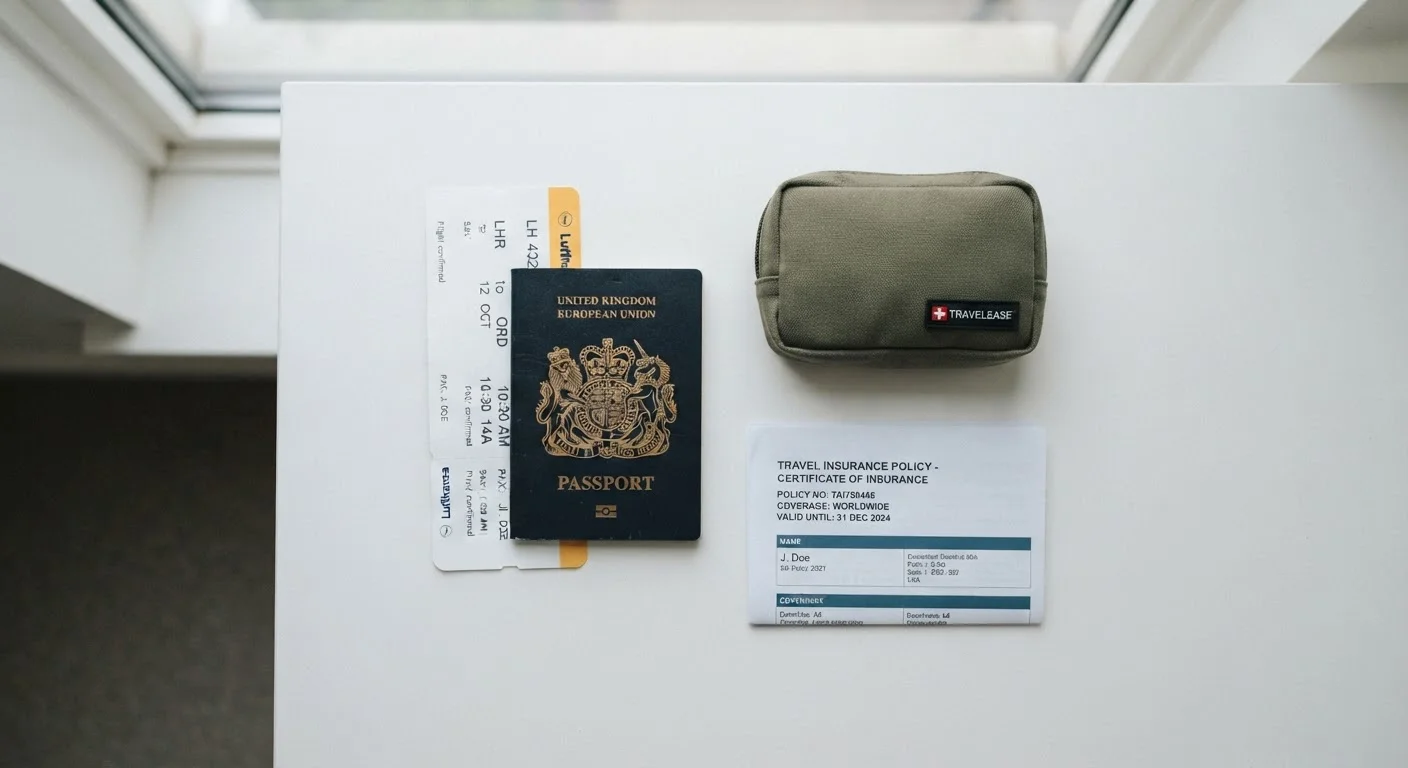
What Travel Insurance Is Actually Designed to Do
Travel insurance exists to limit financial losses when something goes wrong before or during a trip. It is not a guarantee that every problem will be solved - it is a reimbursement mechanism for a defined list of covered events. Understanding that distinction up front helps travelers avoid the frustration of filing a claim, only to find their specific situation wasn't included.
Most comprehensive policies bundle several coverage types together: trip cancellation and interruption, emergency medical care, medical evacuation, baggage loss or delay, and travel delay reimbursement. Each of these has its own sub-terms, dollar limits, and qualifying conditions. A policy's headline price tells you little about how much protection you actually have.
For travelers who want a fuller picture of what unexpected costs can look like on a trip, hidden travel costs are worth understanding alongside any insurance decision.
$50,000+
Typical cost of international medical evacuation
Industry estimates from travel insurance providers suggest emergency evacuations from remote international locations routinely exceed this figure without coverage.
~$100-$300
Average cost of a comprehensive travel insurance policy
Policy costs vary based on trip length, destination, traveler age, and coverage type; this is a general range, not a guarantee of pricing.
14-21 days
Typical window to purchase pre-existing condition waiver
Most insurers require the policy to be purchased within this timeframe after the initial trip deposit to qualify for pre-existing condition coverage.
What's Typically Covered - and the Conditions That Apply
Trip cancellation and interruption are the most heavily marketed benefits, but they only pay out for covered reasons - a specific list that usually includes serious illness or injury, death of a close family member, jury duty, or certain natural disasters affecting your destination. Canceling because you changed your mind, got a cheaper deal elsewhere, or are nervous about traveling does not qualify under a standard policy.
Emergency medical coverage is arguably the most valuable benefit for international travelers, since most U.S. health insurance plans provide little to no coverage abroad. Policies typically reimburse emergency hospital stays, surgery, and physician fees up to a stated maximum. Routine care, elective procedures, and dental work unrelated to an accident are commonly excluded.
Baggage and personal effects coverage pays for lost, stolen, or damaged luggage - but with per-item limits that may fall well short of replacing high-value electronics or jewelry. Airlines have their own separate liability processes; travel insurance typically acts as a secondary layer.
Check Your Credit Card Benefits First
Before purchasing a standalone policy, review the travel benefits included with any credit card you used to book the trip. Some cards offer trip delay reimbursement or baggage protection, which may reduce the coverage you need to purchase separately. Just confirm the limits - credit card protections are often narrower than a full travel insurance plan.
Travel delay reimbursement kicks in when delays exceed a threshold (often 6-12 hours) and covers reasonable expenses like meals and a hotel night - not every inconvenience, and not the cost of a missed event.
The Gaps Travelers Most Often Miss
Pre-existing medical conditions are among the most misunderstood exclusions. If you have a condition that has been treated, diagnosed, or that you sought advice for within a defined lookback period (often 60-180 days before purchase), claims related to it may be denied - unless you secured a pre-existing condition waiver by purchasing your policy within a short window after booking.
Pandemic-related cancellations exposed another gap many travelers hadn't anticipated: most standard policies do not cover losses caused by government travel bans, border closures, or epidemics unless the policy explicitly lists those as covered events. This mirrors the kind of fine-print surprises that also appear in other consumer protection contexts - warranty terms follow a similar pattern of narrow covered conditions versus broad consumer assumptions.
Travel to destinations under active U.S. State Department advisories can also void coverage. Always check current advisories and verify with your insurer before traveling to any region flagged as higher risk. For destination-specific realities that often catch travelers off guard, logistics myths abroad is a useful read before departure.
How to Read a Policy Before You Commit
The most important document in any travel insurance purchase is the Certificate of Insurance or Summary of Benefits - not the marketing page. Look specifically for the definitions section (how the insurer defines "pre-existing condition," "covered reason," and "emergency"), the exclusions list, per-category dollar limits, and the claims process timeline.
If you're building a broader trip budget, insurance should be a deliberate line item, not an afterthought. A realistic travel budget accounts for protection costs the same way it accounts for accommodation and transport.
When in doubt, call the insurer directly and ask whether your specific scenario - a particular health condition, a planned activity, a destination - is covered. Get the answer in writing if possible. No article, including this one, can substitute for verifying your specific policy terms with your provider before you travel.
This article is for general informational and educational purposes only. It does not constitute insurance, legal, or financial advice. Always read your policy documents in full and consult directly with a licensed insurance professional for guidance tailored to your situation. Verify all safety- and entry-related information with official government sources before traveling.
Frequently Asked Questions
Standard trip cancellation coverage only pays out for specific "covered reasons" listed in the policy - like serious illness, death of a family member, or certain natural disasters. "Cancel for any reason" (CFAR) is a separate upgrade that offers more flexibility but typically reimburses only 50-75% of non-refundable costs and must be purchased shortly after your initial trip deposit.
Most standard policies exclude pre-existing conditions unless you purchase a waiver, often available only if you buy insurance within 14-21 days of your first trip deposit. The definition of "pre-existing" varies by insurer, so check the policy language carefully and consult the insurer directly if you have a chronic condition.
Some credit cards include limited travel protections - such as trip delay reimbursement or baggage coverage - but these are usually narrower in scope than a standalone policy. Emergency medical coverage is rarely included. Review your card's benefits guide and compare it against a dedicated policy before assuming you're fully covered.
Many comprehensive travel insurance plans include emergency medical evacuation, which can cost tens of thousands of dollars out of pocket without coverage. However, coverage limits and the definition of a qualifying emergency vary, so confirm these details in your specific policy.
Common exclusions include pandemics (unless specifically listed), travel to destinations under government advisories, losses from risky or illegal activities, and costs arising from undisclosed pre-existing conditions. "Fear of travel" - without a covered reason - is also generally excluded.
Purchasing travel insurance shortly after making your first trip deposit gives you access to the widest range of coverage options, including pre-existing condition waivers and CFAR upgrades. Waiting until just before departure can limit your options and may disqualify certain benefits.
The content provided on our blog site traverses numerous categories, offering readers valuable and practical information. Readers can use the editorial team’s research and data to gain more insights into their topics of interest. However, they are requested not to treat the articles as conclusive. The website team cannot be held responsible for differences in data or inaccuracies found across other platforms. Please also note that the site might also miss out on various schemes and offers available that the readers may find more beneficial than the ones we cover.