

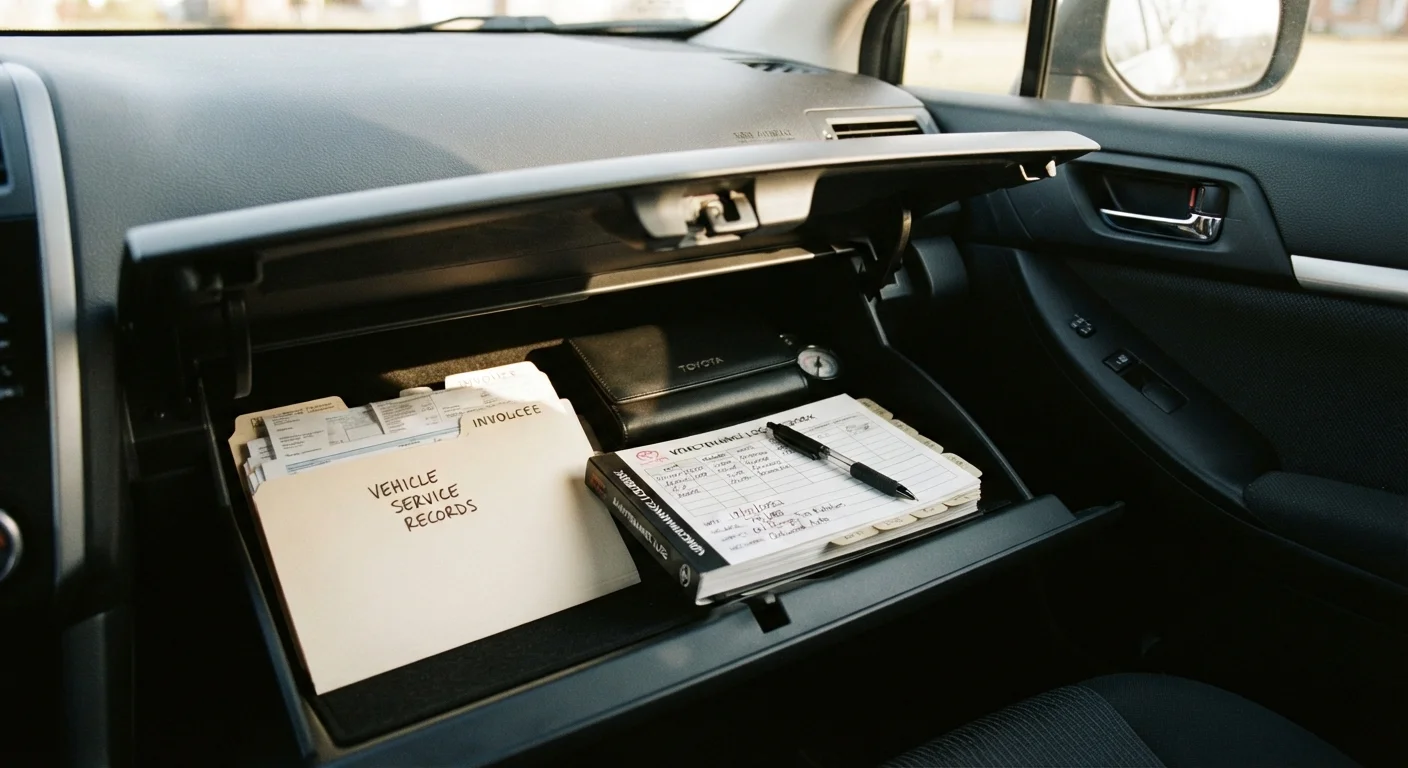
The Hidden Value Sitting in Your Glove Box
Most drivers know their car needs oil changes, tire rotations, and the occasional brake job. Far fewer take the time to document those services - and that oversight has real consequences. A vehicle with a complete, organized maintenance history tells a story of responsible ownership. One without it raises questions that can cost you money at resale time and headaches at the repair shop.
Think of a service record as a medical chart for your car. Just as a physician relies on past test results and treatment history to make better decisions, a mechanic who can see exactly what has been done - and when - is far better positioned to identify what's going wrong now. Without that context, diagnosis becomes guesswork. That guesswork costs time and money.
Whether you drive a three-year-old pickup or a decade-old sedan, the habit of keeping records is one of the simplest, highest-return practices in vehicle ownership. See our end-to-end roadworthiness guide for a fuller picture of what consistent vehicle care involves.
Save every service receipt - dealer, independent shop, and DIY alike.
Receipts are the primary evidence of what was done and when. Without them, any claim about a vehicle's maintenance history is unverifiable, which matters to future buyers and to mechanics troubleshooting current issues.
Record the odometer reading alongside every service entry.
Mileage-based intervals are how most maintenance schedules are structured. Without odometer readings, it's impossible to know whether a service is overdue or recently completed - especially for items like transmission fluid changes or spark plug replacements.
Note the specific products and parts used in each service.
Not all fluids, filters, or parts are interchangeable. Knowing the exact oil viscosity used, the brand of filter installed, or the specification of a replacement part helps future mechanics match or improve upon prior work and can prevent compatibility issues.
Log any unusual symptoms, warning lights, or observations - even if you haven't had them addressed yet.
Intermittent problems are notoriously difficult to diagnose. A brief written note about when a symptom appeared, under what conditions, and how often it recurs gives a technician a significant diagnostic head start.
Review your records before every scheduled service appointment.
Arriving at a service appointment knowing exactly what's been done and what's overdue prevents duplicate services and ensures nothing falls through the cracks. It also positions you to have an informed conversation with the service advisor.
What to Record - and How to Stay Consistent
Effective recordkeeping doesn't require elaborate systems. What it requires is discipline and a clear sense of what information actually matters. For every service event, aim to capture at minimum: the date, current odometer reading, what work was performed, what parts or fluids were used, who did the work (shop name and address, or "owner" if DIY), and the total cost.
Dealer and shop invoices already contain most of this - the key is keeping them instead of discarding them. A simple accordion folder or binder in your glove box or trunk works well. If you prefer digital, a note in your phone's app or a spreadsheet on a cloud service both work fine. Apps built for vehicle tracking can also send maintenance reminders, which helps close the gap between when service is due and when you actually schedule it.
Cloud Backup Protects Against Loss
Paper records can be damaged or lost in a glove box flood, fire, or simple disorganization. Photographing or scanning each receipt into a cloud folder (such as a free Google Drive account) takes under a minute and ensures your history survives any physical mishap. Organize by year or by vehicle if you own more than one.
For those who handle their own maintenance, write it down just as you would a shop receipt. Include the brand of oil, the filter part number, the mileage, and the date. DIY records carry the same weight as professional ones - what matters is accuracy and completeness.
If you've recently bought a used vehicle, request any available service records from the seller before purchase. An absence of records isn't automatically disqualifying, but it does mean you'll be starting fresh - and should factor that uncertainty into your expectations. The owner's manual is a useful complement here, since it specifies the manufacturer's recommended intervals for your exact model.
Up to $500+
Potential resale value boost from documented service history
Industry estimates from vehicle valuation services suggest well-documented maintenance history can meaningfully raise a used vehicle's perceived and actual market value.
1 in 3
Used-car buyers who report concerns over undocumented service gaps
Surveys conducted by automotive consumer research groups consistently find that service history transparency is a top concern for used-vehicle shoppers in the US.
Resale Value, Trust, and Long-Term Peace of Mind
When it comes time to sell or trade in your vehicle, a documented service history is a tangible asset. Buyers and dealers consistently place greater trust - and, in many cases, greater value - in vehicles whose owners can show proof of consistent upkeep. A stack of receipts demonstrates that the car wasn't neglected between oil changes and that known issues were addressed rather than deferred.
For high-mileage vehicles especially, records become even more critical. A car approaching or exceeding 100,000 miles carries inherent uncertainty. Documentation that shows on-time timing belt replacements, transmission services, and coolant flushes significantly reduces that uncertainty. Our guide on high-mileage vehicle maintenance explains why this stage of ownership demands closer attention to documented service intervals.
“The single most important document you can hand a used-car buyer is a complete service history. It communicates care, honesty, and confidence in the vehicle better than any verbal reassurance.”
— Consumer Reports Automotive Team, Vehicle reliability and owner-satisfaction research organization
Beyond resale, there's a practical, day-to-day value: you simply know what's been done and what's coming due. That awareness eliminates the nagging uncertainty that leads some drivers to skip services they can't afford to skip, or to schedule unnecessary ones. Good records give you confidence - and confidence leads to better decisions. If you're building these habits from scratch, car maintenance habits for new drivers is a strong starting point.
The content provided on our blog site traverses numerous categories, offering readers valuable and practical information. Readers can use the editorial team’s research and data to gain more insights into their topics of interest. However, they are requested not to treat the articles as conclusive. The website team cannot be held responsible for differences in data or inaccuracies found across other platforms. Please also note that the site might also miss out on various schemes and offers available that the readers may find more beneficial than the ones we cover.