

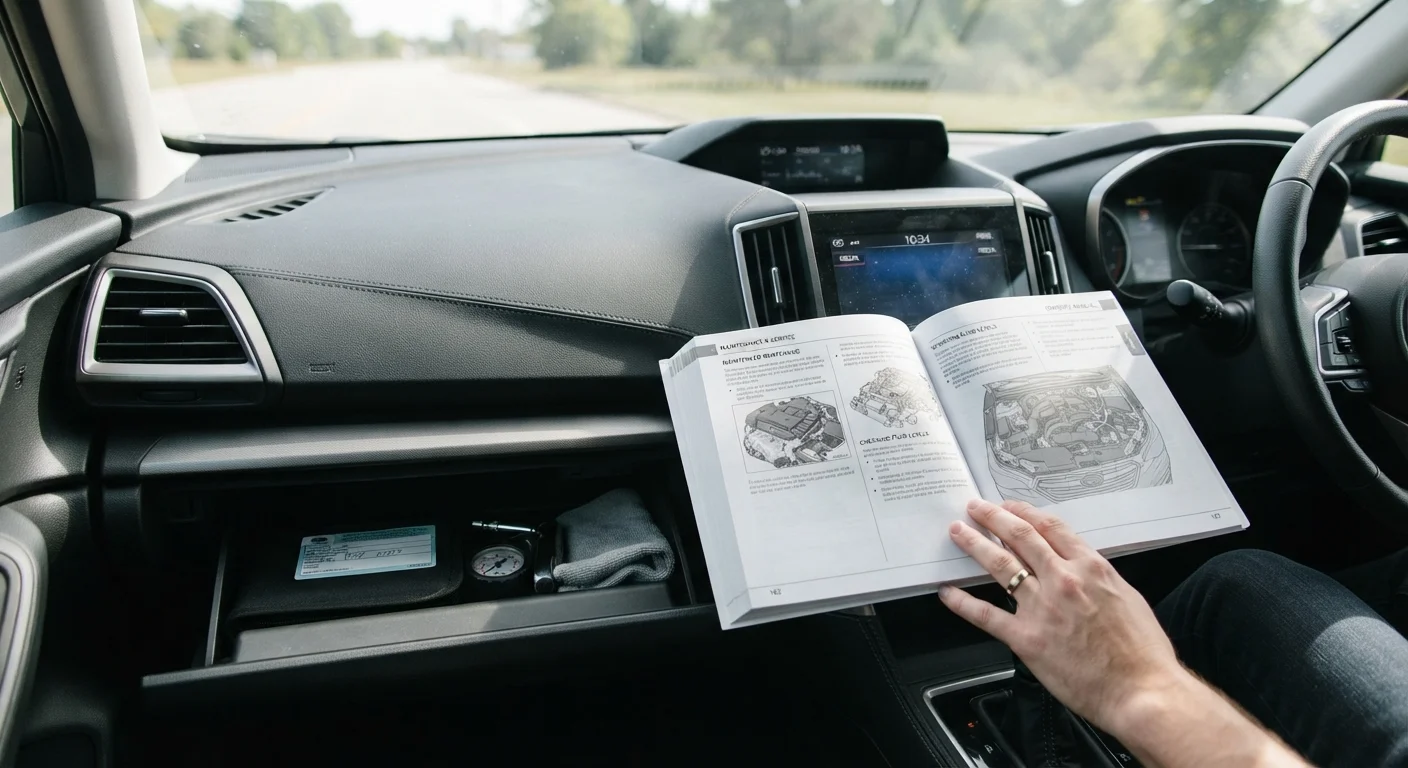
Why the Owner's Manual Is Your Most Reliable Source
Generic automotive advice - from well-meaning friends, online forums, and even some shops - is written for a broad audience. Your owner's manual is written for one vehicle: yours. It reflects decisions made by the engineers who designed your specific engine, transmission, and suspension, and it accounts for the tolerances, materials, and systems in that exact configuration.
This specificity matters more than most drivers realize. Oil change intervals vary widely by engine design. Fuel octane requirements differ between turbocharged and naturally aspirated engines. Recommended tire pressure changes based on vehicle weight and suspension tuning. Following advice calibrated for a different vehicle - even a similar one - introduces unnecessary guesswork into your maintenance routine.
If you're newer to vehicle ownership, building this habit early pays long-term dividends. Our guide on car maintenance for new drivers explains how foundational habits like manual-reading prevent costly problems down the road. For drivers managing higher-mileage vehicles, the manual remains equally relevant - though high-mileage vehicles have shifting maintenance needs worth understanding alongside it.
Digital Manuals Are Searchable
If you download a PDF version of your manual, use your PDF reader's search function (Ctrl+F or Cmd+F) to jump directly to terms like 'oil viscosity' or 'tire pressure' in seconds. This turns a 400-page document into a practical, instantly navigable reference tool.
What to Do Before Your Next Shop Visit
Armed with your manual's maintenance schedule and fluid specs, you're in a much stronger position when speaking with a mechanic. You can verify whether a recommended service is actually due according to your manufacturer's timeline, and you'll recognize terminology that might otherwise feel opaque. Our article on reading a mechanic's estimate without feeling lost builds on this foundation, walking through what each line item on a repair invoice actually means.
Understanding your manual also connects naturally to the broader goal of understanding your car as a system - not just a collection of parts that occasionally need attention. Drivers who know their vehicle's specifications tend to catch anomalies earlier, ask better questions, and make more confident decisions when unexpected repairs arise.
What you will need
Keep your notes from this exercise with your vehicle documents. The few minutes you invest today become a reference you'll return to dozens of times over the life of your car.
Don't Rely Solely on Third-Party Apps
Several apps and websites offer maintenance reminders based on make and model, but these tools pull from generalized databases that may not reflect your specific trim, engine variant, or regional specification. Always verify interval recommendations against your printed or manufacturer-provided manual before scheduling or skipping a service.
The content provided on our blog site traverses numerous categories, offering readers valuable and practical information. Readers can use the editorial team’s research and data to gain more insights into their topics of interest. However, they are requested not to treat the articles as conclusive. The website team cannot be held responsible for differences in data or inaccuracies found across other platforms. Please also note that the site might also miss out on various schemes and offers available that the readers may find more beneficial than the ones we cover.