

Start here
Why Maintenance Habits Matter From Day One
Next
The Fluids You Need to Know
Then
Tires: Your Most Important Safety Contact
When you're ready
Lights, Belts, and Warning Signs You Shouldn't Ignore
Put it all together
Building a Simple Maintenance Routine
Why Maintenance Habits Matter From Day One
Getting your license is a milestone - but the habits you build in those first months of driving shape how your vehicle performs for years. New drivers who treat maintenance as an afterthought often face preventable breakdowns, inflated repair bills, and shortened vehicle lifespans.
The good news: you don't need to be mechanically gifted to protect your car. Most foundational maintenance is about observation and consistency, not technical expertise. Understanding what's normal for your vehicle makes it far easier to spot when something changes. See our guide to understanding your car for clear explanations of how core vehicle systems work.
It's also worth being aware that some widely repeated advice doesn't hold up - for example, the belief that you must change your oil every 3,000 miles regardless of what your manufacturer recommends. Our car maintenance myths article separates fact from folklore.
Your Owner's Manual Is Your Best Tool
Every vehicle comes with an owner's manual that contains maintenance schedules, fluid specifications, and warning light explanations specific to your car. Many drivers never open it - don't be one of them. A digital version is often available from the manufacturer's website if the physical copy is missing.
The Fluids You Need to Know
Fluids are the lifeblood of your vehicle. Letting any of them fall critically low can cause damage that far exceeds the cost of a simple top-up.
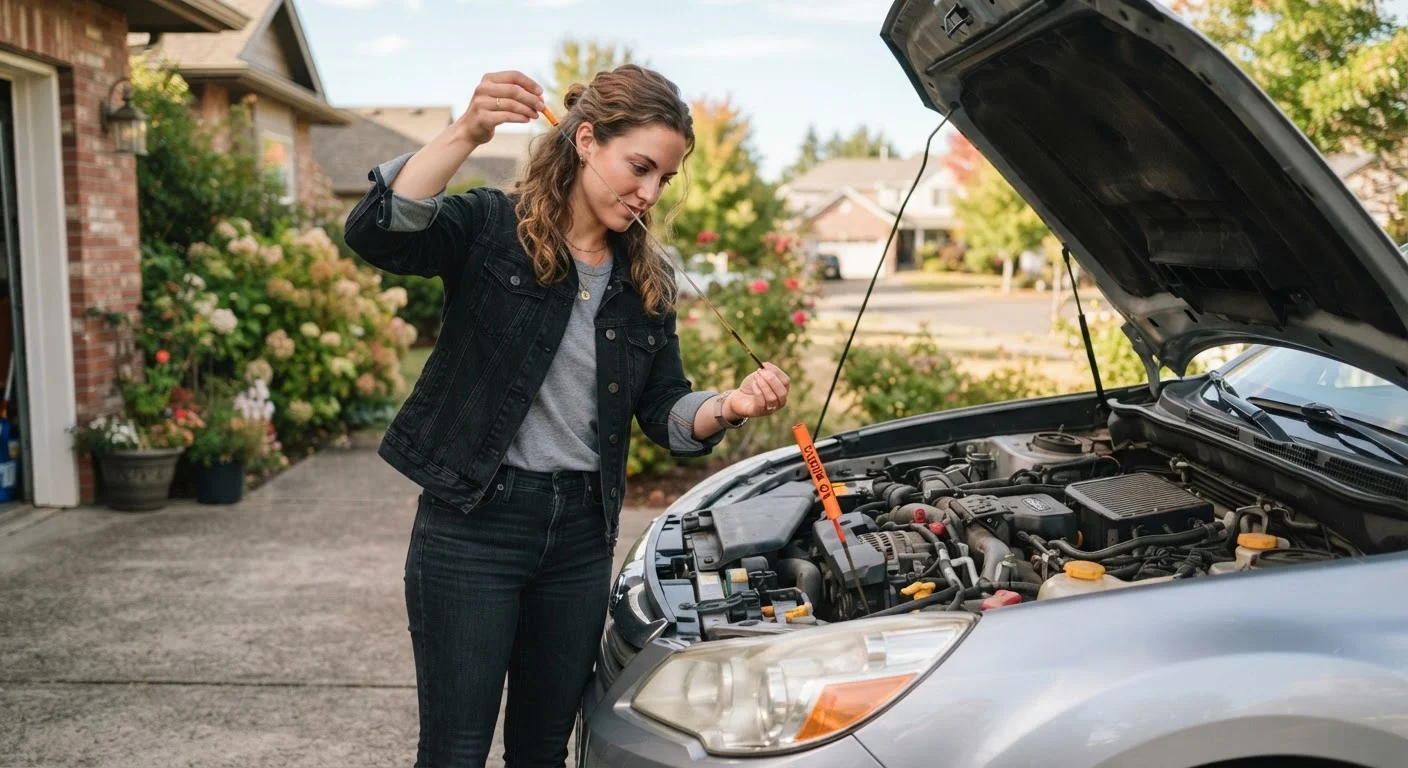
Dipstick
A long, thin rod inserted into the engine to measure the oil level. Pull it out, wipe it clean, reinsert it, then pull it again to get an accurate reading.
Coolant
A liquid mixture (usually water and antifreeze) that circulates through your engine to regulate its temperature and prevent overheating or freezing.
Tire pressure (PSI)
PSI stands for pounds per square inch - the unit used to measure how much air is in your tires. The correct PSI for your car is listed on the driver's door jamb sticker.
Tread depth
The depth of the grooves in your tire surface that channel water away from the contact patch. Shallow tread reduces grip, especially in wet conditions.
Serpentine belt
A single continuous belt that drives multiple engine accessories - such as the alternator and power steering pump - off the engine's rotation.
Check engine light
A dashboard warning indicator that signals the car's onboard computer has detected a problem somewhere in the engine or emissions system. It requires diagnostic scanning to identify the specific cause.
- Engine oil: Lubricates moving engine parts. Check the dipstick monthly when the engine is cold and the car is on level ground. Low or dark, gritty oil needs attention.
- Coolant (antifreeze): Prevents the engine from overheating or freezing. Check the overflow reservoir - never open the radiator cap on a hot engine.
- Brake fluid: Enables your brakes to function. If the level drops significantly without explanation, have a mechanic inspect for a leak.
- Windshield washer fluid: Not a safety-critical fluid, but running out at highway speed can be a visibility hazard. Easy to top up yourself.
- Power steering fluid and transmission fluid: Less frequent to check, but worth including in periodic inspections. Consult your owner's manual for intervals.
Your owner's manual is the definitive reference for your specific vehicle - not general internet advice. Fluid specifications vary by make and model.
Tires: Your Most Important Safety Contact
Tires are the only part of your car touching the road. Their condition affects braking distance, handling, and fuel efficiency - which means neglecting them is one of the car ownership habits that lead to expensive repairs.
Check Pressure Monthly
Tire pressure drops roughly 1 PSI for every 10°F drop in temperature, so seasonal changes matter. Use an inexpensive tire pressure gauge - or a gas station air pump - and compare your reading to the number on the driver's door jamb sticker. Do this when tires are cold (driven less than a mile).
Inspect Tread Depth
Insert a penny into the tread groove with Lincoln's head pointing down. If you can see the top of his head, the tread is worn below a safe threshold and replacement should be considered. Many mechanics recommend replacing tires before reaching this point.
Look for Uneven Wear
Tires wearing unevenly - more on one edge than the other - often signal an alignment or inflation issue worth addressing before it worsens. The seasonal maintenance checklist includes tire checks as a key item each season.
Lights, Belts, and Warning Signs You Shouldn't Ignore
Dashboard warning lights exist for a reason. A check engine light, battery warning, or brake alert isn't decoration - it's the car communicating a problem. Some lights indicate something minor; others signal an urgent issue. When in doubt, have a mechanic read the code with a diagnostic scanner rather than guessing.
Never Ignore a Brake or Temperature Warning
A brake system warning light or an engine temperature warning are among the most urgent dashboard alerts you can receive. Continuing to drive with an overheating engine or compromised brakes can cause severe mechanical damage or create a dangerous situation on the road. Pull over safely and contact a mechanic before driving further.
Exterior Lights
Walk around your car periodically to confirm all exterior lights - headlights, brake lights, turn signals, and reverse lights - are functioning. A burned-out brake light is both a safety hazard and a traffic stop waiting to happen. Bulb replacement is straightforward on most vehicles and covered in your owner's manual.
Drive Belts
The serpentine belt powers accessories like the alternator and power steering pump. If it fails while driving, you may lose multiple systems at once. Inspect it (or ask a mechanic to) for cracks, fraying, or glazing. Replacement intervals vary - check your owner's manual. For a comprehensive picture of what ongoing maintenance involves, see everything involved in keeping a car roadworthy.
Building a Simple Maintenance Routine
The most effective maintenance plan is one you'll actually follow. Start with a monthly five-minute walk-around: check tire pressure, scan for fluid leaks under the car, verify all lights work, and glance at your dashboard for any warning lights.
Layer in slightly less frequent tasks - oil level checks, wiper blade inspection, and topping off washer fluid - on the same schedule as your monthly check so nothing slips. Keeping a simple log of what you checked and when helps enormously, both for your peace of mind and for any mechanic who works on your car later. Our article on keeping records of vehicle maintenance explains why documentation matters more than most drivers realize.
For tasks beyond basic checks - brake work, timing belts, or anything involving the fuel system - a qualified mechanic is the right choice. Knowing where the line is between DIY and professional service is itself a valuable skill. The DIY vs. mechanic guide walks through exactly how to make that call. Pair good maintenance habits with confident driving habits and you're setting yourself up for years of trouble-free motoring.
Maintenance Needs Change as Your Car Ages
The habits that serve you well in a newer vehicle may need adjusting as the miles accumulate. Higher-mileage cars often require more frequent inspections and have different fluid and component needs. If your car is approaching or past 100,000 miles, our guide to high-mileage vehicle maintenance covers what changes and why.
Frequently Asked Questions
A monthly check is a sensible baseline for most drivers. If your car is older or you notice any burning smell or the oil warning light appears, check it sooner. Always consult your owner's manual for manufacturer guidance specific to your vehicle.
The correct tire pressure for your vehicle is listed on a sticker inside the driver's door jamb - not on the tire sidewall, which shows the maximum pressure the tire can hold. Check pressure when tires are cold for the most accurate reading.
Any time a dashboard warning light stays on, you hear unusual sounds like grinding or knocking, or notice fluid leaks under the car, take it to a qualified mechanic promptly. Don't delay - many issues escalate quickly when left unaddressed.
Yes - checking fluids, inspecting tires, replacing wiper blades, and swapping cabin air filters are tasks many beginners handle confidently with guidance. For anything involving brakes, electrical systems, or engine internals, a qualified mechanic is the safer choice.
Common signs include squealing or grinding when braking, a spongy or low-feeling brake pedal, or the car pulling to one side during braking. If you experience any of these, have a mechanic inspect your brakes before driving further.
The content provided on our blog site traverses numerous categories, offering readers valuable and practical information. Readers can use the editorial team’s research and data to gain more insights into their topics of interest. However, they are requested not to treat the articles as conclusive. The website team cannot be held responsible for differences in data or inaccuracies found across other platforms. Please also note that the site might also miss out on various schemes and offers available that the readers may find more beneficial than the ones we cover.