

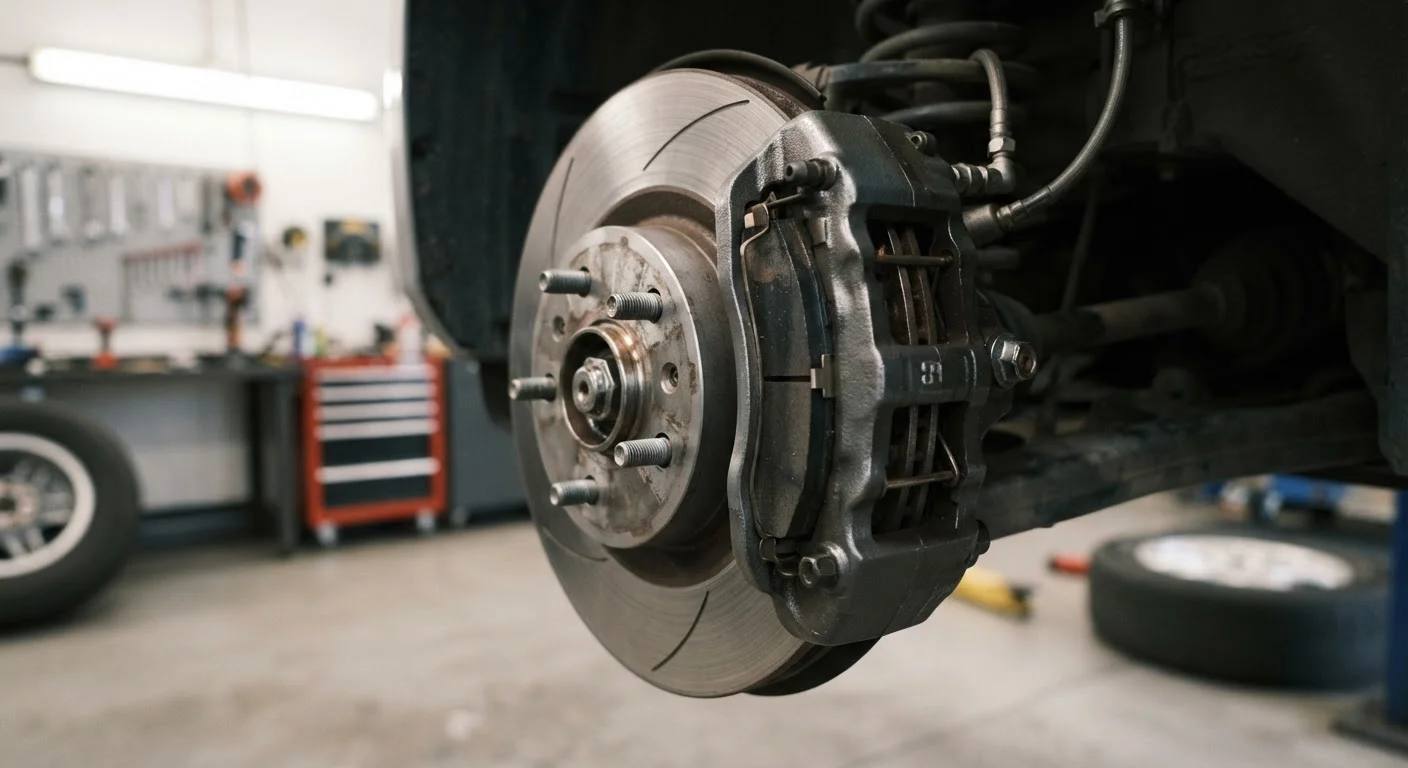
The Three Parts of Your Brake System - and What Each One Actually Does
When a mechanic says your brakes need work, they're almost always referring to one or more of three components: the brake pad, the rotor, and the caliper. Understanding what each one does makes it far easier to follow - and evaluate - the diagnosis you're given.
Brake Pad
The brake pad is the friction material that physically presses against the rotor to create stopping force. It's the part that wears down with every stop you make. Pads have a metal backing plate bonded to a friction compound - as the compound wears thin, braking effectiveness drops and you risk metal-on-metal contact with the rotor. Most pads include a small metal tab called a wear indicator that produces a squealing sound when the pad is near the end of its useful life. See our guide to recognizing brake pad wear for the warning signs to watch for.
Rotor
The rotor is the large metal disc that spins with the wheel. When you press the brake pedal, the pads clamp against both sides of the rotor, creating friction that slows the wheel. Rotors can warp from heat cycles, develop grooves from worn pads, or corrode from moisture and inactivity. A warped rotor typically produces a pulsing or vibrating sensation through the brake pedal.
Caliper
The caliper is the hydraulic clamp that holds the brake pads and squeezes them against the rotor when brake fluid pressure is applied. Most vehicles use a sliding or fixed caliper design. Calipers rarely fail outright, but their pistons can seize, causing uneven braking force or a brake that stays partially engaged - sometimes described as the car "pulling" to one side under braking.
25,000-65,000 mi
Typical brake pad replacement interval
Range reflects differences in pad compound, vehicle weight, and driving patterns; city driving shortens lifespan significantly.
~$300-$800
Typical cost range for a single-axle brake job
Figures vary widely by vehicle type, parts grade, and regional labor rates; this is a general educational reference, not a price guarantee.
2-3x
How long rotors can outlast brake pads
Rotors can survive multiple pad replacement cycles when pads are changed before metal-on-metal wear occurs.
How These Parts Wear - and Why the Order Matters
Brake pads are the consumable in this system - they're designed to wear out and be replaced. Rotors are more durable but finite: they can often outlast two or three sets of pads, provided the pads are replaced before they wear through completely. Calipers, when properly maintained, can last the life of the vehicle.
The order of wear matters because neglect cascades. Pads worn past their limit score the rotor surface. Scored rotors accelerate wear on replacement pads. A seized caliper applies uneven pressure, wearing one pad far faster than the other on the same axle. Catching problems at the pad stage is almost always cheaper than waiting until the rotor is involved. Habits like riding the brake pedal on long downhill stretches or frequent hard stops in stop-and-go traffic also accelerate wear - factors covered in more depth in our article on car ownership habits that lead to expensive repairs.
Check Brake Fluid While You're at It
Brake fluid absorbs moisture over time, which lowers its boiling point and can contribute to caliper corrosion from the inside. Many manufacturers recommend flushing brake fluid every two years or 30,000 miles regardless of brake pad condition. Our guide to car fluids explains what degraded brake fluid actually means for your stopping ability.
When to Question Your Quote
Knowing what these parts do gives you a foundation to ask better questions - not to second-guess your mechanic, but to understand what you're paying for.
Questions worth asking when you receive a brake quote:
- Which specific components are being replaced, and on which axle? Front and rear brakes wear at different rates; replacing all four corners when only the fronts are worn isn't always necessary.
- Are the rotors being replaced or resurfaced? Resurfacing (machining) is appropriate when the rotor is within thickness spec but has surface irregularities. If replacement is recommended, ask what measurement triggered that call.
- Are OEM or aftermarket parts being used? Both can be appropriate, but the answer affects both price and longevity expectations.
- Is the caliper actually failing, or is this a preventive recommendation? Caliper replacement on a high-mileage vehicle may be warranted, but the reasoning should be specific.
A shop that welcomes these questions and answers them clearly is generally one worth trusting. For a broader breakdown of how to read a full repair estimate line by line, see our guide to reading a mechanic's estimate.
Brake Work Is Not a DIY Gray Area for Everyone
Brake systems are safety-critical. While experienced home mechanics with the right tools can replace pads successfully, incorrect reassembly - such as a caliper bolt torqued incorrectly or a brake line not bled properly - can result in brake failure. If you're unsure, a qualified mechanic is the right call. Our DIY vs. mechanic guide can help you assess your situation honestly.
Frequently Asked Questions
Brake pad lifespan varies widely - roughly 25,000 to 65,000 miles depending on driving style, vehicle weight, and pad material. City drivers who brake frequently tend to wear pads faster than highway drivers. Your mechanic can measure remaining pad thickness during a routine inspection.
Not always. Rotors can sometimes be resurfaced (machined smooth) rather than replaced, provided they still meet minimum thickness specifications. If a rotor is warped, deeply grooved, or below spec, replacement is the appropriate call. Ask your mechanic to show you the measurement.
Calipers most commonly fail by seizing - the piston inside stops moving freely, causing uneven braking or a brake that drags. This often happens on older vehicles, those exposed to road salt, or those that sit unused for extended periods. A seized caliper will usually cause the vehicle to pull to one side.
No. Severely worn pads can damage rotors rapidly and significantly reduce stopping ability. If you hear persistent squealing or grinding when braking, have the system inspected promptly. Delaying brake repairs creates risk for you and others on the road.
Labor rates, parts sourcing (OEM vs. aftermarket), and shop overhead all affect pricing. A lower quote isn't automatically better - ask each shop what parts brand they're using and how many labor hours are estimated. Our <a href="/cars-driving/understanding-your-car/reading-a-mechanics-estimate-without-feeling-lost">guide to reading a mechanic's estimate</a> walks through every line item.
Brake pad replacement is one of the more accessible DIY tasks for experienced home mechanics, but it carries real safety implications if done incorrectly. See our <a href="/cars-driving/car-maintenance/diy-car-maintenance-vs-taking-it-to-a-mechanic">DIY vs. mechanic guide</a> to weigh whether it's the right call for your situation and skill level.
The content provided on our blog site traverses numerous categories, offering readers valuable and practical information. Readers can use the editorial team’s research and data to gain more insights into their topics of interest. However, they are requested not to treat the articles as conclusive. The website team cannot be held responsible for differences in data or inaccuracies found across other platforms. Please also note that the site might also miss out on various schemes and offers available that the readers may find more beneficial than the ones we cover.