

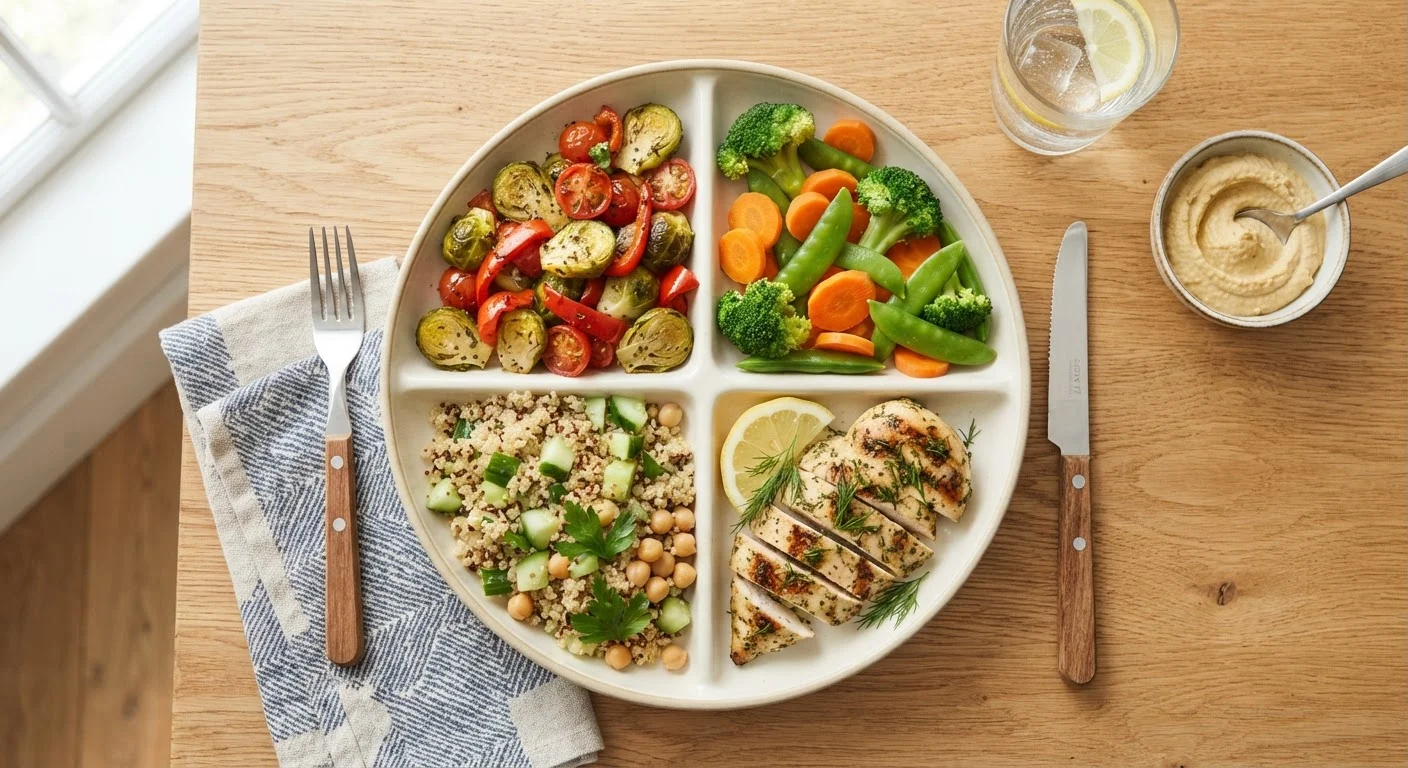
Why the Plate Method Works
Calorie counting can feel exhausting - and for many people, it backfires by creating stress around food rather than healthier habits. The plate method offers a practical alternative: a visual framework that guides how much of each food group fills your plate, no math required.
Developed and promoted by nutrition educators and health organizations, the concept is straightforward. Instead of weighing food or consulting an app, you use the proportions of your plate as a real-time guide. It's flexible enough to work at a restaurant, a family dinner, or a busy weeknight. And because it focuses on food composition rather than restriction, it sidesteps the all-or-nothing thinking that derails many eating plans.
If you're newer to thinking intentionally about what you eat, a grounding overview of nutrition basics can help you understand the reasoning behind the proportions before you begin applying them.
Consistency Matters More Than Perfection
No single meal defines your overall diet. If one plate is unbalanced, the next one is a fresh opportunity. Aiming for the plate structure most of the time - not every time - is a realistic and sustainable target. Research on dietary patterns consistently shows that long-term habits, not individual meals, drive health outcomes.
What You'll Need Before You Start
The plate method requires almost no special equipment. The main shift is mental: moving from rules about what you can't eat toward a positive structure for what you can include.
What you will need
How to Build Your Plate, Step by Step
Follow these steps at your next meal. They apply whether you're cooking from scratch, reheating leftovers, or eating out.
Fill half your plate with non-starchy vegetables
Non-starchy vegetables - things like leafy greens, broccoli, peppers, zucchini, tomatoes, carrots, and green beans - should cover roughly half your plate. They provide fiber, vitamins, and volume that helps you feel full without a heavy caloric load.
Variety matters here. Different colors generally signal different nutrients, so rotating through a range of vegetables over the week supports broader nutritional coverage.
Reserve one quarter for lean or plant-based protein
Protein supports muscle maintenance, helps regulate hunger signals, and keeps energy more stable between meals. Use roughly one quarter of your plate for a protein source: chicken, fish, eggs, tofu, tempeh, legumes, or lean cuts of meat.
Plant-based proteins like lentils, chickpeas, and black beans also bring fiber, making them a particularly filling choice for this section.
Fill the remaining quarter with whole grains or starchy vegetables
The final section of your plate is for energy-dense carbohydrates: brown rice, whole wheat pasta, quinoa, farro, sweet potato, corn, or whole grain bread. These provide sustained energy and important B vitamins and minerals.
Whole grain versions of these foods contain more fiber than refined counterparts, which supports digestion and helps moderate blood sugar response after eating.
Add a small amount of healthy fat
Fat is essential for nutrient absorption - particularly fat-soluble vitamins like A, D, E, and K found in vegetables. A small amount of olive oil used in cooking, a few slices of avocado, a handful of nuts, or a drizzle of dressing rounds out your plate nutritionally.
This doesn't need to be a separate section - it's often already present in how food is prepared or in accompaniments you naturally include.
Choose a beverage that doesn't undermine your meal
Liquid calories are easy to overlook. Water is the simplest and most universally recommended choice. Unsweetened tea, sparkling water, or black coffee are also fine options. Sugary drinks, juice, and alcohol add calories without contributing meaningful satiety or nutrition.
Once this structure becomes familiar, it starts to feel automatic. You won't need to think carefully about every meal - the proportions will simply become your default.
Individual Needs Vary Significantly
The plate method is a general educational framework, not a personalized nutrition plan. People with diabetes, kidney disease, food allergies, or other health conditions may need different proportions or food choices. If you have a medical condition or specific health goals, work with a registered dietitian or your healthcare provider to tailor your approach.
Making It Work Across Real Life
One of the plate method's biggest strengths is adaptability. A stir-fry can follow the same proportions as a more traditional dinner - load half the bowl with bok choy, broccoli, and mushrooms; fill a quarter with tofu or chicken; and keep the rice or noodles to the remaining quarter. Soups and grain bowls follow the same logic with a different shape.
When you're grocery shopping, keeping these proportions in mind helps you buy with purpose. Building a cart with nutrition in mind pairs naturally with this approach - you're simply stocking the ingredients each section of your plate needs.
Eating well this way also doesn't have to strain your budget. Practical principles for nutritious eating on a budget show how to fill each plate section affordably, using staples like canned legumes, frozen vegetables, and whole grains.
For those who want to extend this thinking across the week, a beginner's approach to meal planning can help you prep ingredients in advance so balanced plates come together in minutes on busy evenings.
It's also worth noting that even seemingly healthy choices can fall short without this structure. A salad without protein or healthy fat, for example, may leave you hungry and short on key nutrients - a problem the plate method naturally solves by prompting you to include all sections.
This article provides general nutrition information for educational purposes only. It is not a substitute for personalized advice from a registered dietitian or qualified healthcare professional. Individual nutrition needs vary - consult a professional for guidance specific to your health situation.
The content provided on our blog site traverses numerous categories, offering readers valuable and practical information. Readers can use the editorial team’s research and data to gain more insights into their topics of interest. However, they are requested not to treat the articles as conclusive. The website team cannot be held responsible for differences in data or inaccuracies found across other platforms. Please also note that the site might also miss out on various schemes and offers available that the readers may find more beneficial than the ones we cover.