

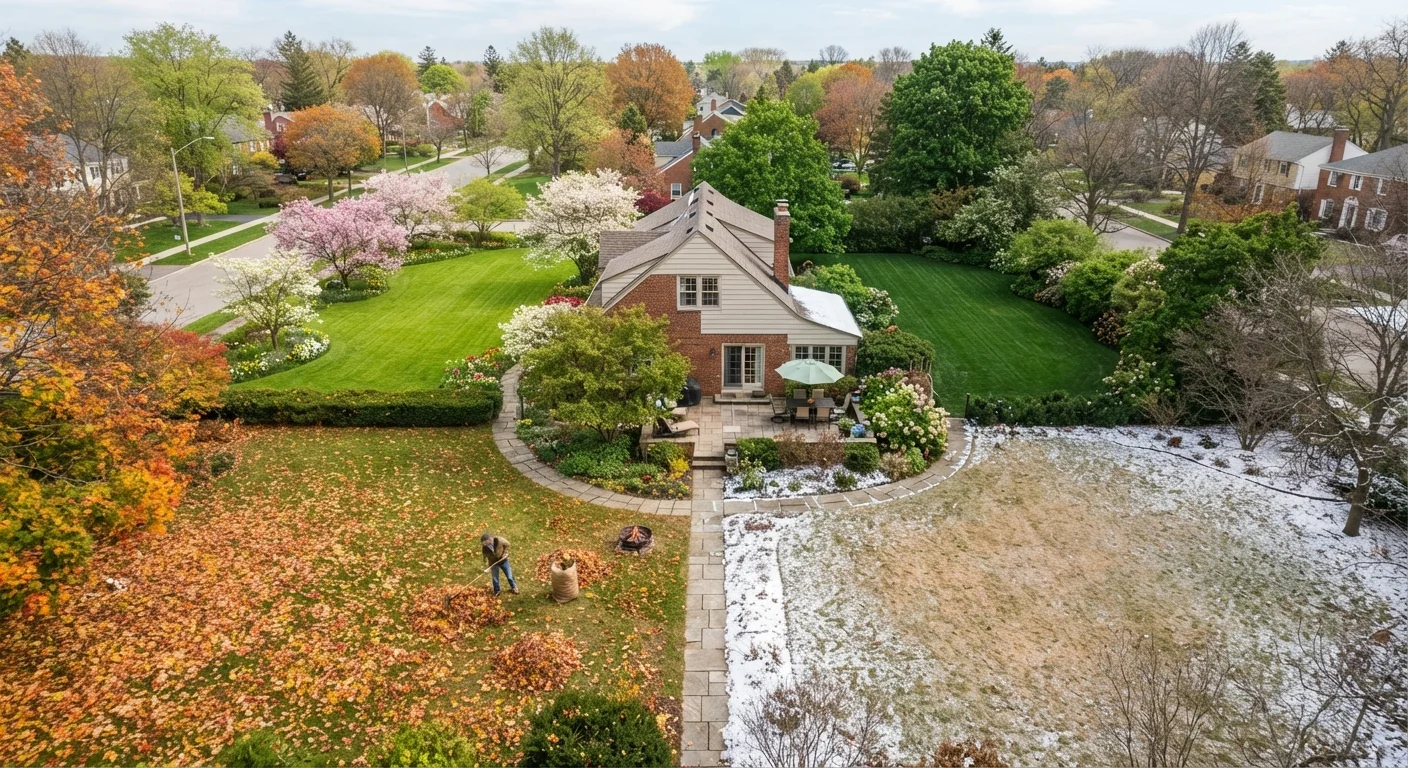
Why a Seasonal Schedule Matters
Lawn care is not a one-size-fits-all, one-time task - it's a living system that responds to temperature, rainfall, and daylight. Applying the right treatment at the wrong time of year can waste money, stress the grass, or invite weeds. A season-by-season calendar takes the guesswork out by aligning your efforts with what the lawn actually needs biologically.
Keep in mind that climate zones vary significantly across the United States. Cool-season grasses - such as Kentucky bluegrass, fescue, and ryegrass - thrive in northern states, while warm-season varieties like Bermuda, St. Augustine, and zoysia dominate the South. Timing recommendations in this guide generally follow these two broad categories; always adjust based on your local growing conditions and first and last frost dates.
| Cool-season grass peak growth | Spring and fall (soil temp 50-65°F) |
| Warm-season grass peak growth | Late spring through summer (soil temp 70-90°F) |
| Recommended mowing height (summer) | 3-4 inches for most cool-season types |
| Typical weekly water need | ~1 inch per week (combined rain and irrigation) |
| Thatch threshold requiring action | More than ½ inch of accumulated dead matter |
| Best time to overseed (cool-season) | Early fall (late August-September) |
For a broader view of outdoor space planning, see our backyard planning guide to connect lawn care with your overall outdoor design.
Spring: Wake Up and Repair
Cool-season lawns (March-May) / Warm-season lawns (April-May):
- Rake and dethatch: Remove accumulated dead grass (thatch) once the soil is no longer waterlogged. A thatch layer thicker than about ½ inch blocks water and nutrients.
- Soil test: Test pH and nutrient levels before applying any fertilizer. Extension services at land-grant universities often offer low-cost testing.
- Aerate: Core aeration - pulling small plugs from the soil - relieves compaction and improves root penetration. Spring is ideal for cool-season grasses.
- Overseed bare patches: Lightly scratch the soil surface, apply seed appropriate to your grass type, and keep the area moist until germination.
- Pre-emergent weed control: Apply before soil temperatures consistently reach around 55°F to prevent crabgrass and other annual weeds from germinating. Timing this correctly is critical - too early and it degrades; too late and weeds have already sprouted.
- First mow: Set the blade higher than your summer height to avoid scalping tender new growth.
Thatch
A layer of dead and living grass stems and roots that accumulates between the green blades and the soil surface. Thin thatch (under ½ inch) can be beneficial, but a thicker layer blocks water and nutrients.
Core aeration
A mechanical process that removes small plugs of soil and thatch from the lawn to reduce compaction, improve air circulation, and allow water and fertilizer to reach grass roots more effectively.
Overseeding
Spreading grass seed over an existing lawn without tearing up the turf. Used to thicken thin areas, introduce improved varieties, or repair damage from heat, drought, or pests.
Pre-emergent herbicide
A weed control product applied to soil before weed seeds germinate. It works by preventing seedling establishment, not by killing existing weeds, so timing relative to soil temperature is critical.
Dormancy
A natural resting state in which grass slows or stops visible growth to conserve energy during extreme heat or cold. Dormant grass is not dead - it typically resumes growth when conditions improve.
Winterizer fertilizer
A fall-applied fertilizer formulated to feed grass roots without stimulating excessive top growth. It helps grass store carbohydrates that support winter survival and spring green-up.
Summer: Sustain and Protect
All regions (June-August):
Summer is about maintenance, not transformation. Heat and drought stress make lawns vulnerable, so your primary goals are hydration management and resisting the urge to over-treat.
- Water deeply and infrequently: Most lawns benefit from about 1 inch of water per week, delivered in one or two sessions rather than daily light sprinkles. Deep watering encourages roots to grow downward.
- Mow at the right height: Raise your mower deck in summer. Taller grass (3-4 inches for most cool-season types) shades the soil, retains moisture, and crowds out weeds.
- Avoid heavy fertilizing in heat: Applying high-nitrogen fertilizer during a heat wave can burn grass. If you fertilize, use a slow-release formula and apply when temperatures are moderate.
- Monitor for pests: Watch for signs of grubs, chinch bugs, or fungal disease. Brown patches that don't recover after watering may signal a pest or disease issue rather than drought.
Lawn Treatments and Pet Safety
Many fertilizers, herbicides, and pesticides require a re-entry interval - a waiting period before the treated area is safe for children and pets. Always read product labels carefully for specific guidance. When in doubt, use the area only after it has dried completely and, if possible, after a watering cycle. Natural or organic formulations may have different profiles, but still warrant label review.
If you have pets, check our pet health guidance for advice on keeping yards safe for animals during lawn treatment periods.
Fall: The Most Important Season
Cool-season lawns (September-November) / Warm-season lawns (winding down by October):
Fall is the single most productive season for cool-season lawn care. Cooler temperatures and reliable rainfall create ideal conditions for grass recovery and root development heading into winter.
- Aerate (again, if needed): Fall aeration is especially beneficial for cool-season grasses - roots grow actively through autumn, and loosening soil now pays dividends in spring.
- Overseed: Overseeding in early fall fills thin areas before winter. Seed-to-soil contact is essential; aerate first for best results.
- Fertilize: A fall fertilizer application - often called a "winterizer" - feeds roots without pushing excessive top growth, building carbohydrate reserves for winter.
- Keep mowing: Continue mowing until growth stops. Grass left too long going into winter is susceptible to snow mold and matting.
- Leaf management: Mulch or remove leaves promptly. A thick mat of wet leaves blocks sunlight and air, promoting disease.
Our fall garden prep checklist complements these lawn tasks with broader garden winterizing steps.
Winter: Rest and Plan
All regions (December-February):
For most lawns, winter is a period of dormancy - grass conserves energy underground while visible growth stops. Your primary job is to avoid damage and use the downtime productively.
- Minimize foot traffic: Dormant grass is fragile. Repeated walking on frozen or frost-covered turf can damage crowns and leave bare spots that appear in spring.
- Service your equipment: Sharpen mower blades, change the oil, and inspect spreaders while they're not in use. Sharp blades make cleaner cuts that reduce disease risk.
- Review and plan: Order seed, map trouble spots from last season, and schedule any spring soil tests. This is also a good time to consult our home maintenance calendar to coordinate lawn tasks with broader property upkeep.
- Warm-season grass note: In mild southern climates, warm-season grasses may remain partially active through winter. Reduce watering but continue monitoring for unseasonably dry conditions.
This article provides general lawn care guidance for educational purposes. Local climate, soil type, and specific grass varieties will affect results. Consult your local cooperative extension service for region-specific recommendations.
The content provided on our blog site traverses numerous categories, offering readers valuable and practical information. Readers can use the editorial team’s research and data to gain more insights into their topics of interest. However, they are requested not to treat the articles as conclusive. The website team cannot be held responsible for differences in data or inaccuracies found across other platforms. Please also note that the site might also miss out on various schemes and offers available that the readers may find more beneficial than the ones we cover.