

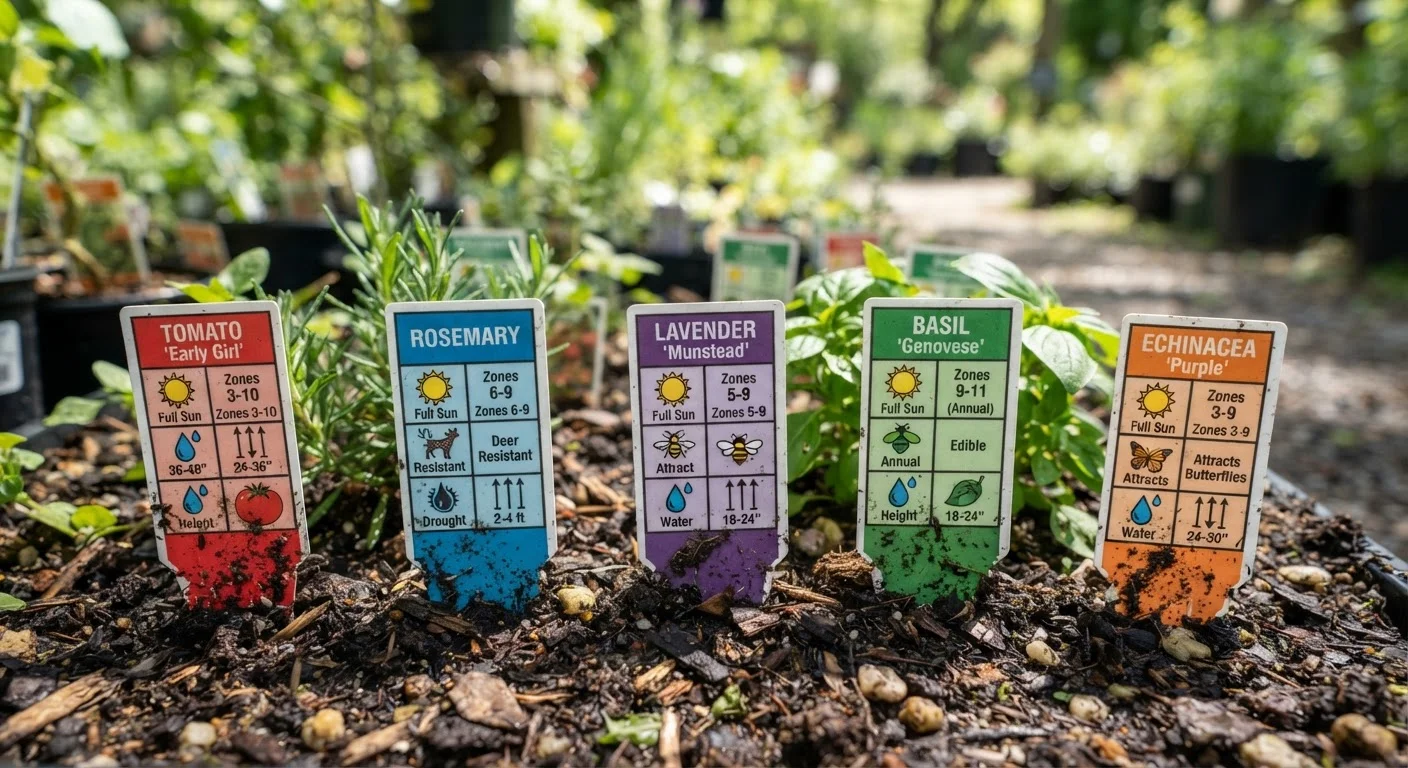
Why Plant Tags Are Worth Reading Carefully
Most gardeners glance at the photo on a plant tag, maybe catch the plant's name, and call it a day. But those small plastic labels are packed with genuinely useful data - the kind that can mean the difference between a thriving plant and a struggling one. Learning to read them fluently takes about five minutes and pays dividends for every season after.
Think of a plant tag like a spec sheet. Each piece of information answers a specific question: Where will this survive winter? How much sun does it really need? How big will it get, and how far should I space it from its neighbors? This guide walks through each element so you can shop and plant with confidence.
| USDA Hardiness Zones | Zones 1-13 (coldest to warmest) (USDA Agricultural Research Service) |
| Full Sun Threshold | 6+ hours of direct sunlight daily |
| Part Sun / Part Shade Range | 3-6 hours of direct sunlight daily |
| Full Shade Threshold | Fewer than 3 hours of direct sunlight |
| AHS Heat Zone Scale | Zones 1-12 (coolest to hottest) (American Horticultural Society) |
| Spacing Measurement Convention | Center-to-center, based on mature spread |
Hardiness Zones: Will It Survive Your Winter?
The USDA Plant Hardiness Zone number (for example, "Zones 5-9") tells you the range of winter low temperatures a plant can withstand. The U.S. is divided into 13 zones based on average annual minimum temperatures, with Zone 1 being the coldest and Zone 13 the warmest. If your region falls outside the tag's listed range, the plant may not survive an average winter in your yard.
Finding your zone is straightforward - the USDA publishes an interactive hardiness zone map online. Enter your ZIP code and note the number. A plant labeled Zones 5-9 will reliably survive winters in those zones; if you're in Zone 4, plan to treat it as an annual or provide heavy mulch protection.
USDA Hardiness Zone
A numerical designation indicating the coldest average winter temperature a geographic area experiences. Plants rated for a zone can generally survive that zone's typical winter lows without special protection.
Mature Spread
The expected width of a plant at full size, measured from the outermost branch tip to tip. This number determines appropriate spacing between plants at planting time.
Part Shade vs. Part Sun
Both terms describe 3-6 hours of daily direct sunlight, but "part sun" implies a preference for the higher end of that range, while "part shade" suggests the plant benefits from some protection from intense afternoon sun.
Heat Zone
A rating from the American Horticultural Society's Heat Zone Map indicating how many days per year a region exceeds 86°F. Used alongside hardiness zones to assess whether a plant can tolerate summer conditions, not just winter cold.
Well-Drained Soil
Soil that absorbs water at a moderate rate and does not stay saturated for long after rain or irrigation. Poorly drained or compacted soils can cause root rot in plants that require well-drained conditions.
It's also worth knowing that hardiness zones only capture cold tolerance - they say nothing about heat, humidity, or drought. Some tags include a Heat Zone number from the American Horticultural Society's map, which tracks the number of days per year above 86°F. If both appear, use both to assess suitability.
Sun, Water, and Spacing: Reading the Symbols
Most tags use simple icons to convey growing conditions at a glance. Here's what each typically means:
- Full Sun (solid sun icon): The plant needs 6 or more hours of direct sunlight daily. These plants often struggle or fail to bloom in shadier spots.
- Part Sun / Part Shade (half-sun icon): Requires 3-6 hours of direct sun. "Part sun" leans toward more light; "part shade" leans toward less. Context matters, especially in hot climates where afternoon shade is protective.
- Full Shade (shaded icon): Thrives with fewer than 3 hours of direct sun. This doesn't mean complete darkness - dappled light under trees often qualifies.
Water droplet icons usually range from one droplet (drought-tolerant) to three (consistently moist). Take these as general guides; local soil drainage will affect actual watering needs significantly.
Spacing tells you how far apart to plant, measured center-to-center. It's tempting to plant closer for an immediate full look, but crowding causes poor airflow, disease, and competition for nutrients. The mature spread listed on the tag - often expressed as a range like "12-18 inches" - is the primary driver of that spacing recommendation.
13
USDA Hardiness Zones across the U.S.
The USDA Plant Hardiness Zone Map divides the country into 13 zones based on average annual minimum winter temperatures.
6+ hrs
Daily sun needed for "Full Sun" plants
Plants tagged as full sun generally require at least six hours of direct light to bloom and grow as described on the label.
For a deeper look at how plant type affects your spacing and planting calendar, see our guide on perennials vs. annuals - the distinction shapes nearly every long-term garden decision.
Tag Information Reflects Average Conditions
Plant tag data is based on typical growing conditions - average soil, moderate climate, and standard care. Microclimates in your yard (a south-facing wall, a low-lying frost pocket, sandy or clay-heavy soil) can shift actual performance noticeably. Use tags as a strong starting point, then adjust based on what you observe in your specific space.
Height, Bloom Time, and Other Tag Details
The mature height range (e.g., "24-36 inches") reflects typical growth under average conditions. Soil quality, watering habits, and climate can shift actual size up or down. Use height when planning layered plantings - taller plants belong at the back of a border so they don't shade shorter neighbors.
Bloom time is listed by season (Spring, Summer, Fall) or sometimes by month. Stagger bloom times across your plantings to keep something flowering throughout the growing season rather than everything peaking at once.
Some tags include a soil type preference such as "well-drained" or "moist, humus-rich." This pairs with drainage conditions in your yard. A plant listed as requiring well-drained soil planted in heavy clay is likely to develop root rot regardless of how well you water it.
Finally, check for any deer resistance or pollinator attraction icons - small symbols that vary by nursery but are usually explained on a legend posted somewhere in the garden center. These shorthand labels can save a lot of research time when you're planning for local wildlife or managing browsing pressure.
Reading product labels accurately is a skill that transfers across contexts - whether you're decoding common product label terms at the store or parsing your plant tag at the nursery, the same careful attention to detail pays off.
The content provided on our blog site traverses numerous categories, offering readers valuable and practical information. Readers can use the editorial team’s research and data to gain more insights into their topics of interest. However, they are requested not to treat the articles as conclusive. The website team cannot be held responsible for differences in data or inaccuracies found across other platforms. Please also note that the site might also miss out on various schemes and offers available that the readers may find more beneficial than the ones we cover.