

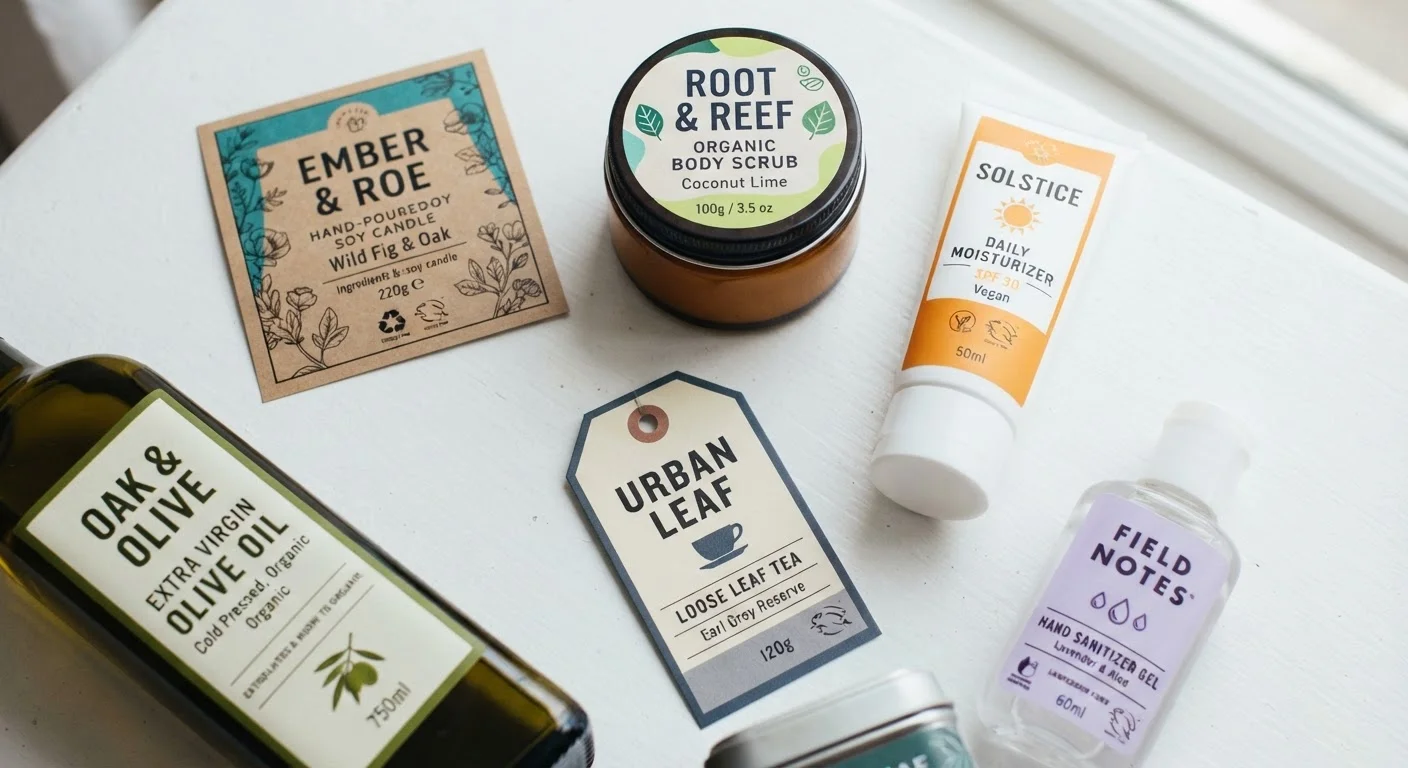
Why Label Language Matters
Consumer product labels exist to inform, but they're also the primary surface where marketing competes with accuracy. Words like premium, natural, and eco-friendly carry real persuasive weight - yet most have no legal definition and no required proof. Understanding which terms are regulated, which are aspirational, and which are outright vague gives you a meaningful edge every time you make a purchase decision.
This glossary covers the terms that appear most frequently across consumer goods: food, personal care, cleaning products, and general merchandise. For a deeper look at how marketing copy obscures product details, see how to read between the lines of any product description. If food labels are your primary concern, the companion article on food marketing claims like 'natural' and 'multigrain' covers the grocery aisle specifically.
The Terms, Defined Plainly
The glossary below separates terms with regulatory backing from those that are effectively uncontrolled. When a term has a governing standard, that standard is noted. When it doesn't, that absence is the point.
For pet owners navigating a similar maze of label language, pet nutrition terms explained plainly applies many of these same principles to the pet food aisle, where 'complete and balanced' carries specific AAFCO-defined meaning. And understanding what warranty terms actually cover rounds out your label-literacy toolkit when evaluating durable goods.
How to Apply This in Practice
Reading labels more critically doesn't require memorizing every regulatory detail. A few reliable habits do most of the work:
- Identify who made the claim. Manufacturer-stated terms like 'premium' or 'eco-friendly' require no external verification. A USDA Organic seal or NSF certification involves an outside party with documented standards.
- Ask what the claim applies to. 'Made with organic ingredients' is not the same as 'Certified Organic.' A product can be '98% natural' while the remaining 2% includes the most consequential ingredient for your purposes.
- Look at net weight and ingredient order. These are federally regulated and tell you more than most marketing language. Ingredients are listed by weight, so the first few dominate the product.
- Cross-reference when stakes are high. For cleaning products, cosmetics, or supplements, independent databases maintained by consumer and regulatory organizations can confirm or complicate what the label says.
This article is for general consumer education only and does not constitute legal, regulatory, or purchasing advice. Regulations and standards referenced reflect general U.S. frameworks and may vary by product category, state, or over time. Always verify current standards with the relevant regulatory authority.
The content provided on our blog site traverses numerous categories, offering readers valuable and practical information. Readers can use the editorial team’s research and data to gain more insights into their topics of interest. However, they are requested not to treat the articles as conclusive. The website team cannot be held responsible for differences in data or inaccuracies found across other platforms. Please also note that the site might also miss out on various schemes and offers available that the readers may find more beneficial than the ones we cover.