

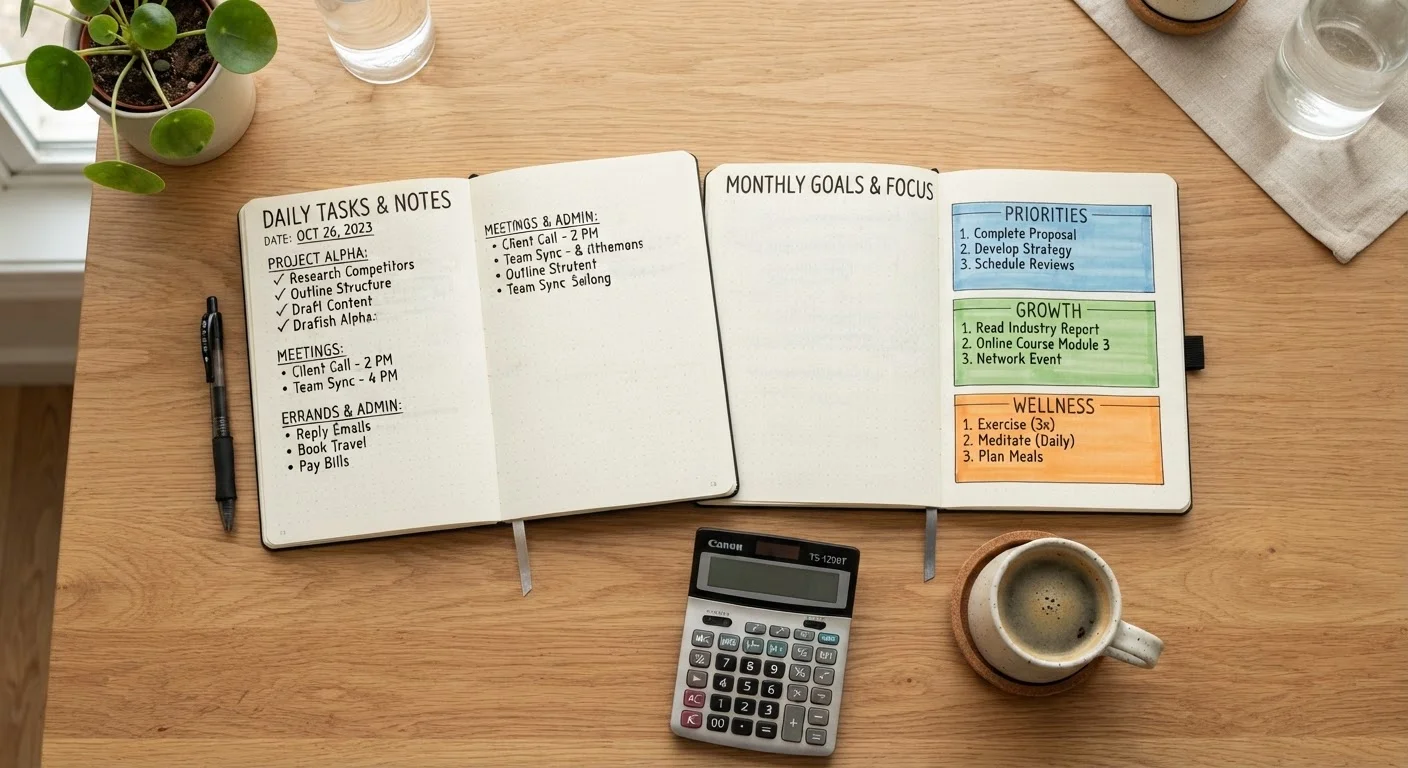
Option A
Zero-Based Budgeting
The meticulous, every-dollar-has-a-job approach.
Best for: People who want complete control over their spending and don't mind putting in the tracking work each month.
Option B
50/30/20 Method
The streamlined, percentage-driven framework.
Best for: People who want a simple structure that doesn't require detailed category-by-category accounting.
How Each Method Actually Works
Understanding the mechanics of each approach is the starting point - before deciding which one fits your life.
Zero-based budgeting starts with your total monthly income and requires you to assign every single dollar to a category - rent, groceries, gas, savings, entertainment - until you reach zero dollars unassigned. The goal isn't to spend everything; it's to make every dollar intentional. At the end of the process, income minus all allocations equals zero. If you earn $3,800 in a month, you plan exactly where all $3,800 goes before the month begins.
The 50/30/20 method works differently. It divides after-tax income into three broad categories: roughly 50% toward needs (rent, utilities, groceries, insurance), 30% toward wants (dining out, subscriptions, hobbies), and 20% toward savings and debt repayment beyond minimums. The appeal is its simplicity - three buckets, no line-item stress. If you want a deeper look at what each category actually covers, The 50/30/20 Rule Explained breaks it down clearly.
Both approaches assume you know your income and have a rough sense of your expenses. If you're starting completely from scratch, Personal Budgeting from the Ground Up is a solid primer before choosing a method.
| Criterion | Zero-Based Budgeting | 50/30/20 Method |
|---|---|---|
| Setup time | 30-60 min per month | Under 15 min to start |
| Category detail | Every dollar assigned | Three broad buckets |
| Works well with variable income | Yes - rebuilt each month | Less ideal |
| Good for beginners | Steeper learning curve | Very beginner-friendly |
| Spending visibility | High - line by line | Moderate - broad only |
| Flexibility mid-month | Requires reallocation | More naturally flexible |
| Best for aggressive goals | Yes - precise control | Less targeted |
Effort, Flexibility, and Real-Life Trade-Offs
The biggest practical difference between these two methods is how much time and mental energy they ask of you.
Zero-based budgeting requires a meaningful time commitment upfront - typically 30 to 60 minutes at the start of each month, plus regular check-ins to see whether your spending is tracking against your plan. It also demands honesty: if you under-budget for groceries in January, you need to adjust before February. The upside is that nothing slips through unnoticed. Understanding fixed vs. variable expenses is especially useful here, since zero-based budgeting makes that distinction very visible.
The 50/30/20 method trades precision for ease. Once you know your take-home pay, the math takes minutes. The trade-off is that the broad categories can mask problem spending. You might be technically within your 30% "wants" allocation while still overspending in ways that work against your goals.
When the Percentages Don't Fit
The 50/30/20 split was designed as a general guideline, not a universal standard. Households with very low incomes, high housing costs, or significant debt may find that needs alone exceed 50% of take-home pay - making the framework difficult to apply as written. If that's your situation, treat the percentages as directional targets rather than hard rules, and adjust the splits to reflect your actual constraints.
It's also worth noting that the 50/30/20 percentages don't always fit every household's reality. In high-cost cities, needs alone can consume 60% or more of take-home pay, leaving little room for the guideline to hold. Neither method is a rigid rule - both are starting frameworks you can adjust. For a broader look at how budgeting myths can get in the way before you even start, see Budgeting Myths That Keep People from Starting.
Which One Actually Sticks?
The best budgeting method is the one you'll actually use consistently. Research on habit formation suggests that complexity is one of the most common reasons financial plans break down early - not lack of willpower.
65%
Americans living paycheck to paycheck
A 2023 LendingClub report found approximately 65% of U.S. consumers reported living paycheck to paycheck, underscoring why a functional budget matters.
~33%
Adults with a detailed written budget
Gallup polling has consistently found that roughly one in three American adults maintains a detailed household budget in writing.
Zero-based budgeting asks more of you, which means it's more likely to fall apart if life gets busy or your motivation dips. The 50/30/20 method's lower barrier makes it easier to maintain - but "easier to maintain" can sometimes mean easier to ignore when things get tight.
If you've tried budgets before and hit a wall in the first few months, Where Most Budgets Fall Apart in the First 90 Days identifies specific patterns that trip people up - and the insight applies to both methods covered here.
One practical approach: start with 50/30/20 to build the habit, then layer in more detail using zero-based principles once tracking feels routine. There's no rule that says you have to choose just one framework forever. If you're curious about how these methods stack up against other savings strategies more broadly, Savings Strategies Worth Knowing covers the wider landscape.
This article is for general informational purposes only and does not constitute personalized financial advice. Consider speaking with a licensed financial professional about your specific situation.
The content provided on our blog site traverses numerous categories, offering readers valuable and practical information. Readers can use the editorial team’s research and data to gain more insights into their topics of interest. However, they are requested not to treat the articles as conclusive. The website team cannot be held responsible for differences in data or inaccuracies found across other platforms. Please also note that the site might also miss out on various schemes and offers available that the readers may find more beneficial than the ones we cover.