

Why Dental Disease Flies Under the Radar
Most pet owners are vigilant about vaccines, flea prevention, and annual checkups. Yet dental health - one of the most consequential aspects of a pet's wellbeing - routinely gets overlooked. The reason isn't negligence; it's invisibility. Pets don't complain about a sore tooth the way people do. They keep eating, keep playing, and keep behaving in ways that appear normal, even when their mouths are harboring painful, progressing infection.
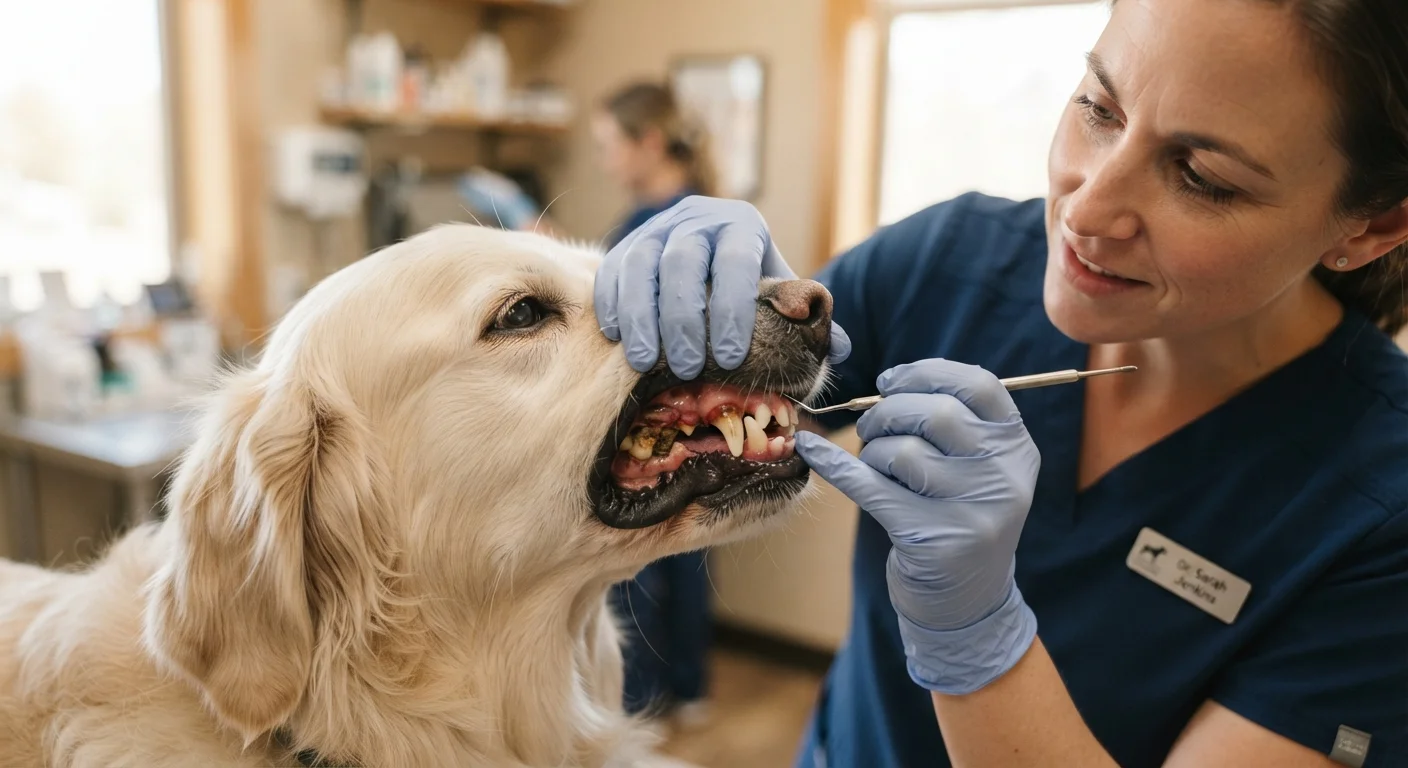
Veterinary data consistently shows that periodontal disease affects the majority of dogs and cats by age three. It begins quietly: bacteria accumulate on tooth surfaces, form plaque, and if not removed, mineralize into hard tartar. Below the gumline - out of sight during a casual inspection - the real damage unfolds. Gum tissue inflames, bone recedes, and tooth roots become exposed or infected.
Because the progression is slow and pets instinctively suppress signs of discomfort, owners often don't recognize a problem until it's in an advanced stage. Understanding how the disease develops is the first step toward catching it earlier. Learn more about how pets hide pain - it's one of the most important things a pet owner can understand.
~80%
Dogs with periodontal disease by age three
Veterinary dental organizations consistently report that the vast majority of adult dogs show evidence of periodontal disease during clinical examination.
~70%
Cats affected by dental disease by age three
Estimates from veterinary literature indicate that most adult cats have some degree of periodontal or dental disease, often undetected by owners.
Stage 1-2
Disease stages where treatment is most effective
Early-stage periodontal disease is considered reversible with professional cleaning and consistent home care, according to veterinary dentistry guidelines.
More Than Bad Breath: The Systemic Stakes
Halitosis - persistent bad breath - is the symptom most owners notice first, and it's tempting to dismiss it as normal for dogs or cats. It isn't. Chronic bad breath is one of the earliest signals that bacterial activity in the mouth has crossed from manageable into concerning.
What happens next is more serious than cosmetic. The mouth is not isolated from the rest of the body. When the gum tissue breaks down, bacteria and their byproducts can enter the bloodstream. Research in veterinary medicine has explored associations between untreated periodontal disease and changes in the kidneys, liver, and heart - though experts note that the full picture of causation is still being studied. What is clear is that chronic oral infection represents a sustained inflammatory burden that vets take seriously as a systemic health risk.
This is why veterinary dental care is not a luxury add-on - it's part of core preventive medicine. Owners who are already thinking carefully about their pet's overall health can explore how weight and systemic health intersect, since both obesity and dental disease share this pattern of quiet, compounding harm.
Anesthesia-Free Cleanings: Know the Difference
Anesthesia-free dental cleanings - sometimes offered as a lower-cost or lower-risk alternative - are not endorsed by major veterinary dental organizations, including the American Veterinary Dental College. They can only address the visible crown of the tooth, leaving subgingival (below the gumline) disease completely unaddressed. They may also produce cosmetic results that reassure owners while the underlying disease continues to advance. Always discuss dental cleaning options with your veterinarian.
What Professional Dental Care Actually Involves
A professional veterinary dental cleaning is meaningfully different from what can be done at home. It requires general anesthesia - a point that gives some owners pause, but which is considered essential by veterinary dental specialists. Only under anesthesia can a veterinarian safely probe below the gumline, take full-mouth dental X-rays, and thoroughly clean areas that are inaccessible on a conscious, moving animal.
Those X-rays are critical. Studies suggest that a significant proportion of dental disease lesions - especially in cats - are not visible above the gumline. Without imaging, they go undetected and untreated. The cleaning itself removes tartar from all tooth surfaces and from the periodontal pocket, the space between tooth and gum where bacteria cause the most damage.
How often a pet needs a professional cleaning varies by individual. Breed plays a role - smaller dogs and brachycephalic breeds (those with flat faces, like Bulldogs and Persian cats) are especially prone to crowded, misaligned teeth that accelerate plaque accumulation. Age, diet, genetics, and home care habits all factor in. Your veterinarian can assess your pet's oral health at routine visits and advise on appropriate intervals.
“Dental disease is probably the most underdiagnosed and undertreated condition we see in veterinary practice. Pets live with significant oral pain that their owners simply don't recognize - and that's something the profession continues to work hard to change through education.”
— Jan Bellows, Board-certified veterinary dentist and Fellow of the Academy of Veterinary Dentistry
At-Home Care: What Works and What Doesn't
The most effective preventive tool available to pet owners is daily toothbrushing with a pet-formulated toothpaste. Human toothpaste contains ingredients - including fluoride and xylitol - that are harmful to animals and should never be used. Pet toothpastes come in flavors designed to be palatable to dogs and cats, which helps with compliance.
Consistency matters more than perfection. Even three to four sessions per week provides measurable benefit over no brushing at all. The mechanical action of the brush against the gumline is what disrupts plaque before it mineralizes into tartar. Acclimating a pet to the process takes patience; starting with your finger, then a finger brush, then a proper toothbrush over the course of weeks is a well-established approach.
A range of supplemental products - dental chews, water additives, oral gels, and specially formulated diets - are available and some carry the Veterinary Oral Health Council (VOHC) seal, indicating they've met defined standards for plaque or tartar reduction. These can complement brushing but are not replacements for it. Be cautious about hard chews - items harder than a thumbnail can fracture teeth.
Diet choices also play a supporting role. Feeding mistakes can compound gradually, and oral health is part of that broader nutritional picture. Owners who want a strong foundation across all aspects of care may also find value in building comprehensive health habits from the start.
Start Brushing Before Problems Begin
Introducing toothbrushing during puppyhood or kittenhood - when pets are most adaptable - dramatically improves long-term compliance. Short, positive sessions with a treat reward afterward help build a routine that feels normal to your pet. If your adult pet has never been brushed, a gradual introduction still works; it just takes more patience.
This article is for general informational and educational purposes only. It is not a substitute for professional veterinary advice, diagnosis, or treatment. Always consult a licensed veterinarian regarding your pet's health and dental care needs.
Frequently Asked Questions
Veterinary organizations estimate that the majority of dogs and cats show some degree of periodontal disease by age three. It is consistently cited as one of the most frequently diagnosed conditions in companion animals. Many cases go undetected because pets rarely show obvious symptoms.
Research suggests a link between chronic oral infections and systemic health issues including kidney, liver, and heart disease, though the exact causal mechanisms are still being studied. Bacteria from infected gum tissue can enter the bloodstream. This is one reason vets treat dental disease as a whole-body concern, not just a mouth problem.
Most veterinary dental specialists and major veterinary associations advise against anesthesia-free dental cleanings. These procedures only clean visible tooth surfaces and cannot address disease below the gumline, where most damage occurs. They can also cause stress and carry their own risks without delivering a complete diagnostic or therapeutic result.
Frequency depends on your pet's species, breed, age, and individual disease risk. Your veterinarian is the right person to guide this decision after a thorough oral exam. Some pets may need annual cleanings; others may go longer between procedures.
Common indicators include persistent bad breath, visible tartar buildup (yellowish or brown deposits near the gumline), red or swollen gums, difficulty chewing, dropping food, or changes in eating behavior. Because pets often mask discomfort, a lack of obvious symptoms does not mean the mouth is healthy.
Many pets can be gradually acclimated to toothbrushing through short, positive sessions using pet-formulated toothpaste. Starting slowly - letting them taste the paste, then introducing the brush - builds tolerance over time. Even brushing a few times per week provides meaningful benefit. Your vet or a veterinary technician can demonstrate technique.
The content provided on our blog site traverses numerous categories, offering readers valuable and practical information. Readers can use the editorial team’s research and data to gain more insights into their topics of interest. However, they are requested not to treat the articles as conclusive. The website team cannot be held responsible for differences in data or inaccuracies found across other platforms. Please also note that the site might also miss out on various schemes and offers available that the readers may find more beneficial than the ones we cover.