

Why Pets and People Process Food Differently
The core reason so many human foods harm pets comes down to biology. Dogs, cats, and humans evolved along different dietary paths, which means our digestive enzymes, liver function, and metabolic machinery differ in important ways. A compound your liver neutralizes effortlessly may overwhelm a dog's system entirely.
Cats present an additional layer of vulnerability. As obligate carnivores, they lack several liver enzymes that even dogs possess - enzymes responsible for processing plant-based compounds. This is why certain foods toxic to dogs are even more dangerous to cats, and why species-specific guidance matters. Understanding these metabolic differences is the foundation for making sense of every warning that follows.
It's also worth noting that toxicity isn't binary. Dose, body weight, and individual health status all influence outcomes. This doesn't mean small amounts are necessarily safe - it means the same exposure can look very different across two animals of different sizes or breeds.
The High-Risk Foods and the Biological Mechanisms Behind Them
The following are among the most well-documented food-based hazards for household pets, along with the science that explains why they cause harm.
~25%
Of ASPCA poison control calls involving food
According to ASPCA Animal Poison Control Center data, food items consistently rank among the top categories reported in pet poisoning cases each year.
0
Known safe dose of grapes for dogs
Veterinary toxicologists have not identified a threshold below which grapes or raisins are considered safe for dogs, making any ingestion a cause for contact with a vet.
30 min
Time for xylitol symptoms to appear in dogs
Xylitol-induced hypoglycemia can manifest within 30 minutes of ingestion in dogs, underscoring the importance of immediate veterinary contact.
Grapes and Raisins
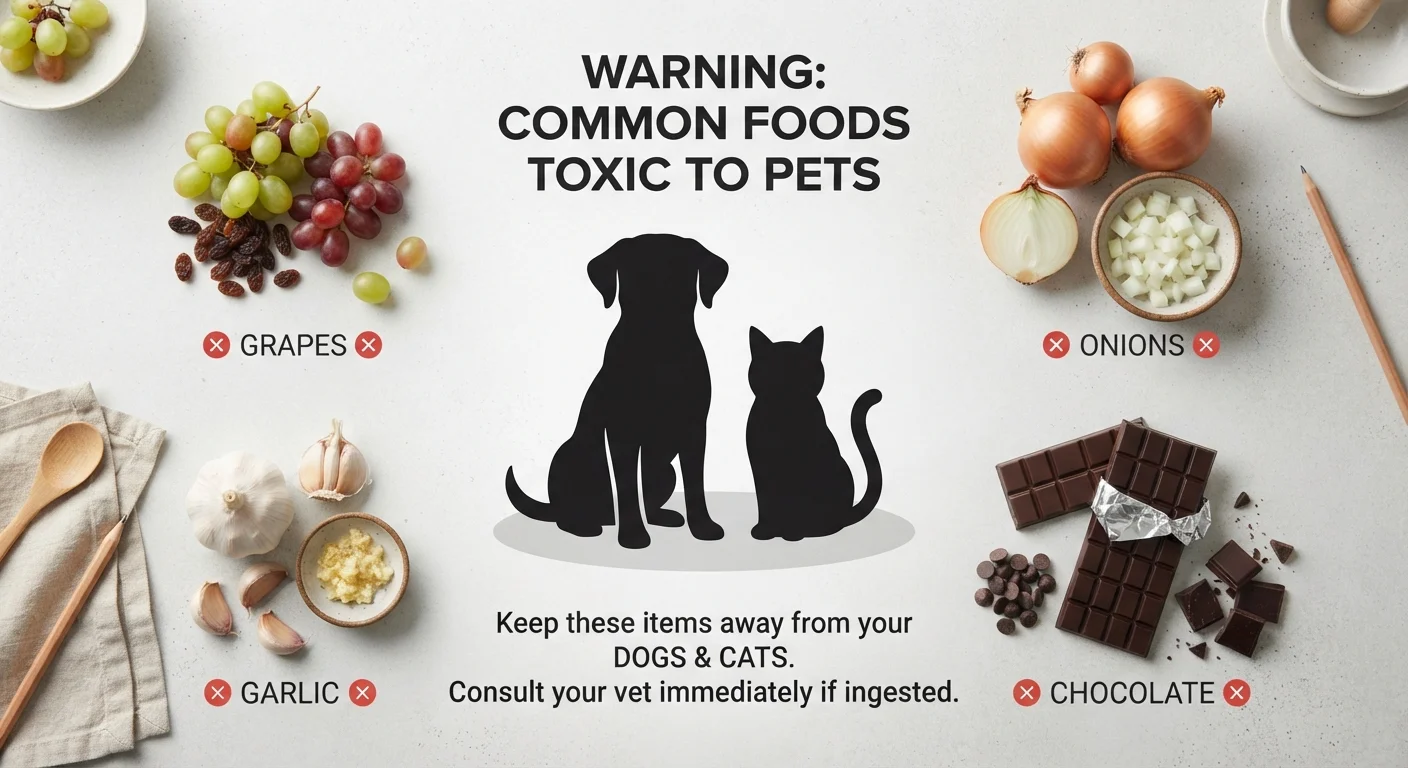
Grape toxicity in dogs is well-established in veterinary literature, yet the specific causative compound remains under active investigation. What is known: ingestion can cause acute kidney failure in dogs, with no clearly identified safe threshold. Because the mechanism is incompletely understood, even small amounts should be treated as an emergency.
Xylitol
This sugar alcohol, commonly found in sugar-free gum, some peanut butters, and certain baked goods, triggers a rapid and dangerous release of insulin in dogs. Blood glucose drops sharply - a condition called hypoglycemia - and in larger doses, xylitol causes liver failure. Symptoms can appear within 30 minutes of ingestion. Always check ingredient labels carefully before sharing any packaged food with your dog.
Chocolate, Coffee, and Caffeine
Theobromine is the primary culprit in chocolate toxicity. Dogs metabolize theobromine at a fraction of the speed humans do, allowing it to accumulate to harmful levels. The result: vomiting, muscle tremors, irregular heart rhythm, and in severe cases, seizures. Dark chocolate and cocoa powder carry far higher theobromine concentrations than milk chocolate.
Alliums - Onions, Garlic, Leeks, and Chives
All allium family members contain organosulfur compounds that oxidize and rupture red blood cells in both dogs and cats, causing hemolytic anemia. Cats are especially vulnerable. Powdered or cooked forms are more bioavailable than raw, meaning a small amount of onion powder in a seasoned dish can be more dangerous than a whole raw onion.
Macadamia Nuts
The toxic compound in macadamia nuts has not been identified, but ingestion in dogs reliably causes weakness, hyperthermia, vomiting, and tremors. Recovery is common with prompt veterinary care, but the mechanism remains a gap in current veterinary toxicology.
Feeding Habits That Raise the Risk
Many toxic exposures happen not through deliberate feeding but through routine habits that seem harmless - sharing a plate, dropping food while cooking, or assuming that because a food is "natural" it must be safe. Well-intentioned habits can quietly harm your pet in ways that aren't immediately obvious.
Read Labels Before Sharing Packaged Foods
Xylitol now appears in a wide range of products beyond gum - including some peanut butters, protein bars, and baked goods. Before sharing any packaged human food with your pet, scan the ingredient list for xylitol and other artificial sweeteners. When in doubt, skip it and offer a pet-specific treat instead.
Mixed dishes are a particular hazard. A casserole containing onions, garlic, and grapes presents multiple toxins simultaneously, and pet owners may not think to connect a pet's illness to something shared from a family meal hours earlier.
Being aware of which ingredients appear in processed human foods - especially xylitol in "sugar-free" products - is equally important. The feeding mistakes that add up over time often involve gradual exposure rather than a single dramatic incident.
What to Do When Toxic Ingestion Happens
Speed matters. If you suspect your pet has consumed a toxic food, do not wait for symptoms - contact your veterinarian or the ASPCA Animal Poison Control Center right away. Have the product name, estimated amount consumed, and your pet's weight available. Time from ingestion to treatment is often the decisive factor in outcomes.
This Content Is General Information Only
This article provides general educational information about food toxicity in pets. It is not a substitute for veterinary advice, diagnosis, or treatment. If your pet has ingested a potentially toxic substance, contact a licensed veterinarian or the ASPCA Animal Poison Control Center immediately. Do not rely solely on this article to assess the severity of your pet's situation.
Do not attempt to induce vomiting at home unless explicitly instructed by a veterinary professional. Some substances cause additional harm on the way back up, and the appropriate response depends on what was ingested and when.
Keeping your pet's feeding environment well-managed is a practical layer of prevention. Store hazardous foods out of reach, be mindful of what falls on the floor during meal prep, and ensure that all household members - including children and guests - understand the risks. This is general health information; for concerns about your pet's specific condition or diet, consult a licensed veterinarian.
Frequently Asked Questions
Yes. Chocolate contains theobromine and caffeine, both of which dogs metabolize far more slowly than humans. Dark chocolate and baking chocolate contain significantly higher concentrations than milk chocolate, meaning even a small quantity can cause vomiting, seizures, or cardiac issues depending on the dog's size.
The exact compound responsible is still being researched, but grape and raisin toxicity in dogs is well-established and can cause acute kidney failure. Because the mechanism is not yet fully understood, there is no known safe dose - any amount warrants a call to your vet.
Xylitol is particularly well-documented as dangerous to dogs, where it triggers a rapid insulin release and can cause liver failure. Its effects in cats appear less severe based on current evidence, but research is limited and caution is still warranted - keep xylitol-containing products away from all pets.
Do not wait for symptoms to appear. Contact your veterinarian or the ASPCA Animal Poison Control Center immediately. Have the product packaging or food name ready so responders can assess the risk accurately. Do not induce vomiting unless a veterinarian specifically instructs you to.
Yes, and cats may be more sensitive. Both contain organosulfur compounds that damage red blood cells, leading to a condition called hemolytic anemia. Powdered forms are more concentrated and therefore more dangerous by weight than raw.
Some human foods are safe in small amounts - plain cooked chicken, plain carrots, and plain cooked rice are commonly tolerated examples. However, always verify with your veterinarian before introducing any new food, since individual health conditions and allergies vary significantly.
The content provided on our blog site traverses numerous categories, offering readers valuable and practical information. Readers can use the editorial team’s research and data to gain more insights into their topics of interest. However, they are requested not to treat the articles as conclusive. The website team cannot be held responsible for differences in data or inaccuracies found across other platforms. Please also note that the site might also miss out on various schemes and offers available that the readers may find more beneficial than the ones we cover.