

Our Verdict
Raw feeding is neither the transformative cure its strongest advocates claim nor the unequivocal danger its harshest critics suggest. The evidence base is genuinely limited, and the approach demands more from pet owners - in hygiene, sourcing, and nutritional planning - than most commercial feeding formats. Handled carefully and with professional guidance, it may suit certain pets and households; handled carelessly, it poses real health risks.
Best suited to motivated, detail-oriented pet owners with healthy adult dogs or cats, access to veterinary nutritional guidance, and the time and resources to manage safe sourcing and food-handling protocols.
What Raw Feeding Actually Means
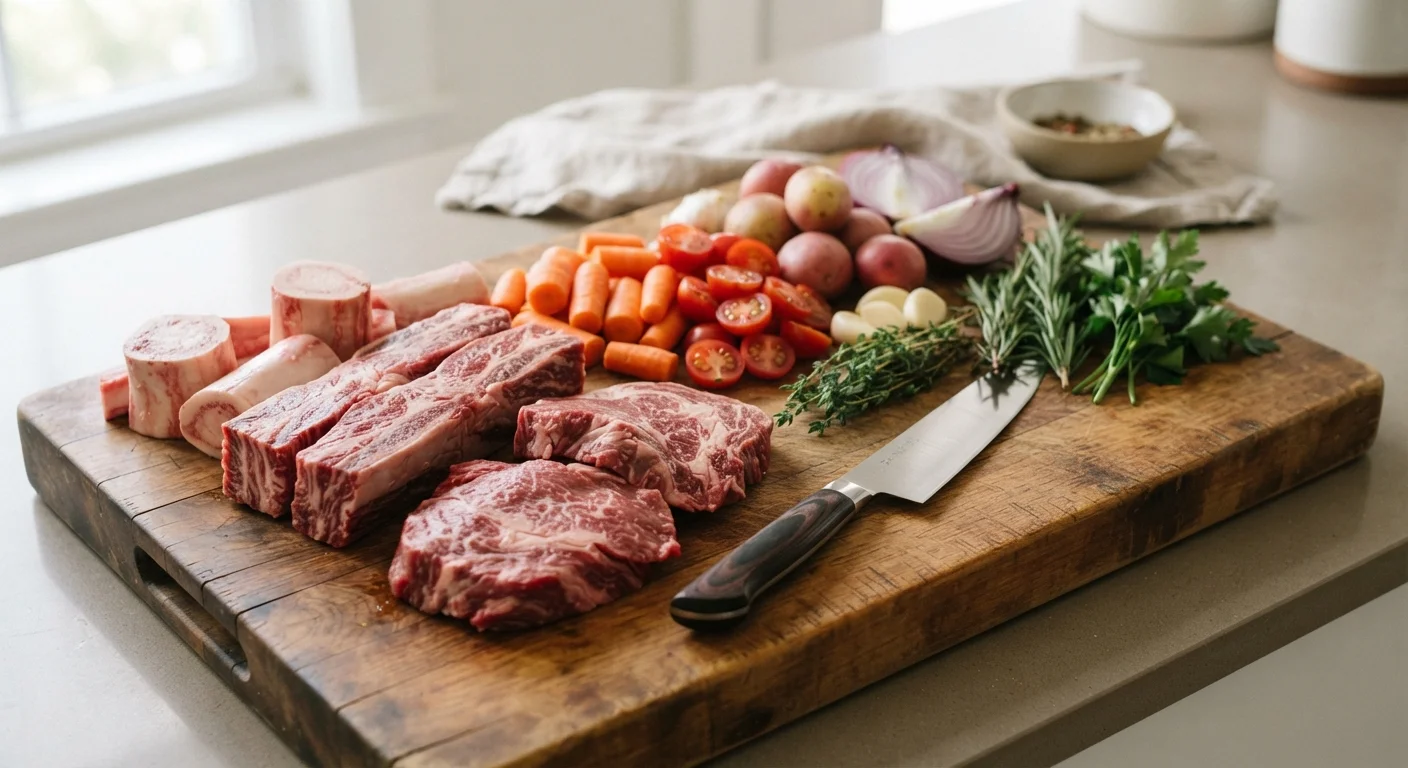
Raw pet diets - broadly called BARF or "raw meat-based diets" (RMBDs) - typically consist of uncooked muscle meat, organ meat, raw meaty bones, and sometimes fruits, vegetables, or dairy. They may be prepared at home, purchased as commercially frozen or freeze-dried products, or assembled from a combination of both.
The appeal is intuitive: dogs and cats evolved from wild ancestors that ate prey animals, and advocates argue that this ancestral diet is more biologically appropriate than highly processed kibble. Before deciding, it helps to understand what commercial pet food labels are actually telling you about the alternatives you may be leaving behind.
The key distinction is between commercially prepared raw diets - which are subject to some degree of manufacturing oversight - and homemade raw diets, which vary widely in nutritional completeness and safety depending on the owner's knowledge and sourcing practices.
The Case For Raw: What Advocates Point To
High moisture content supports hydration
Raw diets naturally contain significantly more moisture than dry kibble, which may support urinary tract health - particularly in cats, who tend to have low thirst drives.
Minimal processing preserves some nutrients
Avoiding heat processing means certain heat-sensitive nutrients remain intact, though whether this translates to meaningful health benefits over well-formulated cooked diets hasn't been conclusively established.
May improve digestibility and stool quality
Some studies and many owner reports indicate smaller, firmer stools in raw-fed pets, suggesting higher nutrient absorption - though individual variation is significant.
Greater dietary control for motivated owners
Homemade raw feeding gives owners full visibility into every ingredient, which can be meaningful for pets with confirmed food allergies or sensitivities when formulated with professional guidance.
Potential improvements in coat and skin condition
A notable proportion of raw-feeding advocates report shinier coats and reduced skin irritation, likely linked to higher fat and protein quality - though this evidence is largely anecdotal.
Many of the reported benefits of raw feeding - shinier coats, smaller stools, improved energy - come from owner observations rather than controlled studies. That doesn't mean they aren't real for individual animals, but it does mean they haven't been systematically confirmed across large populations.
One area where some research does support raw proponents: stool volume and digestibility. Raw diets tend to produce smaller fecal output, suggesting higher digestibility of certain nutrients. However, digestibility alone doesn't indicate a complete and balanced diet.
The Case Against Raw: Real Risks to Weigh
High risk of bacterial contamination
Raw meat routinely harbors pathogens such as Salmonella and Listeria, which can infect both pets and household members, including children and immunocompromised individuals, even without visible symptoms in the pet.
Nutritional imbalances are common
Multiple studies have found that a large proportion of homemade raw diets are deficient in critical nutrients including calcium, phosphorus, and zinc, posing long-term health risks.
Bone hazards including fractures and choking
Raw bones, while generally safer than cooked, can still cause fractured teeth, intestinal perforations, and choking - risks that are difficult to eliminate entirely.
Higher cost and time commitment
Sourcing quality raw ingredients, preparing meals safely, and storing them properly demands significant time and typically costs more than commercial complete-and-balanced options.
Limited long-term scientific evidence
Despite decades of use among enthusiasts, the peer-reviewed evidence for raw feeding's long-term health benefits compared to conventional diets remains sparse and inconclusive.
Not appropriate for all pets or households
Puppies, kittens, pregnant animals, seniors, and pets with compromised immune systems face elevated risk, and households with young children or vulnerable adults require extra caution.
The risk that receives the most consistent attention from veterinary bodies - including the American Veterinary Medical Association (AVMA) - is pathogen contamination. Raw meat is a known vehicle for Salmonella, Listeria, E. coli, and other bacteria. These organisms can shed in a pet's feces even when the animal shows no signs of illness, creating potential exposure risks for humans in the household.
~74%
Homemade raw diets with nutritional deficiencies
A review of studies evaluating homemade raw diets found that the majority did not meet established nutritional guidelines for dogs or cats.
Up to 48%
Commercial raw pet foods testing positive for pathogens
Studies cited by the FDA and AVMA have found Salmonella or Listeria contamination in a significant share of commercially available raw pet food products tested.
Nutritional imbalance is the second major concern. Studies evaluating homemade raw diets have consistently found deficiencies in calcium, phosphorus, zinc, and key vitamins. Unlike home-cooked diets - which share many of the same pitfalls as explored in our home-cooked pet food breakdown - raw diets also introduce unique bone-related hazards.
What the Research Actually Supports
The honest answer is: not much, conclusively. The body of peer-reviewed research on raw pet feeding is small, methodologically varied, and often limited to short study periods or small sample sizes. Most long-term health outcomes - cancer incidence, longevity, organ function - have not been studied rigorously in raw-fed versus conventionally-fed pet populations.
The Evidence Gap Is Real - and Worth Acknowledging
Much of the raw feeding debate takes place without strong clinical trial data on either side. The absence of evidence for harm is not the same as evidence of safety, and vice versa. Veterinary organizations including the AVMA and the British Veterinary Association have issued position statements expressing concern primarily around pathogen risks and nutritional completeness - not ideological opposition to alternative feeding. Pet owners deserve that honest distinction.
This uncertainty doesn't mean raw feeding is inherently wrong - it means pet owners are largely making decisions based on anecdote, ideology, or limited data. For owners who want to evaluate any diet format rigorously, the pet food evaluation checklist provides a structured framework to apply before making a long-term dietary commitment.
For a useful point of comparison, the nutritional differences between kibble and wet food are better documented - a reminder that even conventional format choices benefit from scrutiny.
If You're Considering It: Practical Guidance
If you decide to explore raw feeding, the following principles reflect the current consensus among veterinary nutritionists:
- Consult a veterinary professional first - ideally a board-certified veterinary nutritionist - before transitioning any pet, especially young, elderly, pregnant, or immunocompromised animals.
- Prioritize complete and balanced formulations. Whether commercial or homemade, the diet should meet AAFCO nutrient profiles for your pet's life stage. Understanding how to read ingredient lists like a nutritionist can help you assess commercial raw product labels.
- Follow strict food-handling hygiene. Treat raw pet food as you would raw meat intended for human consumption: separate cutting boards, thorough hand-washing, and safe refrigeration or freezing.
- Monitor your pet's health regularly. Periodic bloodwork and body condition scoring with your veterinarian can catch nutritional shortfalls before they become serious problems.
This article is for general informational purposes only and is not a substitute for personalized veterinary advice. Always consult a licensed veterinarian or board-certified veterinary nutritionist before making significant changes to your pet's diet.
The content provided on our blog site traverses numerous categories, offering readers valuable and practical information. Readers can use the editorial team’s research and data to gain more insights into their topics of interest. However, they are requested not to treat the articles as conclusive. The website team cannot be held responsible for differences in data or inaccuracies found across other platforms. Please also note that the site might also miss out on various schemes and offers available that the readers may find more beneficial than the ones we cover.