

Summary
18 items · 10-20 minutes
Why Viral Products Deserve Extra Scrutiny
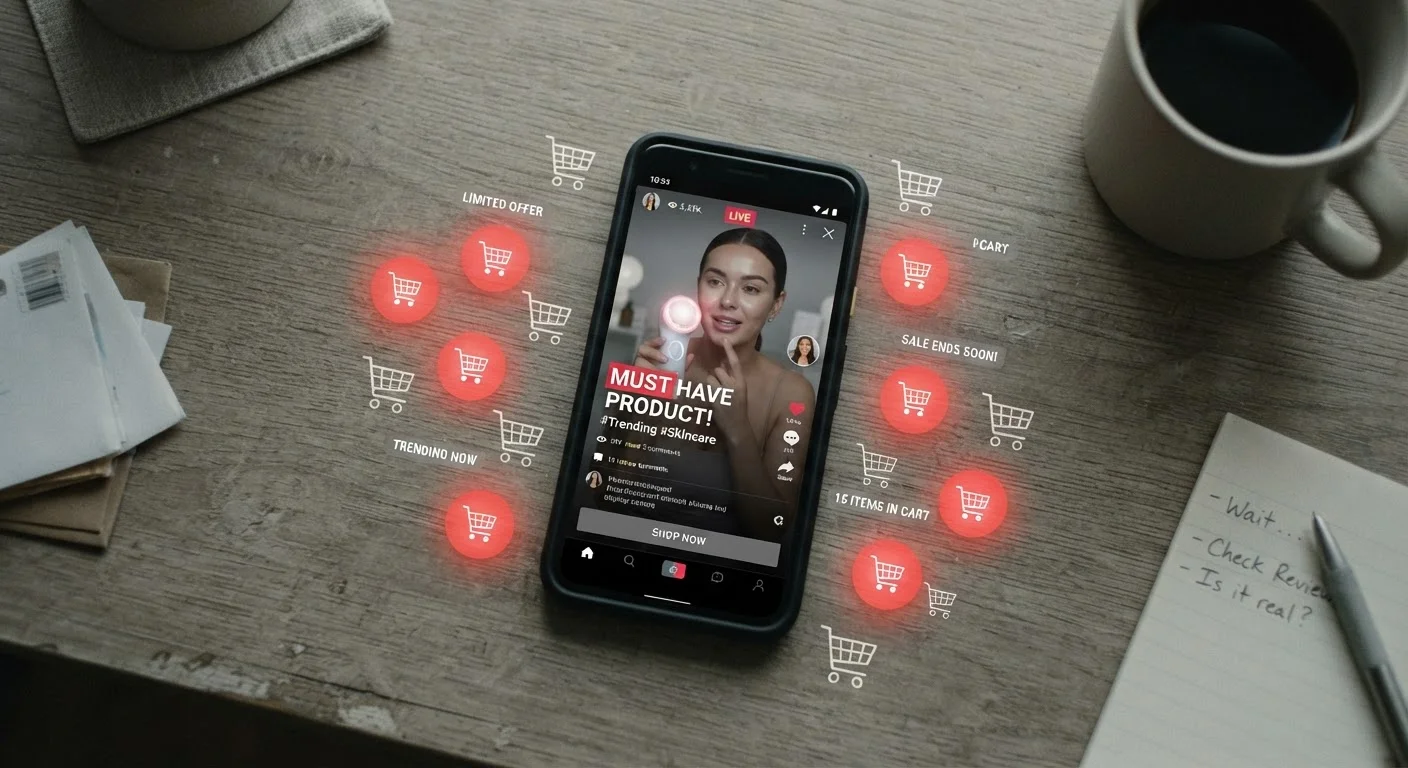
A product blowing up on social media is not evidence that it works, lasts, or delivers real value. Virality reflects how well a video is optimized for engagement - not how a product performs in everyday use. Staged demos, selective editing, and paid promotion can make almost anything look compelling in 30 seconds.
That gap between the reel and reality is where consumer money quietly disappears. The checklist below is designed to slow you down long enough to evaluate the actual product, not just the content created around it. Before you add anything trending to your cart, run through these questions. For a broader framework that covers research habits and recourse options, see our complete consumer protection guide.
Source & Credibility Check
Review & Rating Audit
Price & Value Assessment
Urgency & Pressure Reality Check
Post-Purchase Protection
Tools That Make This Easier
You don't need to rely on gut instinct alone. Several free resources let you verify claims, track prices, and stress-test seller credibility before you commit. The tools below are worth having ready whenever you're evaluating a trending item.
Price history tracker (browser extension)
Reveals the actual price history of a product so you can tell whether a "sale" price represents a genuine discount.
Search engine (incognito mode)
Finds unsponsored reviews, complaints, and coverage of a product or seller outside of the platform you discovered it on.
WHOIS domain lookup tool
Shows how recently a seller's website was registered, which helps identify newly created storefronts common in low-quality drop-shipping.
Credit card with purchase protection
Provides a dispute resolution mechanism if the product doesn't match its description or never arrives.
Screenshot or screen recording tool
Preserves the product listing and any claims made at the time of purchase in case the page is altered afterward.
If a seller discourages outside research or doesn't appear in any search results beyond their own storefront, treat that as a red flag. Our guide to online marketplace red flags covers the most common warning patterns in detail.
The Tactics Viral Sellers Use - and How to Counter Them
Most viral product campaigns share a playbook: influencer seeding, countdown timers, "only X left" banners, and comment sections flooded with suspiciously enthusiastic reviews. None of these signals tell you whether the product is worth buying.
Paid Promotion Must Be Disclosed - But Isn't Always
Federal trade guidelines in the U.S. require influencers and creators to clearly disclose paid partnerships. In practice, disclosures are sometimes buried, omitted, or presented in ways that are easy to miss. If a creator is enthusiastically promoting a product without any visible disclosure, assume a financial relationship exists and evaluate the content accordingly. Enthusiasm is not the same as endorsement from an unbiased source.
Countdown timers that reset when they reach zero are among the most widely used pressure tactics in e-commerce. If you've seen a timer run out and the price didn't actually change, you've encountered artificial scarcity firsthand. Our article on limited-time offers and artificial scarcity explains why these tactics work even on experienced shoppers - and how to neutralize them.
The antidote to almost all of these tactics is time. Giving yourself 48 hours between first seeing a product and making a purchase decision removes the emotional charge these campaigns are built to exploit. If the product is genuinely useful, it will still be available. If the "deal" has disappeared, that itself tells you something about how the pricing was structured to begin with. For more questions to ask yourself before any non-essential purchase, the pre-purchase checklist for smarter spending is a useful companion read.
The content provided on our blog site traverses numerous categories, offering readers valuable and practical information. Readers can use the editorial team’s research and data to gain more insights into their topics of interest. However, they are requested not to treat the articles as conclusive. The website team cannot be held responsible for differences in data or inaccuracies found across other platforms. Please also note that the site might also miss out on various schemes and offers available that the readers may find more beneficial than the ones we cover.