

The Small Number That Does the Heavy Lifting
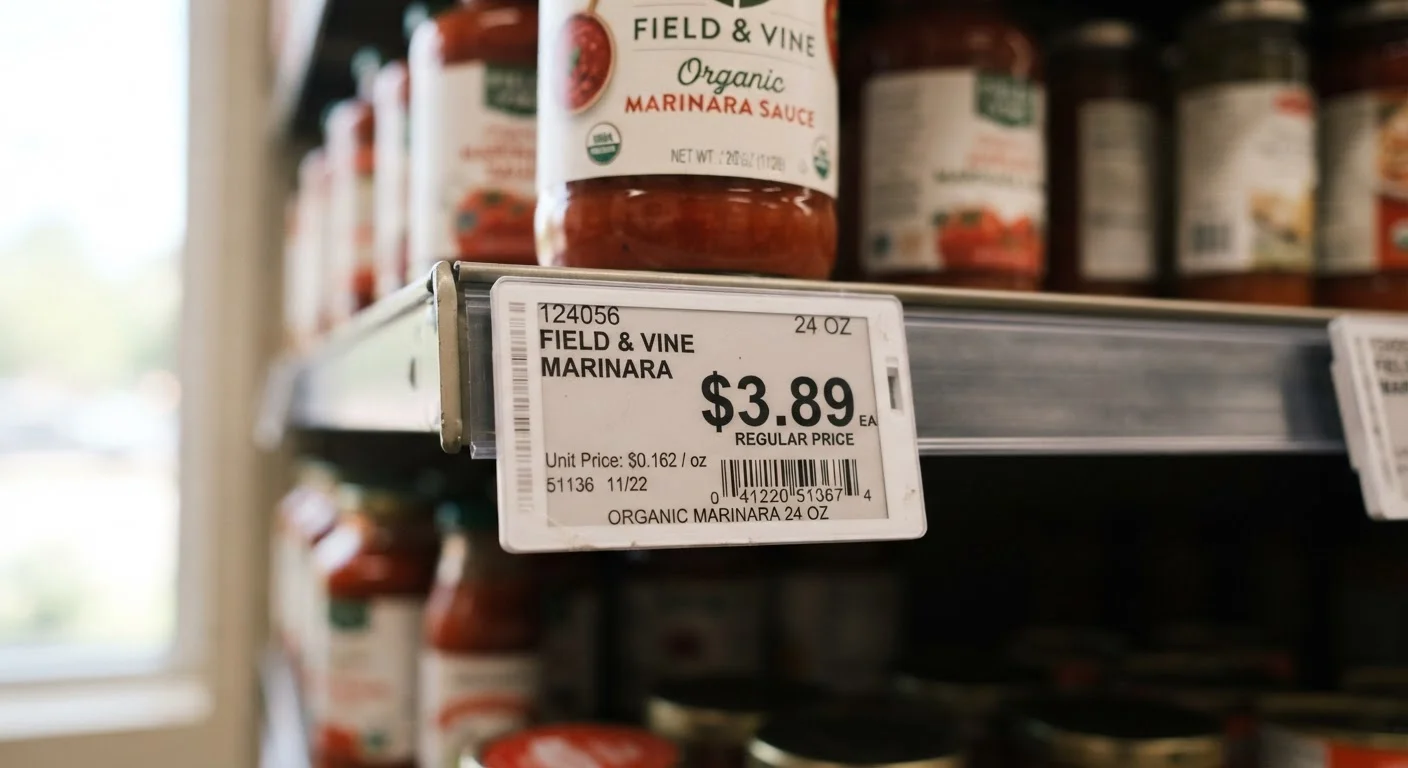
Every grocery shelf tag has at least two prices. The large number is what you pay at checkout. The small number - often tucked in a corner - is the unit price, and it's the one that actually tells you whether you're getting a fair deal.
Unit price standardizes cost across different package sizes and brands. A 32-oz jar of pasta sauce and a 24-oz jar of the same sauce can sit side by side with different sticker prices, and without unit pricing, most shoppers have no reliable way to compare them. With it, the comparison takes about three seconds.
The unit of measurement varies by product type. Liquids are usually priced per fluid ounce, dry goods per ounce or pound, paper products per sheet or count, and cleaning supplies per ounce or use. The shelf tag should always specify the unit - if it doesn't, you can calculate it yourself by dividing the total price by the package quantity or weight.
Unit of Measure Matters for Fair Comparison
Unit prices are only directly comparable when both products use the same unit of measure. A product priced per ounce and one priced per count can't be compared on that basis alone. When shelf tags use mismatched units, focus on whichever measurement reflects how you actually use the product.
Why Shoppers Overlook It
The unit price is physically on the label in most stores, yet research into consumer behavior consistently shows that shoppers anchor on the full package price when making decisions. A few reasons explain this:
- Visual hierarchy: The large price is designed to be seen. The unit price is formatted to be secondary - smaller font, lower contrast, tucked to a corner.
- Cognitive load: Grocery shopping involves dozens of micro-decisions. The brain defaults to simpler cues, like total price or package size, to reduce effort.
- Marketing framing: Labels like 'Family Size' or 'Value Pack' imply savings without proving them. Shoppers often accept the framing without checking the math.
This is exactly the kind of gap that deceptive pricing tactics are built to exploit. When you know to look for the unit price, those tactics lose much of their power.
~30%
Shoppers who regularly check unit prices
Consumer behavior studies have generally found that a minority of grocery shoppers consistently use unit pricing when making purchase decisions, despite widespread availability on shelf tags.
varies by state
Unit pricing legal requirement coverage
U.S. unit pricing laws are not federally uniform; states like Massachusetts and Connecticut have strong mandates, while others have minimal or no requirements for retailers.
Practical Ways to Use Unit Pricing
Unit pricing earns its keep in a few specific situations:
Comparing sizes within a brand
This is the classic use case. A 16-oz bottle of dish soap priced at $2.49 has a unit price of about $0.156/oz. A 30-oz bottle at $3.99 comes to about $0.133/oz - a meaningful difference if you use it regularly. But a promotional 16-oz bottle at $1.89 suddenly changes that math to $0.118/oz. The shelf label tells you what the promotion is actually worth.
Comparing store brands to name brands
Unit pricing removes brand perception and focuses purely on cost per measurement. This is especially useful given that store brands and name brands are often manufactured in the same facilities.
Evaluating bulk purchases
Before committing to a large quantity, the unit price tells you whether the bulk option is genuinely more economical - or whether you're buying more than you need at a price that only appears lower. This connects directly to when bulk buying actually helps your budget.
Do a Quick Mental Check at the Shelf
Before placing a larger or 'value' size in your cart, glance at the unit price on both shelf tags and compare. If the unit prices are close, other factors - like how quickly you'll use the product - may matter more than the per-unit savings. The check itself takes under ten seconds.
Unit Pricing as Part of Smarter Spending
Unit pricing is one piece of a broader framework for evaluating purchases on their actual merits rather than their marketing. It pairs naturally with cost-per-use thinking, which extends the same logic to durable goods - where the number of uses matters as much as the upfront price.
Together, these tools shift your reference point from sticker price to real value. A product's shelf price is just a starting point. What it actually costs you - per ounce, per use, per year - is the number that affects your budget. Understanding what a price tag actually signals helps put unit pricing in even broader context.
The good news: unit pricing requires no app, no calculator (most of the time), and no special knowledge. The number is already on the shelf. You just have to look for it.
Frequently Asked Questions
Look for small text near the bottom or corner of the shelf tag, often in a different font or color from the main price. It typically reads something like '$0.18/oz' or '$1.24/100 ct'. Some stores display it more prominently than others.
Not necessarily. While bulk sizes often have a lower unit price, that's not a universal rule. Retailers sometimes price mid-size packages more competitively, and promotional pricing on smaller sizes can flip the math. Always check the unit price rather than assuming.
Unit pricing requirements vary by state. Some states mandate it broadly for packaged food and household goods; others have limited or no requirements. When unit prices aren't shown, you can calculate it yourself by dividing the total price by the quantity or weight.
Yes, and this is one of its most practical uses. If two products use the same unit of measure on their shelf tags, you can directly compare their cost per unit regardless of brand. This removes brand perception from the equation and focuses on pure value.
This happens most often with products sold by weight versus by count. In these cases, direct comparison isn't straightforward - you'd need to decide which measurement is more relevant to how you actually use the product. Some categories, like paper towels, may show both.
Unit pricing logic applies anywhere you're comparing products that differ in size or quantity - hardware stores, office supply retailers, wholesale clubs, and online marketplaces all benefit from this approach. The shelf tag may not always display it, but you can calculate it manually.
The content provided on our blog site traverses numerous categories, offering readers valuable and practical information. Readers can use the editorial team’s research and data to gain more insights into their topics of interest. However, they are requested not to treat the articles as conclusive. The website team cannot be held responsible for differences in data or inaccuracies found across other platforms. Please also note that the site might also miss out on various schemes and offers available that the readers may find more beneficial than the ones we cover.