

The Most Common Shopping Scams Reported to Consumer Agencies
Consumer protection agencies - including the Federal Trade Commission (FTC) - consistently report that shopping-related fraud accounts for one of the largest categories of consumer complaints in the United States each year. The scams aren't always elaborate. Many succeed precisely because they look ordinary.
| Top reported fraud category | Online shopping and negative reviews (FTC Consumer Sentinel Network) |
| Most common payment method demanded by scammers | Gift cards, wire transfer, cryptocurrency (FTC fraud reporting data) |
| Fake delivery text scams (smishing) | Among the fastest-growing phishing vectors (Cybersecurity & Infrastructure Security Agency (CISA)) |
| Buyer protection coverage | Generally strongest with credit cards (Consumer Financial Protection Bureau (CFPB)) |
| Negative option subscription complaints | Consistently in FTC's top complaint categories (FTC annual reports) |
Understanding which schemes are most frequently reported is the first step toward recognizing them before any money changes hands. The types below represent patterns that consumer protection agencies and cybersecurity researchers have documented repeatedly.
Fake Delivery Notifications
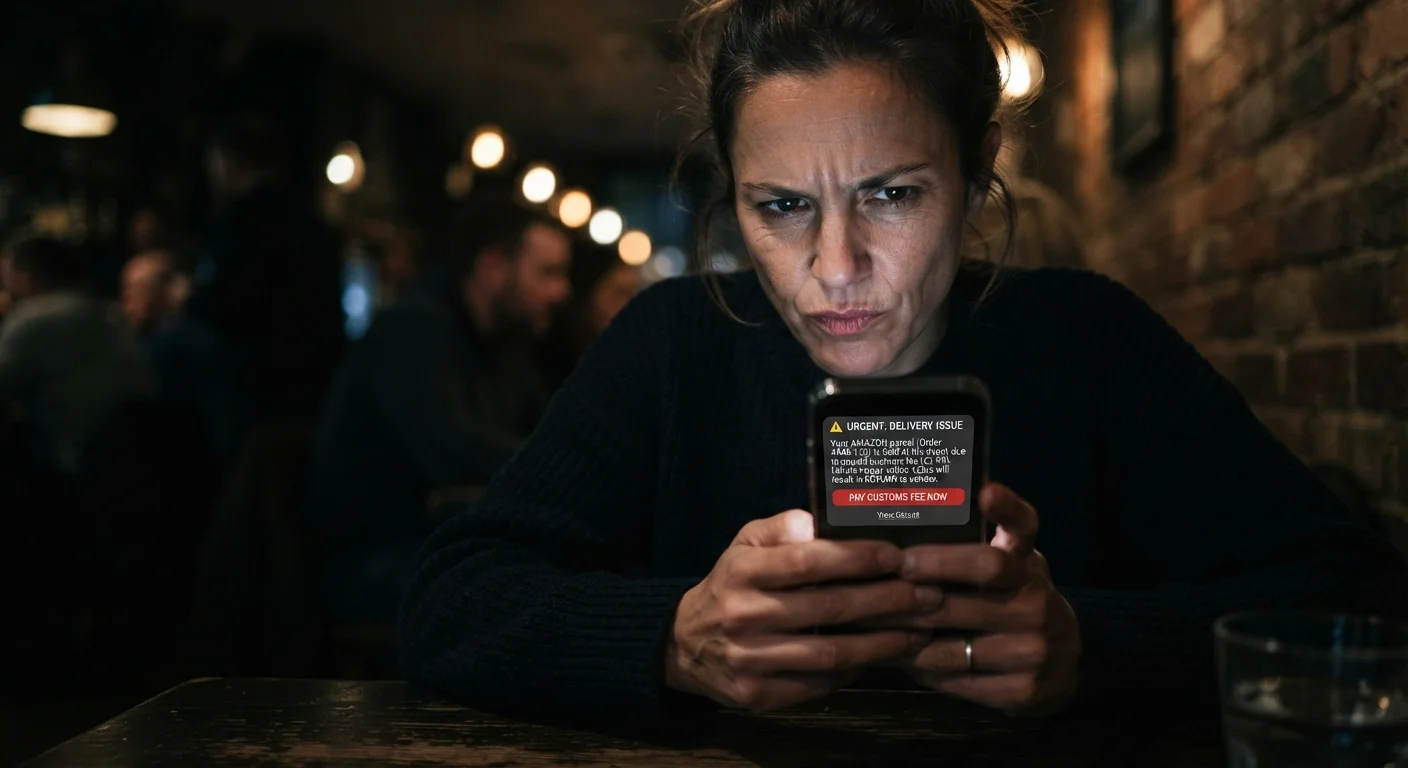
Text messages or emails claiming a package is delayed or held at customs are among the most reported scam vectors. They typically include a link designed to harvest payment card details or login credentials. A genuine carrier will never ask for payment via a text link to release a standard domestic shipment.
Copycat Storefronts
Fraudulent websites mimic legitimate retailers - often with near-identical logos, product photos, and even customer review sections. The giveaways are usually in the URL (slight misspellings, extra hyphens, unusual domain extensions) and the payment methods accepted. See online marketplace red flags for a full checklist of what to look for before entering any payment information.
Non-Delivery Fraud
A buyer pays for an item - often through a peer-to-peer payment app or wire transfer - and the seller disappears. This is especially common on social commerce platforms and classified-ad sites. Payment methods that lack buyer protection (wire transfers, gift cards, cryptocurrency) are strongly preferred by scammers for exactly that reason.
Counterfeit Goods Sold as Genuine
This scam often isn't immediately obvious. A product arrives and looks close to authentic, but fails quickly or poses safety risks. Verifying authenticity before you pay - not after the box arrives - is the only reliable defense.
Pricing and Subscription Traps Worth Knowing
Not every shopping scam involves a fake website or missing package. Some of the most financially damaging schemes are technically legal - but deliberately structured to mislead consumers about what they're agreeing to pay.
Smishing
A phishing attack delivered via SMS text message. Fraudulent texts often impersonate delivery carriers, retailers, or government agencies to trick recipients into clicking malicious links.
Drip pricing
A pricing tactic where mandatory fees are revealed incrementally during checkout rather than upfront, making the final cost significantly higher than the advertised price.
Negative option subscription
A billing model where a consumer is automatically charged on a recurring basis unless they take explicit action to cancel. Often attached to free trials.
Non-delivery fraud
A scam in which a seller accepts payment for goods but never ships them. It is especially common on peer-to-peer platforms and classified-ad sites.
Copycat storefront
A fraudulent website designed to closely resemble a legitimate retailer's site, typically to steal payment information or sell counterfeit or nonexistent goods.
Drip Pricing and Hidden Fees
A product is advertised at one price, then fees accumulate at checkout: processing fees, handling fees, "convenience" charges. By the time the full cost is visible, the consumer has already invested time and often entered payment details. This tactic is sometimes called drip pricing. Deceptive pricing tactics like this are more widespread than most shoppers realize.
Negative Option Subscriptions
A "free trial" auto-converts to a paid subscription unless the consumer actively cancels. The cancellation process is often buried or intentionally difficult. The FTC has taken enforcement action against companies using these patterns, and federal rules now require clearer cancellation mechanisms - but the practice still occurs widely.
Phantom Discounts
A product shows a heavily crossed-out "original" price next to a sale price - but the original price was never genuinely charged. This creates a false sense of urgency and perceived value. For a deeper look at how these schemes are constructed, see the complete consumer protection guide that covers pre-purchase research, transaction safety, and recourse options.
Where to Report a Shopping Scam
If you encounter a suspected scam, report it to the FTC at ReportFraud.ftc.gov. You can also file complaints with your state attorney general's office and the Internet Crime Complaint Center (IC3) if financial loss occurred. Contact your bank or credit card issuer immediately if payment information was shared - credit card disputes typically offer stronger protection than debit transactions or peer-to-peer payments.
This article provides general consumer education and is not legal or financial advice. If you believe you've been a victim of fraud, report it to the FTC at ReportFraud.ftc.gov and contact your payment provider immediately.
The content provided on our blog site traverses numerous categories, offering readers valuable and practical information. Readers can use the editorial team’s research and data to gain more insights into their topics of interest. However, they are requested not to treat the articles as conclusive. The website team cannot be held responsible for differences in data or inaccuracies found across other platforms. Please also note that the site might also miss out on various schemes and offers available that the readers may find more beneficial than the ones we cover.