

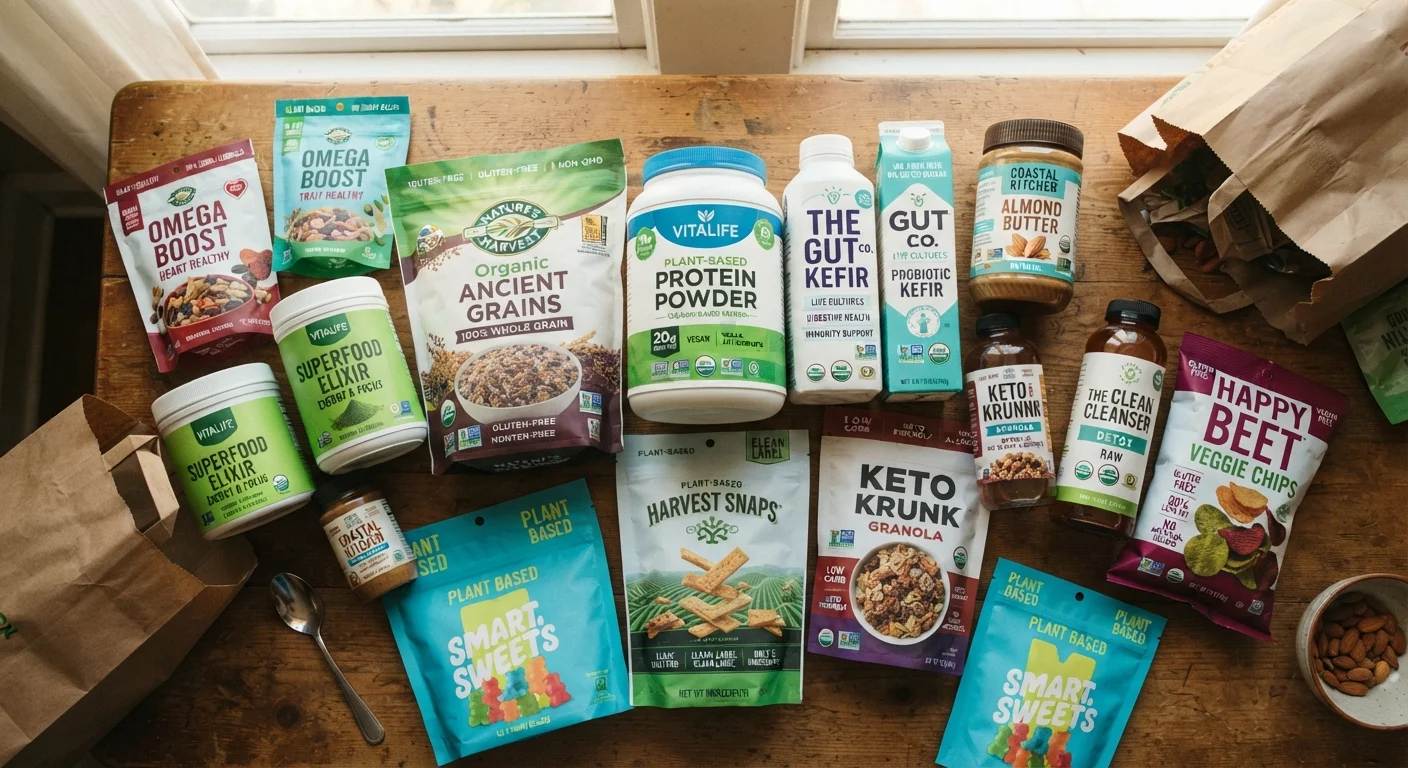
Why Food Label Language Is Designed to Impress, Not Inform
Walk down any grocery aisle and you'll be met with a wall of reassuring words: natural, wholesome, made with real ingredients, light. These phrases feel meaningful. They're meant to. Food marketing copy is written to influence purchasing decisions, not to communicate nutritional reality - and most of these terms exist in a regulatory gray zone.
The FDA regulates specific nutrient claims (like "low sodium" or "high fiber") with defined thresholds. But many of the bolder, vaguer phrases on the front of packages operate with little or no legal definition. Understanding which terms carry real meaning - and which are essentially slogans - is one of the most practical skills a grocery shopper can develop. For a broader look at how product descriptions are crafted to sell, see our guide to decoding product marketing language.
Myth
'Natural' means the food is minimally processed and free from artificial additives.
Fact
The FDA has no formal regulatory definition for 'natural.' The term is largely self-applied by manufacturers and does not guarantee any specific processing standard, ingredient quality, or nutritional benefit.
As of this writing, the FDA has stated it has not defined the term natural for food labeling purposes, though it has considered the issue. In practice, a product labeled 'natural' may still contain high-fructose corn syrup, refined flours, or significant sodium - none of which most consumers would consider natural. The word functions as a positive emotional cue, not a regulated nutritional promise.
Myth
'Multigrain' bread or cereal is a good source of whole grains.
Fact
'Multigrain' only means the product contains more than one type of grain. Those grains may all be refined, stripping away much of their fiber and nutrient content.
The word multigrain says nothing about whether those grains are whole or refined. A multigrain bread made primarily from enriched white flour with small amounts of oat and corn flour is technically multigrain - but nutritionally closer to white bread. To find genuine whole-grain products, look for '100% whole grain' or check that a whole grain (e.g., whole wheat, whole oats) appears as the first ingredient on the label.
Myth
'Made with real fruit' means the product contains a significant amount of fruit.
Fact
This phrase has no regulated minimum fruit content. A product can use it even if fruit is a minor ingredient present in small quantities.
Manufacturers may use fruit juice concentrate, fruit puree, or dried fruit in amounts too small to meaningfully contribute to your daily fruit intake - and still prominently feature this claim. The ingredients list will reveal how high up fruit actually ranks. If it appears after added sugars or flour, its contribution is likely minimal. The claim is designed to borrow nutritional credibility from fruit without committing to a substantive amount.
Myth
'Lightly sweetened' or 'reduced sugar' means the product is low in sugar.
Fact
'Lightly sweetened' has no legal definition. 'Reduced sugar' has a regulated meaning - at least 25% less sugar than the reference food - but the reference food may itself be very high in sugar.
'Lightly sweetened' is pure marketing language with no FDA threshold. A cereal or yogurt carrying this phrase might still contain 12-15 grams of added sugar per serving. 'Reduced sugar,' by contrast, does have a regulated comparative meaning, but it only tells you the product has less sugar than the standard version - not that the sugar level is low in any absolute sense. Always check the Added Sugars row on the Nutrition Facts panel for a concrete number.
Myth
'Free-range' and 'cage-free' on egg or poultry labels mean the animals had meaningful outdoor access.
Fact
These terms have USDA definitions, but the standards for outdoor access and space per animal are minimal and often much less generous than the imagery on the label implies.
The USDA requires 'free-range' poultry to have access to the outdoors, but the duration, quality, and size of that outdoor space are not tightly specified. 'Cage-free' means hens are not kept in battery cages but may still live in densely crowded indoor environments. If animal welfare is a priority for you, look for third-party certification labels from recognized independent standards organizations, which impose more specific requirements than basic USDA definitions.
How to Shop Past the Front of the Package
Once you recognize that front-of-package claims are largely unregulated marketing territory, the most reliable move is to flip the package over. Two things tell you far more than any headline claim:
- The ingredients list: Ingredients are listed by weight, from most to least. If a whole grain, fruit, or vegetable appears third or lower - after refined flour and added sugar - the product contains relatively little of it.
- The Nutrition Facts panel: Serving sizes, total sugars (including added sugars), sodium, and fiber content tell a concrete story that no front-panel phrase can obscure. Our article on reading the Nutrition Facts panel walks through each section in plain terms.
When it comes to grains specifically, the ingredient list is your best tool. A product can call itself multigrain and list enriched white flour as its first ingredient. To understand why that distinction matters nutritionally, see what changes when grains are refined.
~80%
Shoppers influenced by front-of-package claims
Research published in nutrition and consumer behavior journals consistently finds that a large majority of grocery shoppers use front-of-package labeling as a primary decision-making tool, often more than the Nutrition Facts panel.
0
FDA-regulated definitions for 'natural' on food labels
The FDA has explicitly noted it has not formally defined the term 'natural' for food labeling, meaning manufacturers apply it at their own discretion.
Finally, look for third-party certifications - marks from independent organizations with defined standards - rather than self-applied brand claims. These seals are meaningfully different from a company simply printing "tested for quality" on its own packaging. Third-party certifications vs. brand claims explains what each type of claim actually verifies.
This article is for general informational purposes only and is not a substitute for personalized dietary advice. Consult a registered dietitian or qualified healthcare professional for guidance specific to your health needs.
The content provided on our blog site traverses numerous categories, offering readers valuable and practical information. Readers can use the editorial team’s research and data to gain more insights into their topics of interest. However, they are requested not to treat the articles as conclusive. The website team cannot be held responsible for differences in data or inaccuracies found across other platforms. Please also note that the site might also miss out on various schemes and offers available that the readers may find more beneficial than the ones we cover.