

Our Verdict
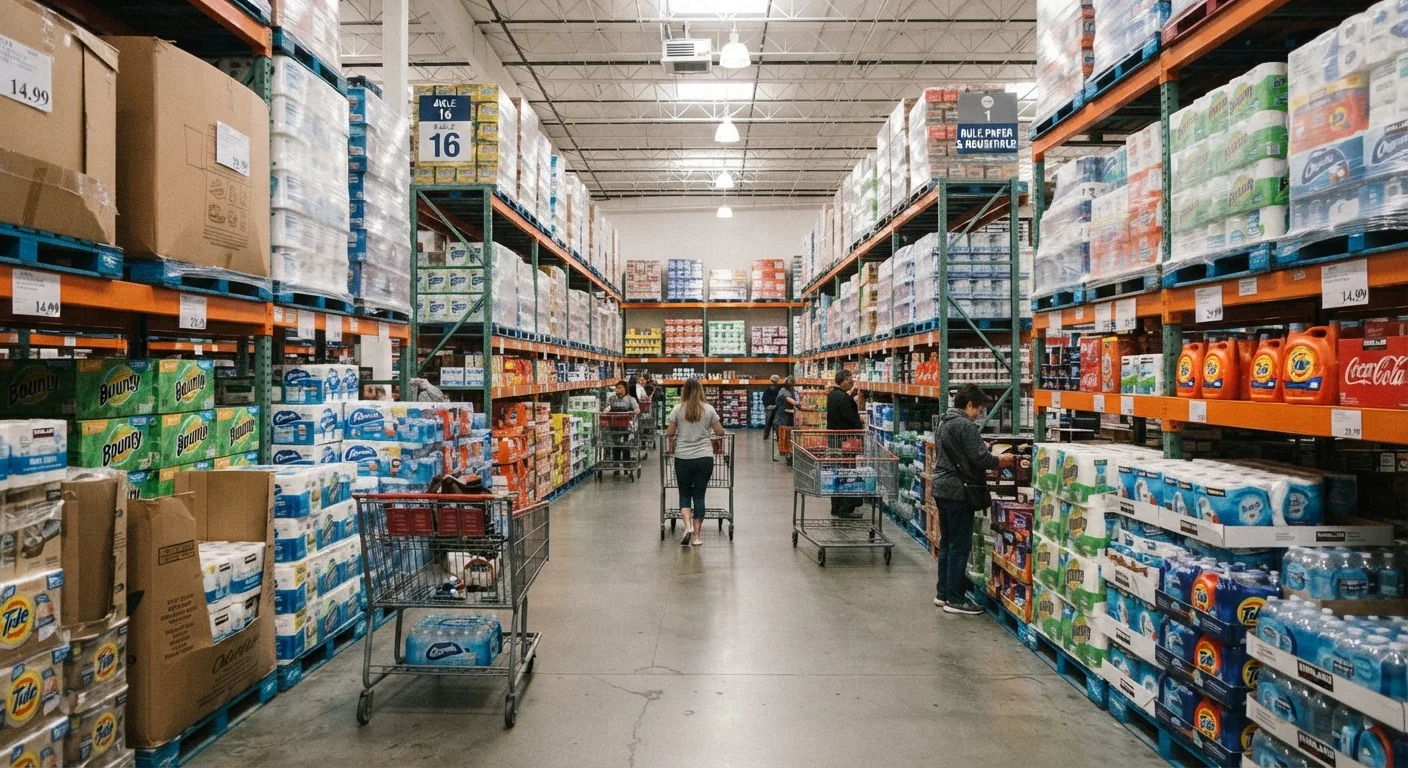
Bulk buying is a legitimate money-saving tool, but only for the right products and households. The savings are real when you have the storage, the cash flow, and a reliable consumption rate. When those conditions aren't met, bulk buying shifts from a budget strategy to a hidden cost.
Households with consistent usage patterns, adequate storage, and the upfront cash to stock staples without straining their monthly budget.
The Appeal - and the Trap
The logic behind bulk buying feels airtight: buying more units at a lower cost per unit means you spend less overall. Warehouse clubs have built entire retail empires on this premise, and for many shoppers it works exactly as advertised. But the math only holds under specific conditions - and those conditions are easier to miss than most people expect.
The core trap is confusing a lower unit price with actual savings. If you buy 96 ounces of salad dressing because the per-ounce cost is half that of a standard bottle, but you use two tablespoons a week and the bottle goes rancid in four months, you haven't saved money. You've spent more money on something you couldn't fully use. This is the scenario that quietly repeats itself in kitchens and garages across the country.
Smart bulk buying requires a short but honest pre-purchase assessment. A pre-purchase checklist can help structure that thinking before you load the cart.
When Bulk Buying Genuinely Helps
Certain categories are reliable candidates for bulk purchase because they combine high usage rates with long shelf life or durability.
Lower cost per unit on staple products
For frequently used, non-perishable items, bulk pricing consistently reduces the cost per unit. Over months and years, that difference accumulates into real budget savings.
Fewer shopping trips and less decision fatigue
Stocking common household necessities in bulk means less frequent restocking runs and fewer small purchases that add up. It also removes the mental overhead of tracking when essentials run low.
Protection against short-term price increases
Buying ahead at a known price can buffer against periodic price spikes on commodity goods like paper products, canned foods, or cleaning supplies.
Strong value for large or multi-person households
Higher consumption rates mean bulk quantities get used within reasonable timeframes, which is the core condition that makes bulk math work in a household's favor.
Household staples like toilet paper, paper towels, dish soap, and laundry detergent are classic examples: stable products, predictable consumption, and no spoilage risk. The same logic applies to canned goods, dried beans, rice, pasta, and other pantry staples with multi-year shelf lives. Over time, consistently buying these items in bulk at lower unit costs compounds into meaningful savings - the kind that shows up clearly in annual grocery spend.
Understanding cost-per-use thinking reinforces why this works: when usage is near-certain and frequent, the per-unit cost advantage is fully realized rather than partially lost to waste.
When It Just Takes Up Space
The categories where bulk buying reliably backfires follow a predictable pattern: short shelf life, variable usage, or products you haven't committed to long-term.
Perishables spoil before you finish them
Fresh produce, dairy, bread, and many refrigerated items rarely last long enough for a bulk purchase to make sense. The discount disappears the moment food goes to waste.
Large upfront cost strains monthly cash flow
Bulk purchases require spending more money at once, which can create short-term budget pressure even when the long-term math is favorable. For households managing tight cash flow, this trade-off matters.
Buying unfamiliar products in quantity is risky
Trying a new detergent, food product, or personal care item in bulk before confirming you like it is a common and costly mistake. A single large purchase can lock you into a product you end up not using.
Storage space has real value and limits
Many households simply don't have the space to store 40 rolls of paper towels or a flat of canned goods without disruption. Overcrowded storage adds stress and can cause items to be forgotten, damaged, or expired.
Trend-sensitive or seasonal products lose relevance fast
Buying heavily into a product that's subject to personal taste changes - flavored snacks, specialty beverages, fashion-adjacent items - often results in stockpiles you stop wanting well before they're depleted.
Membership Fees Change the Equation
Warehouse club memberships typically run $50-$65 per year. If you're buying bulk primarily for the lower unit prices, you need to save at least that much - net of any spoilage or unused product - for the membership to pay for itself. Light or occasional bulk shoppers often find the math doesn't clear that bar. It's worth tallying actual annual savings before renewing automatically.
Beyond the product itself, bulk buying carries hidden overhead. The full cost of a purchase includes storage space, which has real value - especially in apartments or smaller homes. Tying up cash in a three-year supply of something also has an opportunity cost, even if it's invisible on the receipt.
The Numbers You Actually Need to Run
Before committing to a bulk purchase, three figures matter more than the per-unit price alone.
- Your actual consumption rate. How long will this realistically last your household? Not the optimistic version - the realistic one.
- The product's usable shelf life. Check expiration dates and degradation timelines. Many cleaning products, vitamins, and oils lose efficacy well before the printed date under average storage conditions.
- Your storage cost. If bulk buying means renting a larger storage unit, buying extra shelving, or simply tolerating clutter that degrades your living space, factor that in.
If the per-unit savings don't clearly outpace these factors, the deal is less compelling than the price tag suggests. This connects directly to broader spending habits worth building: evaluating the full picture rather than the headline number.
~30%
Typical unit price reduction in bulk formats
Consumer behavior research generally estimates that warehouse club pricing offers 20-30% lower cost per unit compared to standard retail, though the realized savings depend heavily on how much of the product is actually used.
40%
Share of U.S. food waste from households
According to the USDA, households account for a significant portion of food waste, a pattern that bulk purchasing of perishables can worsen when consumption rates are overestimated.
The content provided on our blog site traverses numerous categories, offering readers valuable and practical information. Readers can use the editorial team’s research and data to gain more insights into their topics of interest. However, they are requested not to treat the articles as conclusive. The website team cannot be held responsible for differences in data or inaccuracies found across other platforms. Please also note that the site might also miss out on various schemes and offers available that the readers may find more beneficial than the ones we cover.