

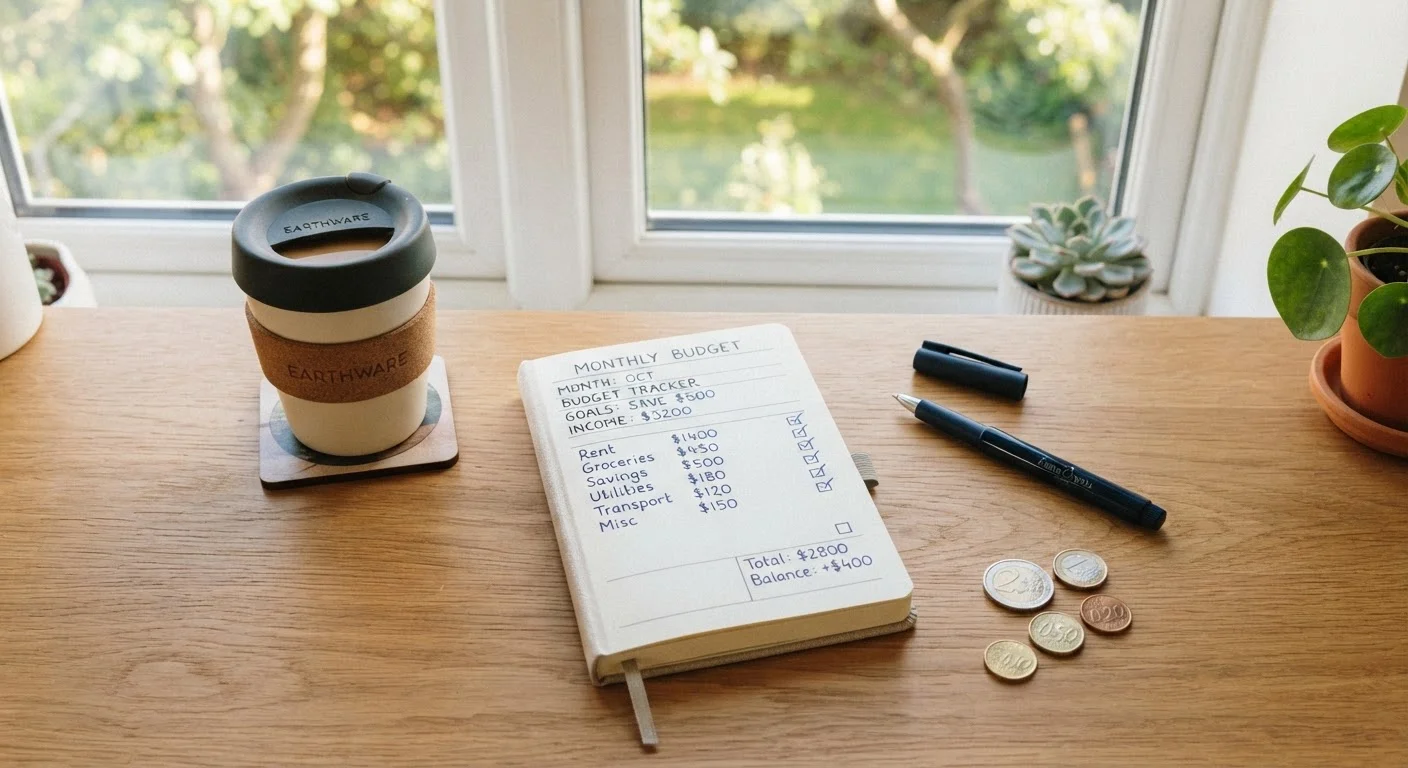
Why Spending Habits Matter More Than Budgets
Most financial guidance starts with budgets - spreadsheets, categories, percentages. That framing puts the emphasis on the plan rather than the behavior. But a budget left unexamined is just a document. What actually shapes financial outcomes over time is the collection of small, repeated decisions that rarely feel significant in the moment.
Spending habits - the patterns you default to without much thought - are what determine whether your money works for your priorities or quietly drains toward things that don't. The good news is that habits are learnable and, with enough repetition, become low-effort. The harder news is that some common habits most people assume are fine are quietly costly. Understanding what intentional spending looks like in practice is a useful starting point before evaluating your own patterns.
Track your actual spending for at least one full month before trying to change anything.
You cannot improve what you cannot see. Most people are significantly off in their mental estimates of what they spend in common categories like dining, entertainment, and miscellaneous purchases. A baseline month of honest tracking creates the information needed to make meaningful decisions.
Automate savings before discretionary spending reaches your checking account.
Willpower-dependent savings - where you intend to save what's left over at month's end - reliably fail because discretionary spending tends to expand to fill available funds. Automating a transfer immediately after income arrives removes the decision entirely.
Apply a 48-hour waiting period to all non-essential purchases above a personal threshold.
The urgency felt around unplanned purchases almost always fades with time. Most impulse items that still seem worth buying two days later are reasonable purchases; most that don't were impulse decisions that would have caused regret.
Audit all recurring subscriptions every three to six months.
Subscriptions are deliberately structured to be forgettable - low monthly costs, automatic renewals, and no reminder when usage drops. Regular audits surface services that have gone unused and create a concrete opportunity to cancel without regret.
Define a personal spending threshold that requires a deliberate decision, not just a tap.
Without a self-defined limit, every purchase gets evaluated against no standard at all. A personal threshold - whatever amount feels meaningful given your income - creates a built-in pause that applies consistently.
Habits Worth Building - and Keeping
The spending habits that hold up long-term share a common trait: they create a small pause or structure between an impulse and money leaving your account. They're not dramatic overhauls - they're repeatable small actions with compounding effects.
For a structured way to evaluate any individual purchase before committing, the pre-purchase checklist offers a quick set of honest questions that take less than two minutes. Pair that with consistent tracking - whether paper, app, or spreadsheet - and you have the foundation for most people's financial improvement. See how different tracking methods compare to find the approach that fits your actual habits.
Habits Worth Unlearning
Some patterns feel financially neutral - or even smart - but erode budgets reliably over time. Recognizing them isn't about guilt; it's about seeing clearly what's happening.
$219/mo
Average U.S. household subscription spend
A C+R Research survey found U.S. consumers estimated spending around $86 per month on subscriptions - but actual charges averaged more than double that amount.
47%
Americans with no emergency savings buffer
Federal Reserve survey data has consistently found that close to half of U.S. adults would struggle to cover an unexpected $400 expense from savings alone.
Convenience spending as a default. Grabbing lunch, ordering delivery, or paying for convenience services instead of using what you already have is individually cheap and collectively expensive. The problem isn't any single purchase - it's the habit of defaulting to convenience rather than choosing it deliberately.
Subscription accumulation. Services added one at a time feel small. Collectively, they often total far more than people estimate. Subscription creep is one of the most common hidden drains on household budgets, and most people underestimate their own totals by a significant margin.
Lifestyle inflation tied to income increases. When income rises, spending tends to rise in step - often faster. This pattern, sometimes called lifestyle creep, prevents financial progress even as earnings improve. Unexpected ways people quietly drain their own savings covers this pattern alongside several other less visible budget leaks.
Treating sale prices as savings. Spending money on a discounted item you wouldn't have purchased at full price is a net cost, not a saving. Several popular money ideas that sound reasonable don't hold up when examined against actual spending outcomes.
Make the Pause a System, Not a Rule
Rules rely on remembering and willpower; systems do the work automatically. Rather than telling yourself to 'think before buying,' build friction into the process - remove saved payment info from shopping sites, keep a physical wish list, or set a calendar reminder to revisit pending purchases. The goal is to make the pause the path of least resistance.
The Role of Payment Method and Emotion
Two underappreciated forces shape spending patterns in ways most people don't consciously notice: how you pay, and how you feel when you pay. Research in consumer behavior consistently finds that more abstract payment methods - cards, digital wallets - tend to create less psychological friction than cash, making it easier to spend more than intended. How payment type shapes what you actually spend explains the pattern and what you can do with that knowledge.
Emotional state also matters. Stress, boredom, and fatigue are all known triggers for unplanned spending. Recognizing that connection doesn't require avoiding feelings - it just requires noticing when emotion is driving the purchase rather than genuine need. For readers who find emotional spending patterns persistent, distinguishing needs from wants provides a practical framework for thinking it through before tapping a card.
Emotional Spending Isn't a Moral Failure
Spending in response to stress or boredom is a common and well-documented behavior pattern, not a character flaw. Recognizing the trigger is the first step; building alternative responses (a walk, a call, a glass of water) is the second. For readers whose spending patterns feel tied to persistent emotional distress, speaking with a mental health professional can be a genuinely useful step alongside financial planning.
This article is for general informational purposes only and does not constitute personalized financial advice. For guidance specific to your situation, consult a qualified financial professional.
The content provided on our blog site traverses numerous categories, offering readers valuable and practical information. Readers can use the editorial team’s research and data to gain more insights into their topics of interest. However, they are requested not to treat the articles as conclusive. The website team cannot be held responsible for differences in data or inaccuracies found across other platforms. Please also note that the site might also miss out on various schemes and offers available that the readers may find more beneficial than the ones we cover.