

Why Your Packing Approach Matters More Than What You Pack
Most packing stress doesn't come from forgetting things - it comes from having no system at all. Without a repeatable process, every trip starts from scratch. You end up overpacking, then scrambling to fit it all in, then dragging excess weight through airports and train stations.
The good news is that packing efficiently is a learnable skill. A handful of consistent strategies - applied before you even open a suitcase - can cut your prep time significantly and reduce the mental load of departure day. This connects directly to the broader phases of trip planning, where packing is often treated as an afterthought rather than a deliberate step.
The Capsule Wardrobe and One-Bag Methods
Two approaches have stood up across trip types and traveler styles: the capsule wardrobe and the one-bag method.
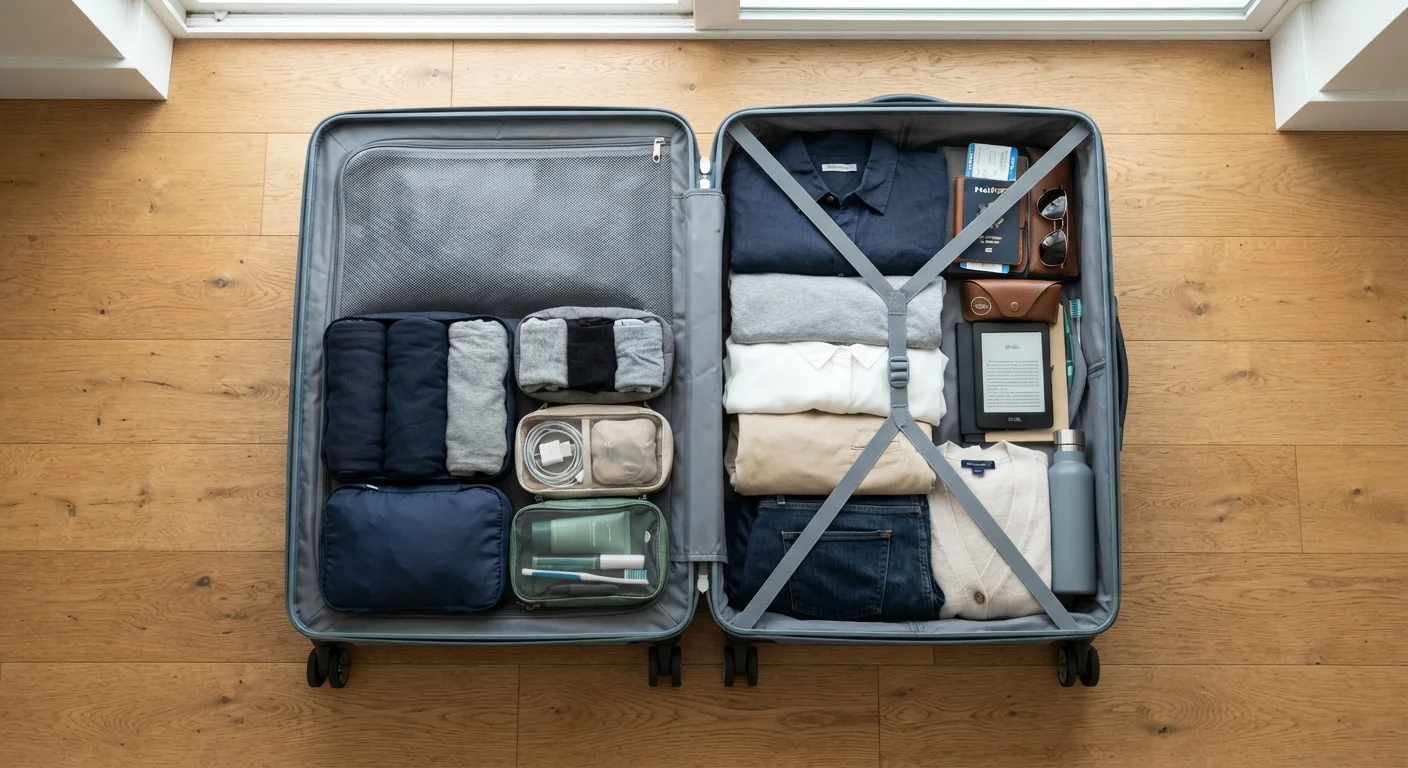
A capsule wardrobe means selecting a small set of clothing items - typically 5 to 9 pieces - that mix and match into multiple outfits. Every piece should work with at least two others. Neutral colors (navy, gray, black, cream) make this easier. For a seven-day trip, this approach can cover all occasions without filling a full-size checked bag.
The one-bag method goes further: the goal is fitting everything - clothes, toiletries, tech, and documents - into a single carry-on or personal item. It works best when you're willing to do laundry mid-trip or choose a destination with accessible laundromats or hotel laundry services. For trips up to 10-14 days, many experienced travelers find it entirely workable. The payoff: faster airport navigation, no checked baggage fees, and less to manage throughout the trip.
Both methods benefit from intentional outfit planning before you pack. Lay out every item you plan to bring and mentally pair them into actual outfits. Remove anything that only works as a standalone piece.
Test the One-Bag Method on a Short Trip First
If you've never tried carry-on-only travel, a weekend trip or a two-night domestic stay is the ideal trial run. You'll quickly identify which 'essentials' you didn't actually use and calibrate for longer trips. Most travelers find the adjustment easier than expected once they experience the airport efficiency firsthand.
Tools That Make Packing Faster and More Consistent
Packing cubes are the single most practical organizational tool for repeat travelers. They compress clothing into defined zones within a bag, prevent re-packing chaos when accessing items mid-trip, and make airport security checks faster. You don't need a complete set - two or three cubes cover most needs.
A reusable master packing checklist - saved digitally and updated after each trip - removes the need to reinvent your list every time. The organizational tools experienced travelers rely on extend well beyond packing, but the checklist habit is one of the highest-return habits to build first.
For toiletries, a dedicated toiletry bag that stays pre-packed with travel-size essentials means you're never starting from zero. Refill after each trip rather than before.
Adjusting Your Strategy by Trip Type
No single packing formula fits every trip. A weekend road trip, a two-week international itinerary, and a business conference each have distinct requirements.
- Weekend trips (1-3 nights): A personal item or small backpack is almost always sufficient. Resist the urge to bring a full carry-on - the overhead bin space and extra weight rarely justify themselves for short stays.
- Domestic trips under a week: Carry-on only is achievable for most travelers with basic capsule thinking. Check the weather for your destination at least 48 hours before departure; packing for the wrong conditions is one of the most common causes of overpacking.
- International trips of 1-2 weeks: One carry-on plus a personal item is the ceiling most experienced travelers set for themselves. Laundry planning is the key variable - know before you go whether you'll have access to it.
Efficient packing also ties directly to keeping travel costs manageable - avoiding checked bag fees and traveling lighter can meaningfully reduce your trip's total cost. For a complete look at how packing fits into your broader trip preparation, see the comprehensive trip planning guide.
The content provided on our blog site traverses numerous categories, offering readers valuable and practical information. Readers can use the editorial team’s research and data to gain more insights into their topics of interest. However, they are requested not to treat the articles as conclusive. The website team cannot be held responsible for differences in data or inaccuracies found across other platforms. Please also note that the site might also miss out on various schemes and offers available that the readers may find more beneficial than the ones we cover.