

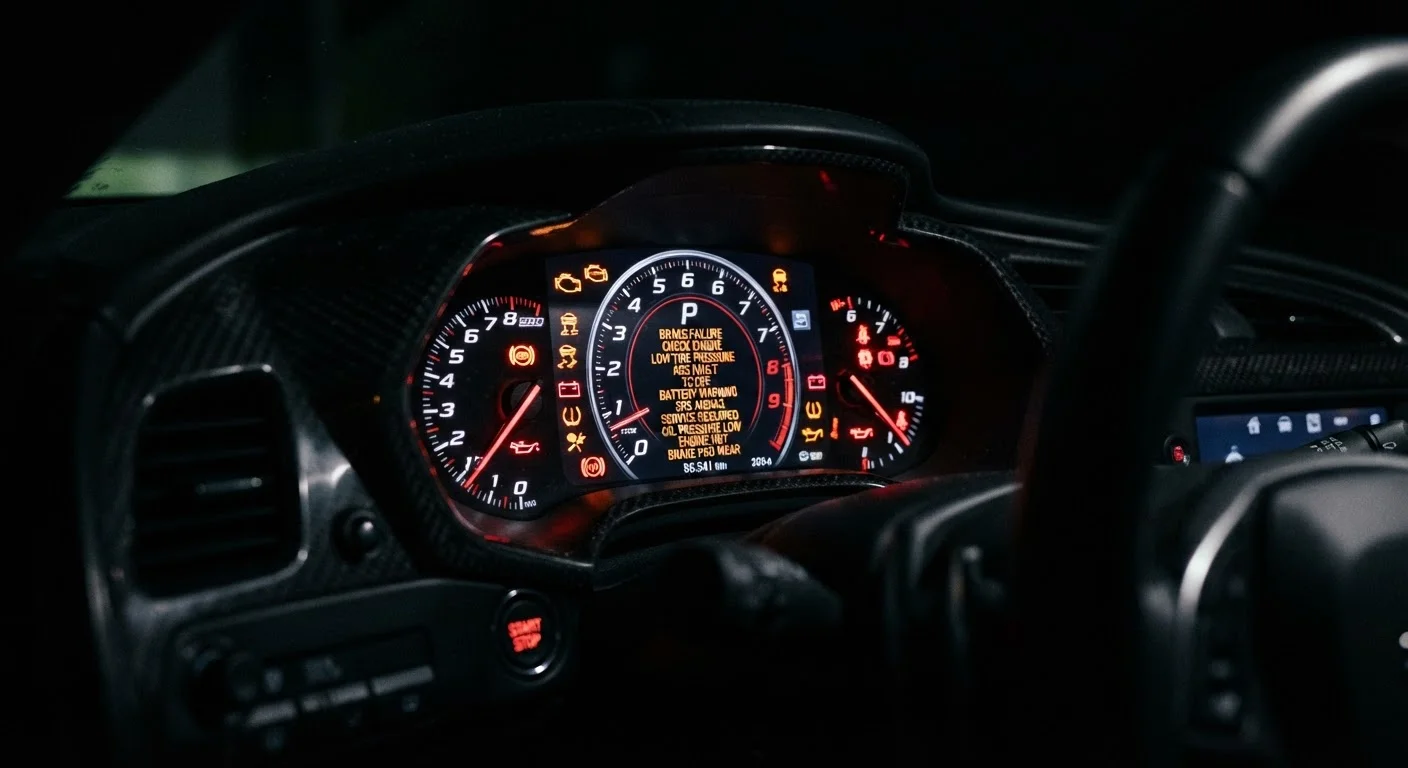
Why Warning Lights Exist - and Why Ignoring Them Is Risky
Modern vehicles monitor dozens of systems simultaneously, from engine combustion to tire pressure to transmission temperature. When a sensor detects something outside normal operating parameters, it triggers a dashboard warning light to alert the driver. These lights aren't suggestions - they're your vehicle's built-in diagnostic language.
The problem is that many drivers either panic at every illuminated symbol or dismiss them entirely. Neither response is helpful. Understanding what each light means - and how urgently it demands action - is a core driving skill. This guide gives you a practical reference you can return to whenever a new symbol appears.
For a broader foundation on vehicle systems, the Understanding Your Car hub is a useful starting point.
| Number of systems monitored | Dozens in most modern vehicles (Varies by make, model, and year) |
| Red light urgency | Stop driving as soon as safely possible (Standard automotive safety guidance) |
| Amber light urgency | Schedule service within 1-2 days (General industry recommendation) |
| TPMS mandated in US since | 2008 (all new passenger vehicles) (NHTSA TPMS federal mandate) |
| Most common amber light | Check Engine / MIL (Malfunction Indicator Lamp) (Automotive repair industry data) |
Color Codes: The First Thing to Notice
Before decoding any specific symbol, pay attention to its color - manufacturers use a consistent color hierarchy across virtually all modern vehicles sold in the US:
- Red: Stop driving or address immediately. Red signals a condition that can cause serious vehicle damage, a safety hazard, or both. Examples include low oil pressure, engine overheating, and brake system failure.
- Yellow/Amber: Caution. Something needs attention soon but isn't necessarily an emergency right now. The check engine light, traction control issues, and low tire pressure typically appear in amber.
- Green or Blue: Informational. These confirm an active system, such as high beams on (blue) or turn signals active (green). No action required.
This color framework lets you make a quick, informed decision before you've even identified the specific symbol.
MIL (Malfunction Indicator Lamp)
The formal term for the check engine light. It illuminates when the onboard diagnostics system detects a fault code in engine or emissions-related components.
TPMS
Tire Pressure Monitoring System - a federally mandated sensor network that alerts the driver when tire pressure drops significantly below the recommended level.
OBD-II
On-Board Diagnostics, second generation. A standardized system in all US vehicles sold after 1996 that records fault codes when sensors detect abnormal readings. A scan tool can read these codes to help diagnose the root cause of a warning light.
Oil Pressure
The force at which engine oil is circulated through internal components. Low oil pressure - as opposed to simply low oil level - means lubrication is insufficient and can cause rapid engine damage.
Alternator
A generator driven by the engine that recharges the battery while the vehicle is running. A failing alternator will trigger the battery warning light and can leave the vehicle unable to restart.
The Most Common Warning Lights, Explained
The following are the warning lights drivers encounter most frequently. Always cross-reference with your owner's manual for vehicle-specific details - as your owner's manual contains precise guidance for your exact make and model.
Check Engine (Amber)
One of the most misunderstood lights on any dashboard. A steady amber check engine light often indicates an emissions-related issue - a loose gas cap, a failing oxygen sensor, or a minor fault that won't strand you immediately. A flashing check engine light, however, signals an active engine misfire that can damage your catalytic converter. Pull over safely and reduce speed if you see it flashing. See how to tell the difference between urgent and non-urgent check engine scenarios.
Oil Pressure Warning (Red)
This light means your engine may not have adequate oil pressure - not necessarily that oil is low, but that pressure is critically insufficient. Stop the vehicle as soon as it is safe to do so. Running an engine with low oil pressure can cause irreversible internal damage within minutes.
Battery / Charging System (Amber or Red)
Indicates the battery is not being charged properly. This could point to a failing alternator, a loose belt, or a bad battery. The vehicle may continue running briefly on battery reserve, but don't count on it. Head directly to a mechanic.
Tire Pressure Monitoring System - TPMS (Amber)
This symbol - a cross-section of a tire with an exclamation point - means one or more tires is significantly under-inflated. Check all four tires with a gauge before driving further. For a full breakdown of tire numbers and what they mean, see Tire Pressure, Tread Depth, and Load Rating.
Temperature Warning (Red)
Your engine is overheating. Pull over immediately, turn off the engine, and do not open the radiator cap while the engine is hot. Continuing to drive can warp the cylinder head or cause catastrophic engine failure.
Brake System Warning (Red)
Could mean the parking brake is engaged, brake fluid is low, or - most seriously - there's a fault in the hydraulic braking system. If the parking brake is off and this light stays on, treat it as urgent and have the brakes inspected before driving further.
Scan Tools Are Widely Available
An OBD-II scan tool - available at most auto parts stores and as inexpensive plug-in devices - can read the specific fault code behind a check engine light. Many auto parts retailers will perform this scan at no charge. While the code won't diagnose the exact cause, it narrows the problem significantly and helps you have a more informed conversation with a mechanic.
When to Drive On vs. When to Stop Immediately
A simple decision framework helps when a new light appears mid-drive:
- Red light? Reduce speed, find a safe place to pull over, and do not continue driving until you understand the cause.
- Amber light, no other symptoms? It's generally safe to complete your current trip, but schedule an inspection promptly - within a day or two.
- Amber light plus unusual sounds, smells, or handling changes? Treat it as red. Multiple signals together often indicate a more serious condition than any one indicator alone.
Consulting the full dashboard warning lights guide can help you match unfamiliar symbols to their correct meaning and urgency level.
Warning lights are designed to protect you and your vehicle. Taking them seriously - without overreacting - is one of the most practical habits any driver can develop.
1 in 10
Vehicles on US roads with a check engine light on
Estimates from automotive diagnostic service providers suggest roughly 10% of vehicles on the road at any time have an active check engine light.
$4,000+
Potential engine repair cost from ignored oil pressure warning
Industry repair data indicates severe engine damage from oil starvation can result in repair bills well above $4,000, depending on the vehicle.
The content provided on our blog site traverses numerous categories, offering readers valuable and practical information. Readers can use the editorial team’s research and data to gain more insights into their topics of interest. However, they are requested not to treat the articles as conclusive. The website team cannot be held responsible for differences in data or inaccuracies found across other platforms. Please also note that the site might also miss out on various schemes and offers available that the readers may find more beneficial than the ones we cover.