

Why These Three Numbers Matter
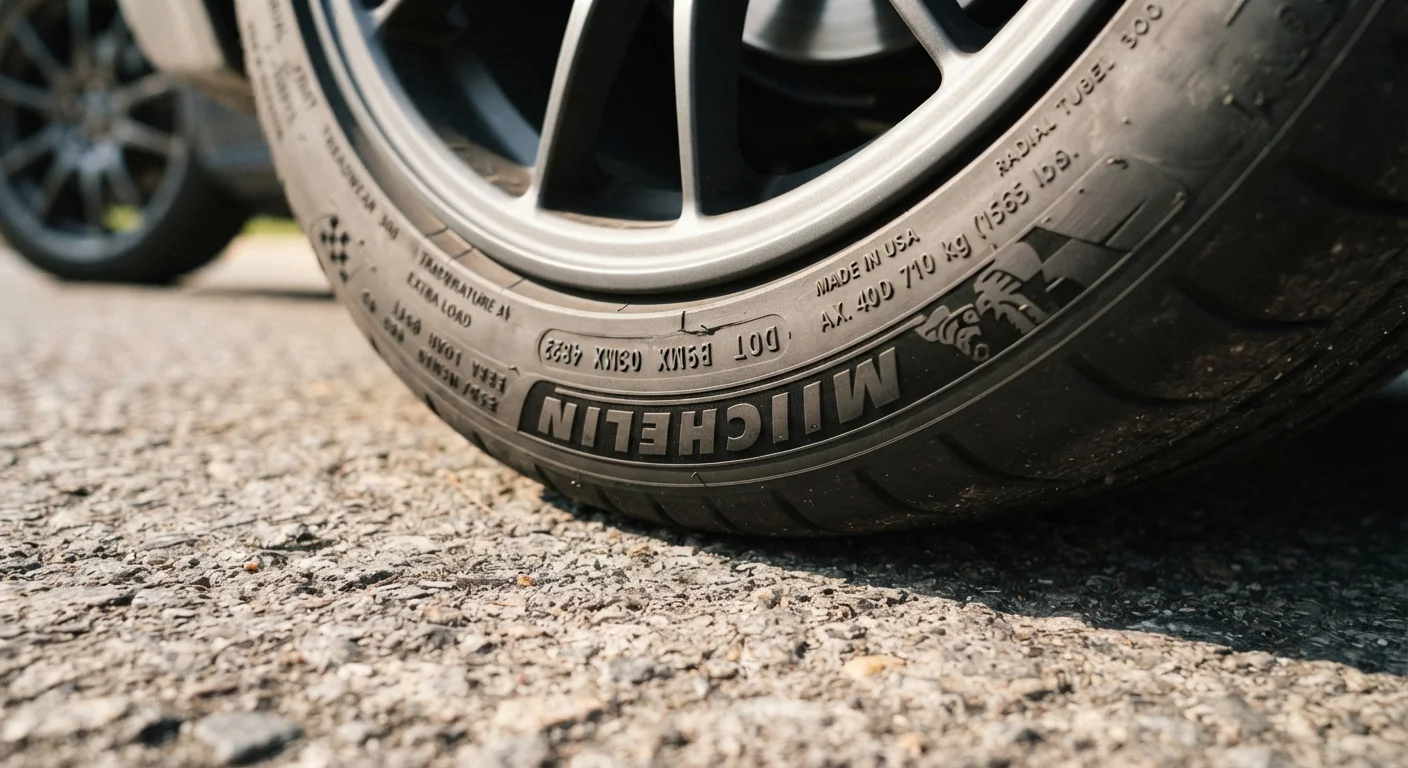
Tires are the only part of your vehicle that actually touches the road, yet most drivers pay little attention to the numbers stamped on their sidewalls or printed in their owner's manual. Tire pressure, tread depth, and load rating are not bureaucratic specs - they are active safety thresholds. Get them wrong and you compromise braking distance, handling response, and structural integrity.
| Recommended pressure source | Driver's door jamb sticker or owner's manual |
| Pressure check frequency | Once per month and before long trips |
| Legal tread minimum (most U.S. states) | 2/32 inch |
| Tread depth on new tires | 10/32-11/32 inch |
| Temperature effect on pressure | ~1 PSI lost per 10°F drop |
| Load rating location | Tire sidewall and door jamb sticker |
This guide walks through each measurement, how to check it, and what the warning signs look like. For a deeper look at how pressure specifically affects fuel economy and handling, see our tire pressure explainer. For broader car maintenance guidance, the hub covers everything from fluids to filters.
Tire Pressure: The Number You Should Check Monthly
What it is: Tire pressure is measured in PSI and indicates how much air is inside the tire. Contrary to common belief, the PSI printed on the tire sidewall is the maximum pressure the tire can safely hold - not the target. Your vehicle's recommended pressure is found on the driver's door jamb sticker or in your owner's manual.
How to check it: Use a calibrated tire pressure gauge - digital or dial-type - when the tires are cold (driven fewer than one mile). Remove the valve stem cap, press the gauge firmly onto the valve, and read the result. Most passenger vehicles call for 32-35 PSI; trucks and SUVs vary. Adjust to match the door jamb spec, not the sidewall max.
When to worry: A tire loses roughly 1 PSI per month under normal conditions, and about 1 PSI for every 10°F drop in temperature. If a tire is consistently 5 or more PSI low, suspect a slow leak. If your TPMS light comes on, verify pressure manually - sensors can lag. See what your dashboard warning lights are actually telling you for TPMS context.
Tread Depth: Reading the Road's Grip on Your Tires
What it is: Tread depth is measured in 32nds of an inch. New tires typically start at 10/32" to 11/32". The legal minimum in most U.S. states is 2/32", but handling and wet-weather stopping distance degrade significantly before you reach that threshold.
How to check it: The quickest field method is the penny test: insert a penny into the tread groove with Lincoln's head pointing down. If you can see the top of Lincoln's head, the tread is at or below 2/32" - replace the tire. A quarter works for a more conservative check: if you can see the top of Washington's head, you're at 4/32" or less, which is worth planning a replacement, especially if you drive in rain or snow.
PSI
Pounds per square inch - the unit used to measure tire air pressure in the United States. Your vehicle's correct PSI is specified by the manufacturer, not the tire itself.
Tread depth
The measurement from the top of the tread rubber to the bottom of the deepest groove, expressed in 32nds of an inch. It directly affects grip, water evacuation, and braking performance.
Load index
A numerical code on the tire sidewall indicating the maximum weight each tire can carry when inflated to its rated pressure. Replacement tires must match or exceed the original index.
TPMS
Tire Pressure Monitoring System - a federal-mandate sensor system (required on U.S. vehicles since 2008) that alerts the driver when tire pressure falls 25% or more below the recommended level.
Speed rating
A letter code on the sidewall indicating the maximum sustained speed the tire is designed to handle safely. It reflects the tire's heat-dissipation capability under load.
Tread wear indicator
Small raised bars molded into the tread grooves at 2/32 inch depth. When the tread surface is flush with these bars, the tire has reached the legal minimum and should be replaced.
Tread wear indicator bars - small raised ridges built into the grooves - become flush with the tread surface at 2/32". Checking these takes seconds. Uneven wear patterns (cupping, one-sided wear) can signal alignment or suspension issues worth addressing. The impact on wet and icy road traction is why tread depth deserves attention before every winter season.
Load Rating: The Number Most Drivers Ignore
What it is: Every tire has a load index - a two- or three-digit number stamped on the sidewall that corresponds to the maximum weight the tire can support when properly inflated. A tire marked "91" supports up to 1,356 lbs; "102" supports up to 1,874 lbs. Multiply by four to get the tire set's total capacity. This must meet or exceed your vehicle's GVWR.
Why it matters: Replacing tires with a lower load rating than the vehicle requires is a safety violation in practice if not always in law - overloaded tires build heat, deform, and can fail without warning at highway speeds. Load rating also connects to speed rating (a letter code following the load index, such as "H" for 130 mph), which establishes the tire's structural thermal limits.
How to verify it: Your door jamb sticker lists the minimum load index required for your vehicle. Any replacement tire must match or exceed that index. If you've upgraded to carrying heavier loads - a pickup used for hauling, for instance - consult a qualified tire professional about whether your current rating is adequate. For definitions of GVWR and related terms, our car terms glossary has plain-language breakdowns. This is also governed by broader driving and safety principles worth reviewing.
When to Bring in a Professional
Checking pressure and tread depth are straightforward DIY tasks. However, if you notice rapid pressure loss, uneven tread wear, sidewall bulges, or cracking, have the tires inspected by a qualified tire technician. These symptoms can indicate structural damage that a visual check alone may not fully reveal. Never attempt to repair sidewall damage yourself - a professional assessment is essential.
The content provided on our blog site traverses numerous categories, offering readers valuable and practical information. Readers can use the editorial team’s research and data to gain more insights into their topics of interest. However, they are requested not to treat the articles as conclusive. The website team cannot be held responsible for differences in data or inaccuracies found across other platforms. Please also note that the site might also miss out on various schemes and offers available that the readers may find more beneficial than the ones we cover.