

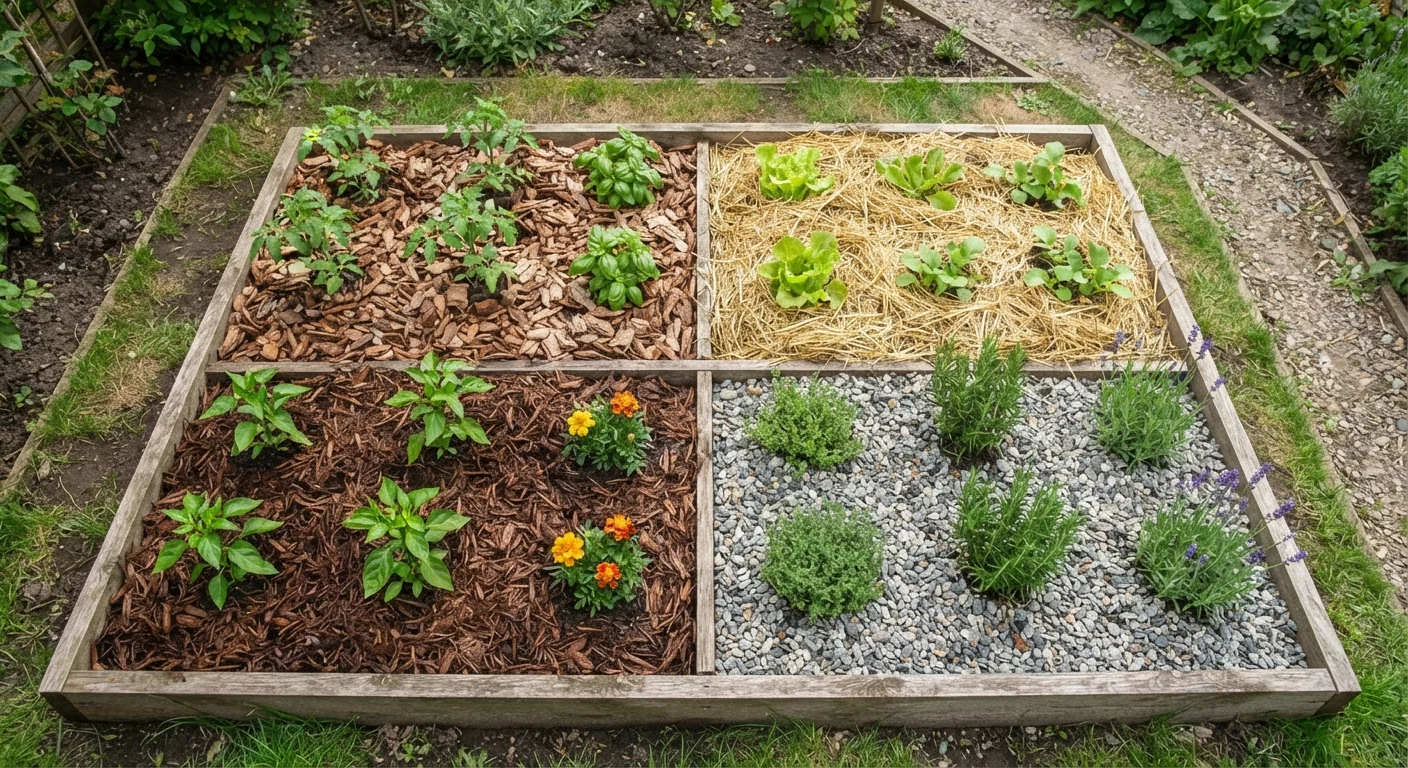
Why Mulch Selection Actually Matters
Walk into any garden center and you'll find a wall of mulch options - shredded hardwood, pine straw, river rock, rubber crumbles, cocoa hulls, and more. Most gardeners grab whatever looks good or costs less without realizing that material choice has real consequences for plant health, water use, and long-term soil quality.
At its core, mulch does a few fundamental things: it suppresses weeds, retains soil moisture, and moderates soil temperature. But beyond those shared benefits, different mulch types behave very differently over time. Some feed your soil; some don't. Some work well around vegetables; others belong in a pathway. Pairing the wrong mulch to a planting situation wastes money and can even cause problems - compacted soil, pH imbalance, or persistent moisture that invites disease.
This guide breaks down the most common mulch types and explains precisely where each one earns its place in the garden. Whether you're setting up raised beds or in-ground planting areas, understanding mulch will help you build healthier soil from the start.
Wood Chips and Shredded Bark
Wood chips and shredded bark are among the most widely used mulches for good reason. They're long-lasting (typically 1-3 years before breaking down significantly), widely available, and effective at suppressing weeds in established beds. Shredded hardwood breaks down faster and knits together into a mat that resists blowing away - useful in exposed areas. Larger wood chips take longer to decompose but provide excellent moisture retention and a clean visual finish around trees, shrubs, and perennial borders.
One important caveat: fresh wood chips can temporarily tie up nitrogen in the soil as microbes work to decompose them. This is rarely a serious problem when chips are used as a surface mulch rather than mixed into soil, but it's worth knowing if you're mulching around heavy-feeding annual flowers or vegetables.
Wood chips excel around trees and shrubs but may temporarily tie up nitrogen if mixed into soil.
Straw
Straw (not hay - hay contains seeds) is a go-to mulch for vegetable gardens. It's lightweight, easy to spread, and decomposes relatively quickly, feeding soil organisms and slowly improving organic matter. It insulates soil well against both heat and cold, making it useful for extending the growing season at either end.
Straw is particularly valued around strawberries, tomatoes, and other low-growing crops where soil splash - the splatter of soil onto fruit and foliage during rain or irrigation - can spread disease. A few inches of straw creates a clean buffer. Make sure you source straw that hasn't been treated with persistent herbicides, which can linger and harm garden plants.
Straw is the vegetable gardener's workhorse - lightweight, fast-decomposing, and disease-suppressing.
Pine Needles (Pine Straw)
Pine needles are a natural choice for acid-loving plants like blueberries, azaleas, rhododendrons, and camellias. Contrary to a common belief, pine needles don't dramatically acidify soil on their own - their effect on pH is modest - but they do create a loose, airy mulch layer that's slow to compact and allows water to pass through easily.
Pine straw is especially common in the Southeast United States, where it's abundant and inexpensive. It's also lightweight and easy to apply. It does break down over time and will need annual topping-off, but it blends naturally into woodland garden settings and holds well on slopes where heavier mulches might wash away.
Pine needles shed water efficiently and hold well on slopes, making them practical in woodland garden settings.
Compost as Mulch
Finished compost used as a surface mulch offers something no other mulch can match: it actively feeds the soil while suppressing weeds. A 1-2 inch layer of mature compost spread over planting beds acts as both a slow-release fertilizer and a biological inoculant, introducing beneficial microorganisms that improve soil structure over time.
The tradeoff is that compost doesn't suppress weeds as aggressively as thicker, coarser mulches - seeds can germinate in it more easily. For this reason, some gardeners apply a thin compost layer beneath a thicker layer of wood chips or straw, getting soil benefits while still blocking light from weed seeds. It pairs naturally with everything you'd want to know about soil amendments and how they work.
Compost mulch feeds soil biology while it suppresses weeds - a rare dual benefit no other mulch delivers.
Gravel and Crushed Stone
Gravel, pea stone, and crushed decomposed granite are inorganic mulches that don't break down, don't improve soil, and don't need replacing frequently. These qualities make them well-suited to specific situations: rock gardens, drought-tolerant plantings, Mediterranean herb gardens, and pathway surfaces where permeability matters.
Stone mulches absorb heat during the day and radiate it back at night, which can help heat-loving plants in cooler climates - but can stress plants in already-hot regions during summer. They're also heavy, difficult to remove if you change your mind, and can become weedy over time as debris accumulates between stones. Use them intentionally, not just for aesthetics.
Gravel is permanent and low-maintenance, but heat retention makes it a poor choice for most planting beds.
Rubber Mulch
Rubber mulch, typically made from recycled tires, is marketed for its longevity and color retention. It genuinely doesn't decompose, doesn't blow away easily, and is commonly used in playground safety surfacing. In garden beds, however, it contributes nothing to soil health and may leach compounds over time - research on this is ongoing and inconclusive, but many gardeners and extension services recommend caution in edible garden applications.
It's also very difficult to remove once installed and can become an obstacle if you want to adjust planting schemes. Rubber mulch may have a practical place in ornamental pathways or non-planting areas, but most gardening professionals steer clear of it in active garden beds, particularly where food crops are grown.
Rubber mulch lasts long but contributes nothing to soil and is best kept out of edible garden beds.
Matching Mulch to Your Garden's Needs
Choosing a mulch type isn't complicated once you know what you're trying to accomplish. Vegetable gardens generally benefit most from light, organic materials that decompose quickly and support the nutrient cycling that heavy-producing crops demand. Perennial beds and shrub borders can support slower-decomposing wood-based mulches that offer longer-lasting weed suppression season after season.
Top Off Organic Mulches Annually
Organic mulches break down over time - that's part of what makes them beneficial - but it also means the layer thins out. Plan to add a fresh inch or two each spring before the growing season ramps up. This keeps weed suppression effective and ensures the soil-building benefits continue year after year.
Regardless of mulch type, depth matters. A layer that's too thin won't suppress weeds effectively; too thick and you risk blocking air and water from reaching roots. Most organic mulches perform best at 2-3 inches; coarser materials like wood chips can go up to 4 inches. Always leave a gap of a few inches around plant stems and tree trunks - mulch piled directly against stems traps moisture and can promote rot.
Mulch also works hand-in-hand with how you water. If you've invested in a drip system, pairing it with a well-chosen organic mulch can dramatically reduce evaporation - see our comparison of drip irrigation vs. sprinklers for more context. And if you're thinking holistically about soil health, mulch is one piece of a larger puzzle that includes soil amendments working below the surface.
The content provided on our blog site traverses numerous categories, offering readers valuable and practical information. Readers can use the editorial team’s research and data to gain more insights into their topics of interest. However, they are requested not to treat the articles as conclusive. The website team cannot be held responsible for differences in data or inaccuracies found across other platforms. Please also note that the site might also miss out on various schemes and offers available that the readers may find more beneficial than the ones we cover.