

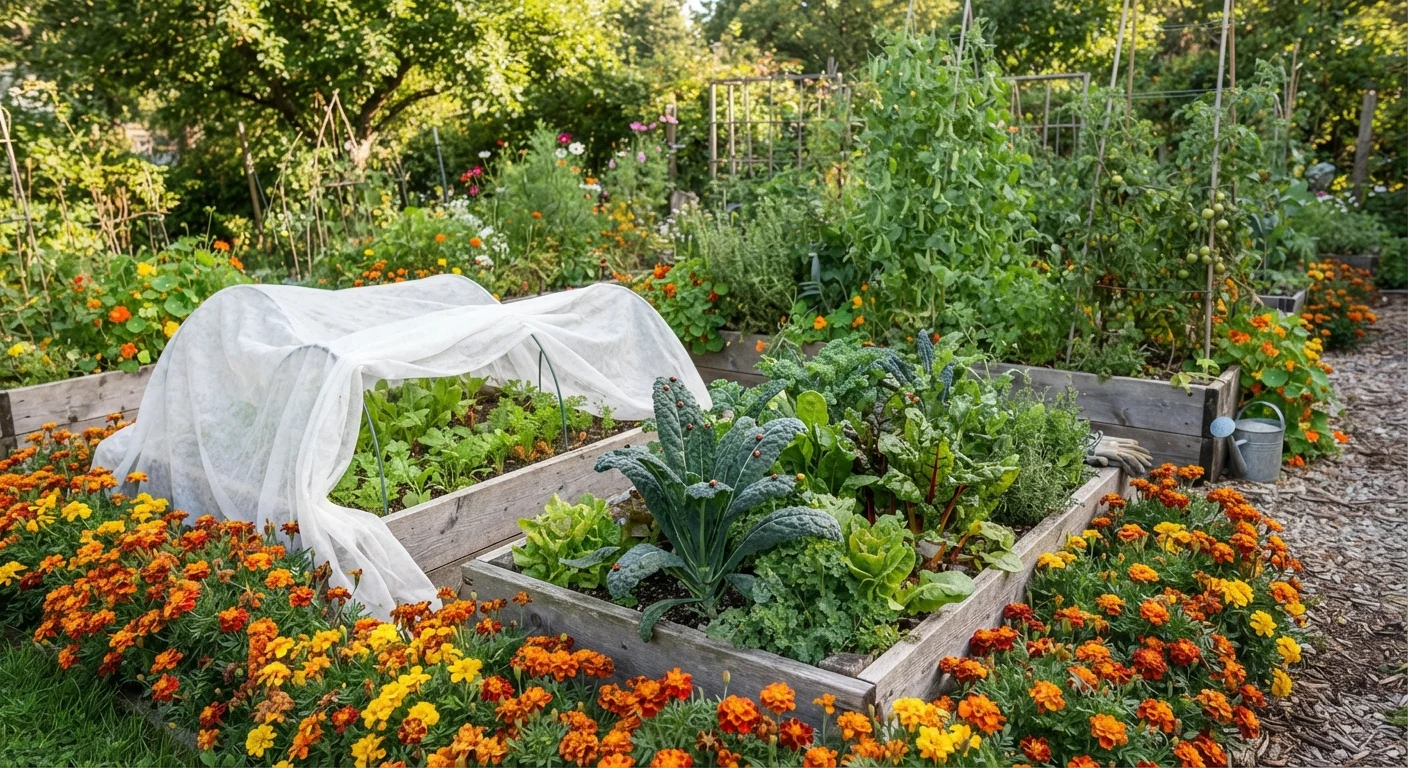
Why Organic Pest Control Starts With the Whole Garden
The most effective organic pest control isn't a spray or a trap - it's a garden designed to be resilient. Pest pressure tends to increase in monocultures (single-crop plantings) and in soil that's compacted, nutrient-poor, or inconsistently watered. Plants struggling under these conditions signal stress in ways that attract insects and disease.
Before reaching for any treatment, evaluate the basics. Are your plants getting appropriate sunlight and consistent moisture? Is your soil structure supporting healthy root growth? A soil amendment like compost can improve both drainage and nutrient availability, giving plants the vigor to outpace minor pest damage on their own. Similarly, choosing a well-suited planting setup improves drainage and air circulation, both of which reduce conditions that favor pest outbreaks.
Monitor your garden at least twice a week, inspecting leaf undersides and stems.
Most pest infestations are far easier to control in early stages. A small aphid colony can be removed by hand or with a water jet; an established one requires more intervention. Regular observation is your most powerful diagnostic tool.
Use companion planting to disrupt pest habitat and attract beneficials.
Interplanting crops with aromatic herbs (basil, rosemary) and flowering plants (marigolds, nasturtiums) creates an environment that confuses and deters pest insects while drawing in predators. Diversity is a structural defense.
Rotate crops each season to prevent soil-borne pest populations from establishing.
Many soil-dwelling pests and their larvae overwinter and emerge expecting the same host plant to be in the same location. Rotating plant families - moving brassicas, nightshades, cucurbits to different beds each year - breaks this cycle.
Remove and dispose of heavily infested plant material promptly.
Leaving diseased or pest-ridden foliage on the plant or on the ground provides a breeding site and overwintering habitat. Prompt removal interrupts the life cycle before the next generation spreads.
Enrich soil with compost to support plant immunity and soil predator populations.
Biologically active soil - high in organic matter - hosts predatory ground beetles, spiders, and other invertebrates that prey on pest larvae. Healthy soil also produces plants with stronger cell walls, which are more resistant to insect damage. See our composting guide for setup help.
Physical Controls: Stop Pests Before They Land
Physical barriers are among the most reliable and underused tools in the organic gardener's toolkit. They require no toxicity, no timing calculations, and no harm to beneficial insects.
- Row covers: Lightweight fabric (sold as floating row cover or insect netting) draped over crops physically excludes flying insects - cabbage moths, cucumber beetles, squash vine borers - before they can lay eggs. Anchor edges with soil or garden staples and remove covers when flowers need pollination.
- Copper tape: Slugs and snails receive a mild electrical-like reaction when crossing copper. Strips applied around raised bed edges or pots create an effective perimeter.
- Sticky traps: Yellow sticky cards attract and trap whiteflies and fungus gnats, helping you monitor population levels and intercept adults before eggs are laid.
- Collars: A simple cardboard or plastic collar pushed an inch into the soil around transplant stems prevents cutworms from severing young plants at the base overnight.
Time Row Cover Removal Carefully
For crops that need pollination - squash, cucumbers, melons - floating row covers must be removed once flowers appear. Leaving them on will prevent bees and other pollinators from reaching the blooms, resulting in poor fruit set. Remove covers in the morning when pollinators are most active, then replace them in the evening if pest pressure warrants it.
Biological Controls: Let Nature Do the Work
A garden that supports beneficial insects is a garden with built-in pest management. Predatory and parasitic insects regulate aphids, caterpillars, whiteflies, and more - often more thoroughly than any spray.
1,500+
Aphids a single ladybug can consume per lifetime
University extension entomology resources consistently cite ladybugs as one of the most efficient natural aphid predators available to home gardeners.
~80%
Of insect species in a garden are neutral or beneficial
Entomologists estimate the vast majority of insects found in garden settings are either harmless decomposers or active predators of pest species.
To encourage beneficials, plant flowering species that provide nectar and pollen across the growing season: dill, fennel, yarrow, sweet alyssum, and native wildflowers are particularly effective. Avoid broad-spectrum pesticides (including some organic ones) that kill beneficials indiscriminately.
You can also introduce beneficial insects intentionally. Ladybugs and lacewings prey on aphids; parasitic wasps (such as Trichogramma species) lay eggs in caterpillar eggs, stopping them before they hatch. Steinernema and Heterorhabditis nematodes, applied as a soil drench, target soil-dwelling larvae like grubs and fungus gnat larvae. Follow product directions carefully - these are living organisms with specific storage and application requirements.
“The goal of organic pest management is not the elimination of pests, but the reduction of pest populations to a level at which the damage they cause is acceptable. A garden with some pest presence is often a healthier, more balanced system than one scrubbed clean of all insects.”
— Entomology Extension Educators, Land-grant university cooperative extension programs
Organic Sprays: Use Strategically, Not Routinely
Organic sprays are not inherently safe for all insects just because they're derived from natural sources. Use them selectively and only after physical and biological methods have proven insufficient.
- Insecticidal soap: Effective against soft-bodied insects - aphids, spider mites, mealybugs - on direct contact. It breaks down quickly and leaves no residue, but must coat the pest to work. Apply in early morning to avoid leaf burn.
- Neem oil: Derived from the neem tree, it disrupts insect feeding and reproduction and has some fungicidal properties. It's most effective as a preventive treatment or at early infestation stages. Harmful to aquatic invertebrates; avoid application near waterways.
- Bt (Bacillus thuringiensis): A naturally occurring soil bacterium whose toxin is specific to caterpillar larvae when ingested. It does not harm birds, mammals, or adult insects. Particularly useful for cabbage worms and tomato hornworm larvae.
- Diatomaceous earth: Food-grade DE, dusted on leaves and soil surfaces, damages the exoskeletons of crawling insects. Reapply after rain. Avoid inhaling the dust during application.
If you're starting a vegetable garden for the first time, incorporating these practices from the outset - rather than retrofitting them - makes pest management far less reactive and stressful.
Permits and Regulations Can Apply
Some states and municipalities have restrictions on the use of certain pesticides - including those labeled as organic. Before applying any pest control product, including neem oil or Bt, check your local cooperative extension office or state department of agriculture for current guidance. This is especially relevant near water features, community gardens, or shared property lines.
The content provided on our blog site traverses numerous categories, offering readers valuable and practical information. Readers can use the editorial team’s research and data to gain more insights into their topics of interest. However, they are requested not to treat the articles as conclusive. The website team cannot be held responsible for differences in data or inaccuracies found across other platforms. Please also note that the site might also miss out on various schemes and offers available that the readers may find more beneficial than the ones we cover.